Category

Blog

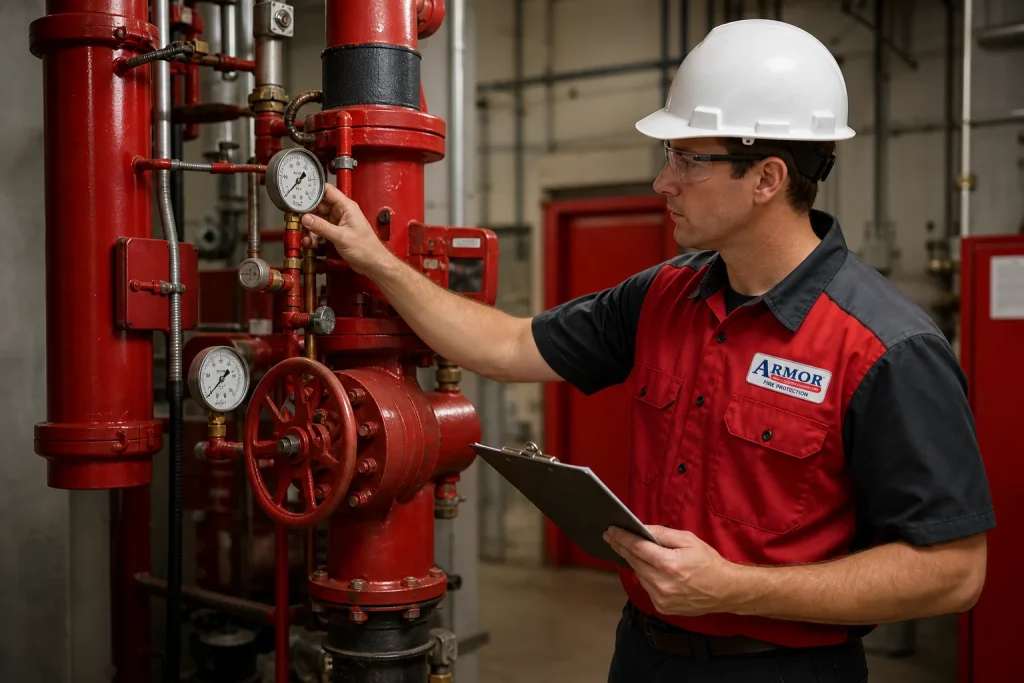
Certified technician performing backflow testing in Phoenix AZ on a commercial water supply line

Backflow Testing in Phoenix AZ: What It Is, Why It Matters, and When It Is Required

By Blog

Backflow testing in Phoenix AZ confirms that your property's backflow prevention device is stopping contaminated water from siphoning back into the clean water supply. The City of Phoenix requires annual testing on every installed assembly, and Armor Fire Pro's Backflow Testing team handles the inspection, testing, and paperwork so you stay compliant.

By Armor Fire Pro Team, Fire Protection Specialists

What Backflow Testing in Phoenix AZ Actually Checks

Backflow testing in Phoenix AZ is the annual inspection that verifies a backflow prevention device is doing its one job: stopping used or contaminated water from reversing direction and flowing back into the clean water supply that serves your building and your neighbors. When pressure drops on the city main during a break or a heavy demand spike, a cross connection at an irrigation line, a fire sprinkler riser, or industrial process equipment can pull chemicals, fertilizer, or stagnant water backward into the potable system. A properly installed and certified backflow prevention device closes automatically the moment flow tries to reverse, and that closure is exactly what a technician confirms during testing.

Commercial buildings, restaurants, medical facilities, apartment complexes, and any property with an irrigation system or fire suppression line typically has at least one backflow prevention device on site. If your property has never been tested, or if you are not sure where your device is located, that is the first thing a certified backflow testing visit will identify, along with whether the device is even the correct type for your water service.

How a Backflow Prevention Device Protects Your Water Supply

A backflow prevention device works through a set of internal check valves that only allow water to move in one direction. A double check valve assembly uses two independent check valves in series. If one valve fails to seat completely, the second still stops reverse flow before contaminated water reaches the local water main. A reduced pressure zone assembly adds a relief valve between the two check valves, so if either valve leaks, the relief valve opens and discharges water rather than letting it flow backward into the clean water supply.

Most commercial Fire Sprinklers systems tie directly into the domestic water supply, which is exactly why the City of Phoenix requires a dedicated backflow prevention device on every fire line, not just irrigation and process water connections. Standing water inside a sprinkler system, combined with any chemical additives used for corrosion control, is treated as a contamination risk the same as an irrigation cross connection, and it gets tested on the same annual schedule.

When Annual Backflow Testing Is Required in Phoenix

The City of Phoenix cross connection control program requires annual backflow testing on every backflow prevention device installed on a commercial, industrial, or irrigated property. The requirement applies whether the device sits on a domestic water line, a fire line, or an irrigation meter. Property owners typically receive a renewal notice from the city ahead of the due date, but the responsibility to schedule arizona backflow testing on time stays with the property owner, not the water department.

Missing the annual backflow testing deadline can result in a locked meter or a formal notice of non-compliance, since the city treats an untested device as an unverified contamination risk to the local water system. Backflow testing is one piece of a property's broader compliance calendar, alongside required inspections for fire alarms, sprinklers, and suppression systems, so it helps to track the renewal date alongside those other annual inspections rather than as a standalone deadline.
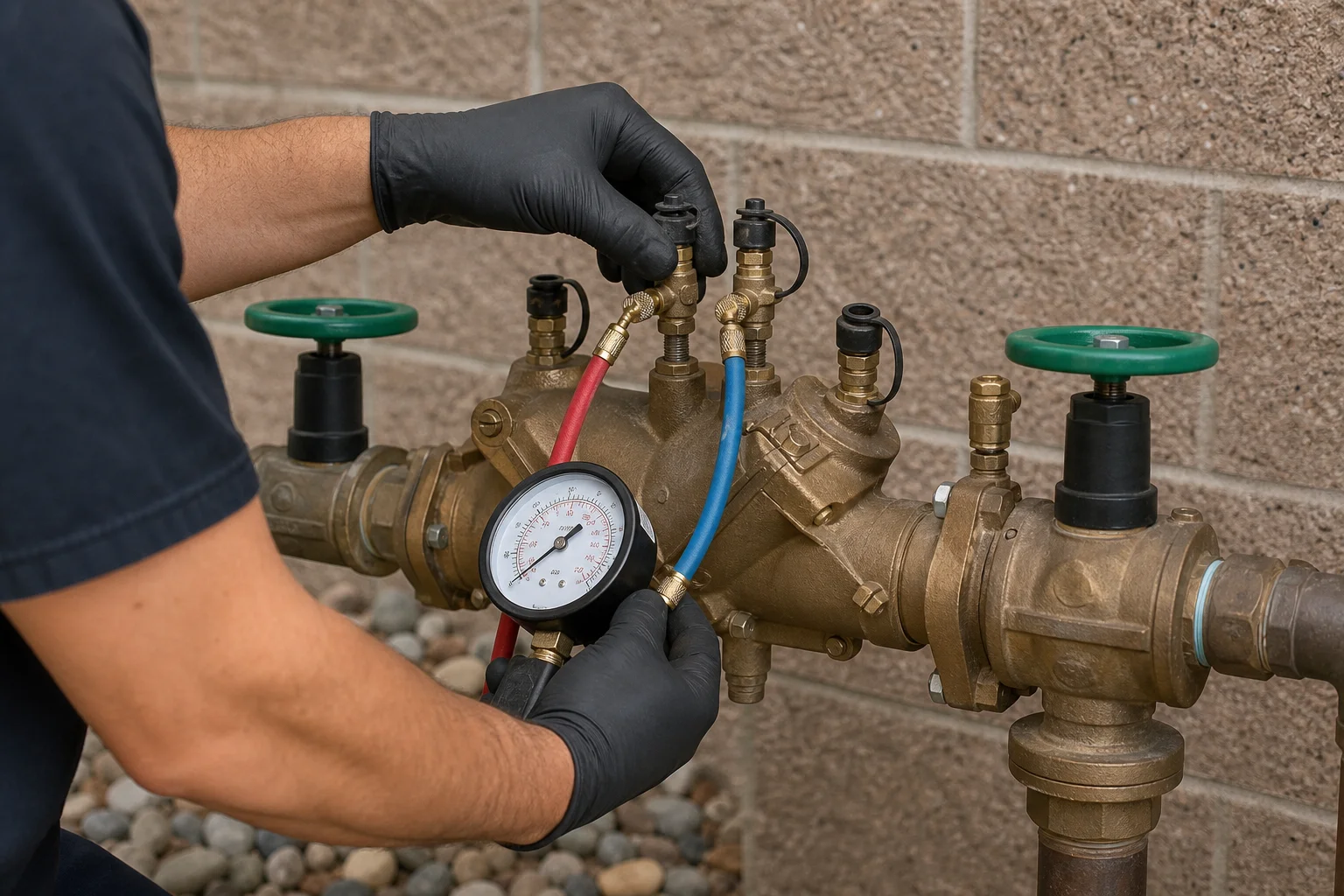
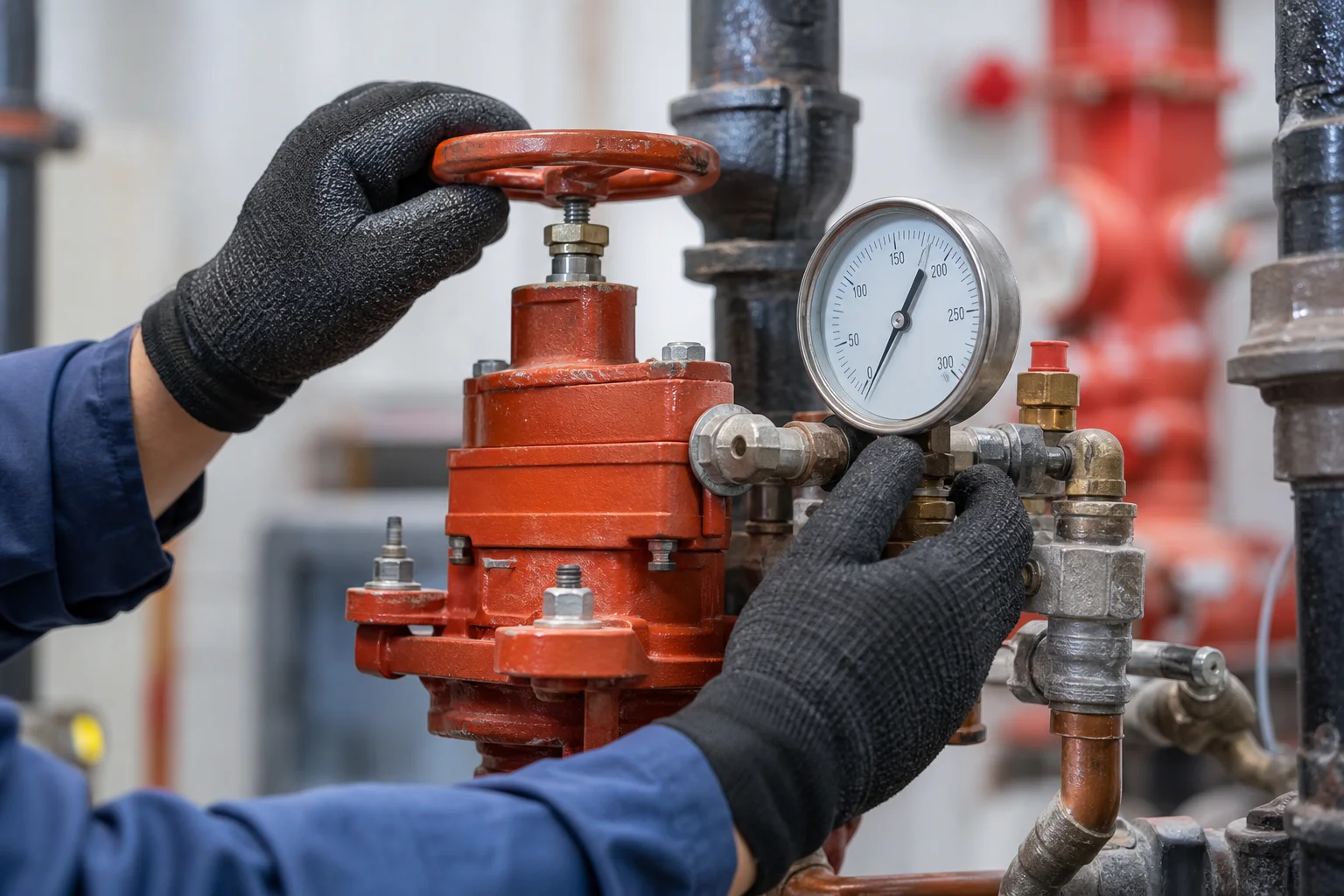
A certified fire protection technician performs backflow prevention testing on a commercial water supply line outside a Phoenix building

What Happens During a Certified Backflow Testing Appointment

A certified backflow testing appointment starts with the technician locating the device and confirming the make and model against city records. Using a calibrated differential pressure gauge, the technician isolates the assembly, then tests each check valve and, on a reduced pressure zone assembly, the relief valve, all while the device stays under normal supply pressure. Each valve has to hold within a specific pressure differential to pass, and the technician checks flow in both directions before signing off.

The technician records the test results on a standardized city form, submits a copy directly to the City of Phoenix water services department, and you receive a copy of the results for your own compliance file. If a device fails, the technician explains what part needs repair or replacement, since a failed backflow prevention device has to be corrected and retested before the city will mark the property compliant. Most straightforward tests take under an hour to perform, and no water service interruption is needed for the building beyond the isolated line.

Choosing a Certified Backflow Testing Provider in Arizona

Not every plumber or fire protection company holds current backflow tester certification, and the City of Phoenix only accepts test results submitted by a certified backflow tester on file with the water department. Armor Fire Pro's technicians hold that certification and bring years experience testing devices across restaurants, medical offices, warehouses, and multi-family properties throughout the Phoenix area, so the paperwork gets filed correctly the first time.

Working with a local provider matters too. A team that already services your fire alarm, sprinkler, and suppression systems can schedule backflow testing alongside other annual inspections, which keeps trucks off your property and cuts down on repeat scheduling. If your backflow prevention device installed years ago is due for a broader compliance check, that review often overlaps with Arizona fire code compliance requirements, and with how backflow prevention gets built into new sprinkler system installations from day one.

Frequently Asked Questions

How often is backflow testing required in Phoenix?
The City of Phoenix requires annual backflow testing on every installed backflow prevention device, whether it protects a domestic water line, a fire sprinkler system, or an irrigation meter. The city mails a renewal notice, but scheduling the test on time is the property owner's responsibility, not the water department's.

Who can perform certified backflow testing in Arizona?
Only a certified backflow tester on file with the local water department can perform testing the City of Phoenix will accept. Armor Fire Pro's technicians hold current certification and submit test results directly to the city on your behalf, then send you a copy for your records.

What happens if my backflow prevention device fails testing?
The technician documents which valve failed to hold pressure, recommends the repair or replacement needed, and retests the device once the work is complete. The city will not mark a property compliant until a passing test result is on file with the water department.

Do I need a backflow prevention device on my fire sprinkler system?
Yes. Any fire sprinkler system connected to the domestic water supply needs its own backflow prevention device, and that device is subject to the same annual backflow testing requirement as irrigation or process water connections on the property.

Will I receive a copy of my test results?
Yes. After the technician submits results to the City of Phoenix, you receive a copy of the results for your own records, which you should keep alongside your other fire and water compliance documentation for future inspections.

Schedule Your Backflow Testing in Phoenix AZ Today

A backflow prevention device only protects your water supply if it is tested and documented every year, and Armor Fire Pro's certified technicians handle the testing, paperwork, and city submission in one visit. Request a Free Quote to get your property scheduled before your next renewal notice arrives.

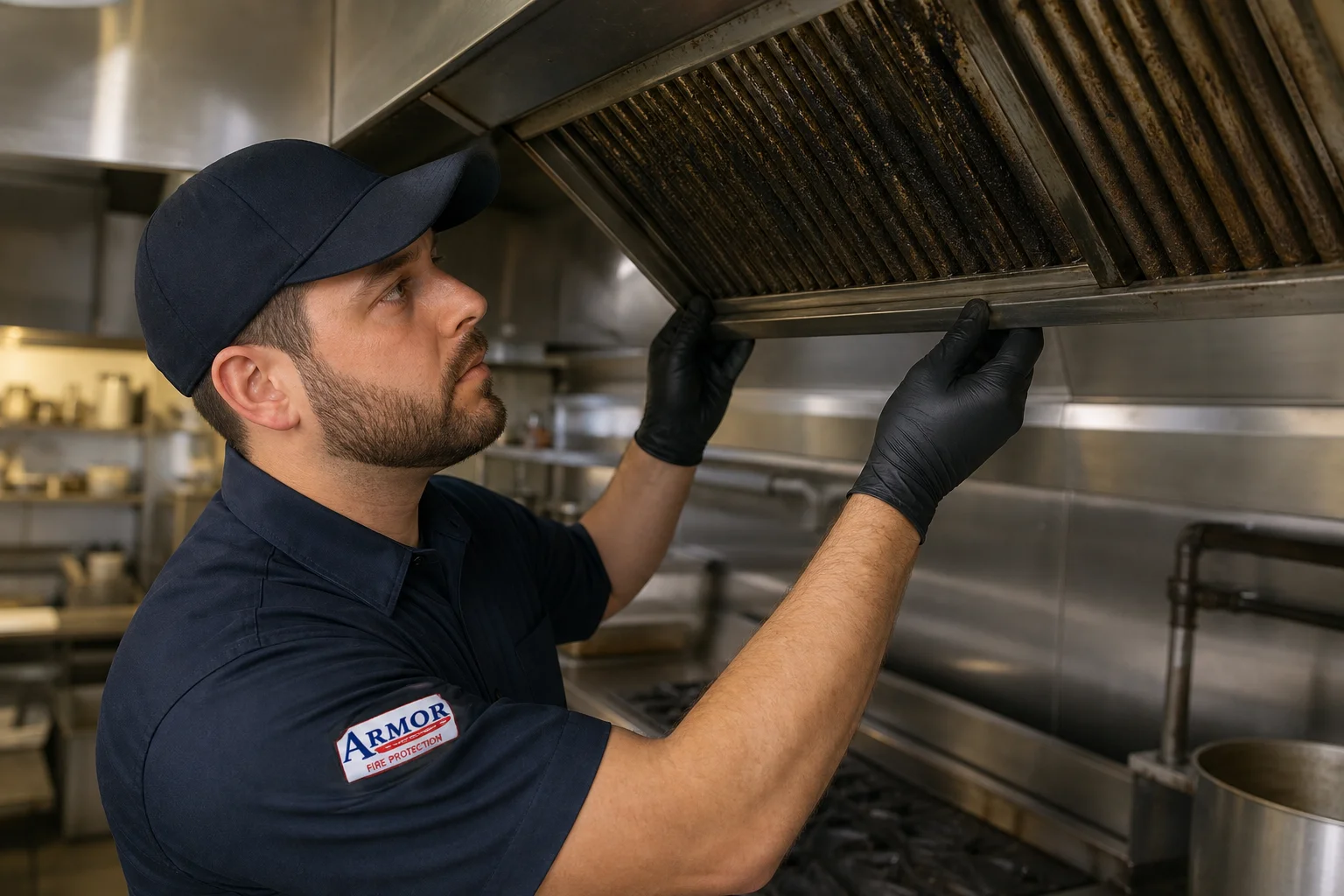
Fire protection specialist performing an NFPA 96 hood system inspection on a commercial kitchen rooftop

NFPA 96 Hood System Inspection Intervals for Commercial Kitchens (And What a Failed Inspection Costs)

By Blog

NFPA 96 hood system inspection intervals for commercial kitchens range from monthly to annual depending on how much grease your equipment produces, and a failed inspection can cost far more than the cleaning bill itself, from a fire marshal shutdown to a denied insurance claim tied to your Kitchen Fire Suppression system. Here's the schedule, and the fallout.

By Armor Fire Pro Team, Fire Protection Specialists

How Often Does NFPA 96 Require Hood System Inspection Intervals for Commercial Kitchens?

NFPA 96 hood system inspection intervals for commercial kitchens aren't one-size-fits-all. The standard sorts every kitchen into a cooking volume tier, and that tier sets how often a technician inspects and cleans the exhaust hood, ductwork, and fan. Kitchens that cook around the clock or run solid fuel equipment like charcoal or wood-fired grills sit on the shortest interval, monthly, while a typical full-service restaurant lands on a quarterly schedule. Lower-volume kitchens, think a church hall or a seasonal snack bar, may only need semiannual or annual service. Your local fire marshal has final say on which tier applies, so the interval on paper is a starting point until confirmed for your kitchen.

What Determines Whether You're Quarterly, Semiannual, or Annual

Hood cleaning frequency depends on cooking volume, not restaurant size. A kitchen frying and grilling twelve or more hours a day produces far more grease vapor than one running a light lunch menu three days a week, and that volume is what a contractor measures before assigning your interval. Solid fuel cooking produces sticky, harder-to-remove residue than a typical fryer line, which is why those systems usually get bumped to monthly regardless of covers served. High-volume kitchens rarely qualify for anything longer than quarterly. If your cooking style changed since your last inspection, say you added a wok station or a charbroiler, flag it, since it can shorten your interval.

What Happens During an NFPA 96 Hood System Inspection?

A real inspection covers the whole exhaust path, not just the visible hood panels. A qualified technician checks grease buildup inside the hood, ductwork, and rooftop fan, confirms access panels are actually accessible instead of painted or bolted shut, and verifies the fan and ductwork are structurally sound enough to help control a fire if grease ignites inside the system. A complete visit typically also confirms your Fire Extinguishers & Accessories are charged, tagged, and mounted where code requires, since fire marshals commonly check both during the same walk-through. The technician also checks that the wet chemical suppression system has full nozzle coverage and a current service tag, since a blocked nozzle can't stop a fire even when the hood is spotless. Pairing that check with your wet chemical suppression systems service on the same visit avoids scheduling two contractors for one exhaust system.

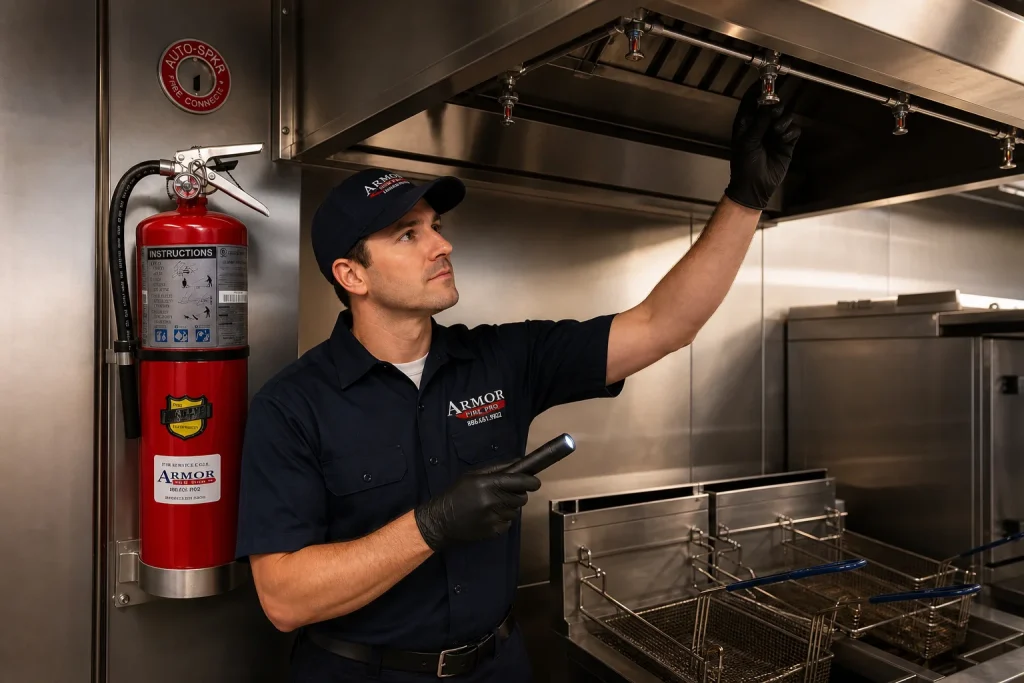
Fire protection technician inspecting a commercial kitchen exhaust hood and ductwork

Who Is Qualified to Perform NFPA 96 Hood Inspections and Cleanings?

Hood cleaning and inspection work should go to a trained fire protection contractor familiar with NFPA 96, not general janitorial staff. The job requires knowing where grease hides inside ductwork, how to safely access a rooftop fan, and what actually satisfies the standard versus what just looks clean from the floor. Many technicians carry certification through IKECA, the trade association built around kitchen exhaust cleaning, and a documented service tag left after each visit is what proves the work happened if a fire marshal or adjuster ever asks.

Who Enforces These Requirements in Your Kitchen

The local fire marshal, acting as the authority having jurisdiction, actually enforces NFPA 96 in a commercial kitchen. NFPA 96 itself is a set of guidelines until a city or county adopts it into local fire code, at which point following it stops being optional. That adoption is why fire protection for commercial kitchens looks the same on paper nationwide but gets enforced locally, through the same fire code requirements that govern the rest of your building's fire protection systems and the same fire marshal who signs off on your occupancy.

What Does It Cost When a Commercial Kitchen Fails a Hood Inspection?

The real cost isn't one number, it's a stack of line items that shows up after the fact: a corrective cleaning to bring the system up to code, a re-inspection fee to get the fire marshal back out, and if the failure forces an unplanned shutdown, a rush service premium. Damage like a warped filter, a fan that won't spin freely, or a misaligned suppression nozzle adds repair labor on top.

A few factors move that total more than anything else. Hood count and linear footage of ductwork is the biggest driver, since labor scales with how much surface a technician has to scrape. How overdue the cleaning is matters almost as much: a kitchen cleaned two years late has hardened grease layers needing multiple passes, versus a light job for one cleaned six months late. Roof access matters too, a fan needing a ladder or lift adds time a ground-level unit doesn't. And cooking type matters: solid fuel and high-volume operations build tar-like residue that takes longer to strip than a standard fryer line.

Hood cleaning and fire suppression service are commonly billed as separate line items even though an AHJ often checks both on the same visit, so ask directly whether a quote covers just the hood or the full protection scope. A few questions get an accurate number: how many hoods and duct run, what's cooked and how often, when was the system last serviced, and does roof access need special equipment. Give a contractor those details, plus your last service date, and understanding your NFPA 96 interval before asking for a quote keeps the number honest instead of generic.

What Are the Consequences of Failing an NFPA 96 Inspection Beyond the Cleaning Bill?

A failed hood inspection is a life safety finding, not a paperwork issue, and the fire marshal treats it that way. Beyond corrective service, a kitchen can face a formal notice of violation, a set deadline to fix the problem, and in serious cases, an order to stop cooking on that line until it passes re-inspection. Repeat failures draw closer scrutiny on future visits, and some jurisdictions escalate to fines.

What Happens Immediately After a Restaurant Fails a Hood Inspection

Expect a written notice describing exactly what didn't pass, grease buildup, a blocked access panel, or a suppression system out of service, along with a correction window, often measured in days rather than weeks. If the suppression system itself is non-functional, some fire marshals order the cooking line shut down immediately, since an unmanaged fire can spread fast without a working system to contain it. Getting a contractor scheduled the same day is usually the fastest way to reopen the line.

Will Insurance Pay for a Kitchen Fire If Hood Inspections Were Skipped?

It depends on the policy, worth confirming directly with your carrier rather than assuming either way. Many commercial property and liability policies for restaurants include maintenance language expecting documented, code-compliant upkeep of fire protection systems, hood cleaning included. If an insurer can show a fire started or spread because scheduled hood cleaning or suppression service was skipped, that clause can become grounds to deny or reduce a claim. Keeping every service tag, invoice, and inspection report on file is what lets a kitchen prove compliance if a claim is ever challenged.

Frequently Asked Questions

How long does an NFPA 96 hood inspection take?
Most inspections for a single hood system run one to a few hours, depending on how many hoods are involved and how much grease has built up since the last visit.

Can a commercial kitchen stay open with a failed hood inspection?
Sometimes. If the hood is dirty but the fire suppression system is still functional and access isn't blocked, many fire marshals allow the kitchen to keep operating during a short correction window. If the suppression system itself is out of service, or the violation is severe, the AHJ can order the cooking line closed until a passing re-inspection is completed.

Does NFPA 96 apply to wood or charcoal cooking equipment?
Yes. Solid fuel operations like wood-fired ovens, charcoal grills, and char-broilers fall under NFPA 96 and typically need the shortest cleaning interval of any kitchen type, often monthly, because solid fuel cooking produces heavier, harder-to-remove grease and tar deposits than standard fryers or flat-top grills.

What's the difference between hood cleaning and a hood inspection?
Hood cleaning removes grease from the hood, ductwork, and fan. An inspection is broader: it checks whether the whole exhaust and fire protection system, cleaning included, still meets NFPA 96 and local fire code.

Who keeps the compliance records after each hood service visit?
The kitchen owner or manager is ultimately responsible for keeping service tags, invoices, and inspection reports on file, even though the contractor typically leaves documentation behind at every visit. Those records are what a fire marshal or adjuster will ask to see first if compliance is ever questioned.

Get Your Kitchen on a Compliant Inspection Schedule

Skipping or guessing at your NFPA 96 hood system inspection intervals for commercial kitchens is the expensive way to find out where your kitchen actually falls. Request a Free Quote or contact Armor Fire Pro Team directly, and our fire protection services will confirm your cooking volume, your current schedule, and exactly what a compliant visit covers before the fire marshal has to.

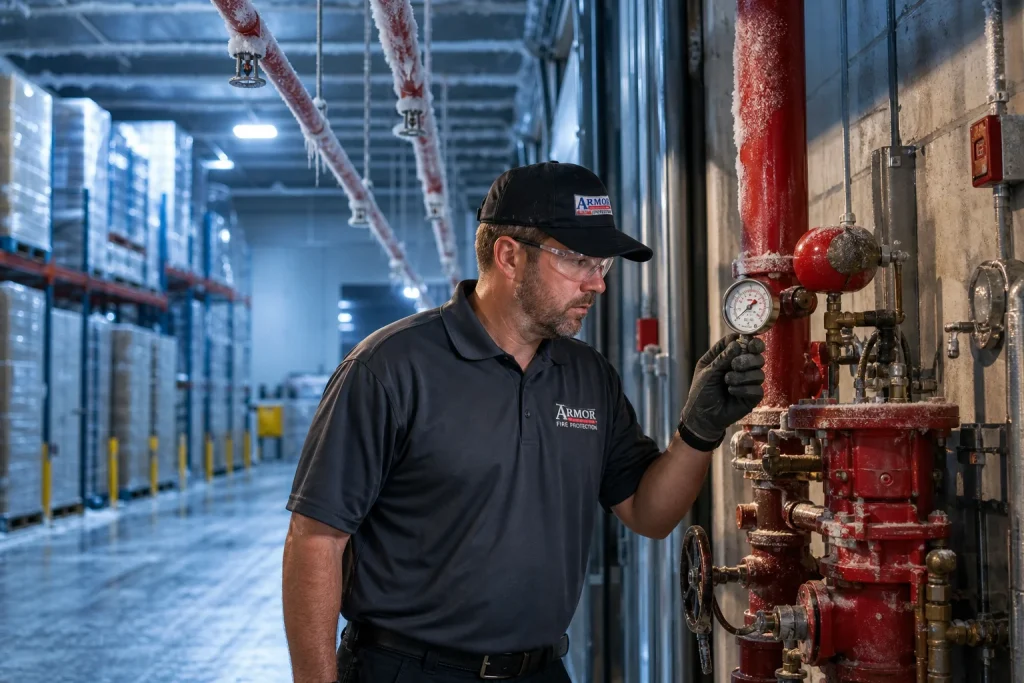
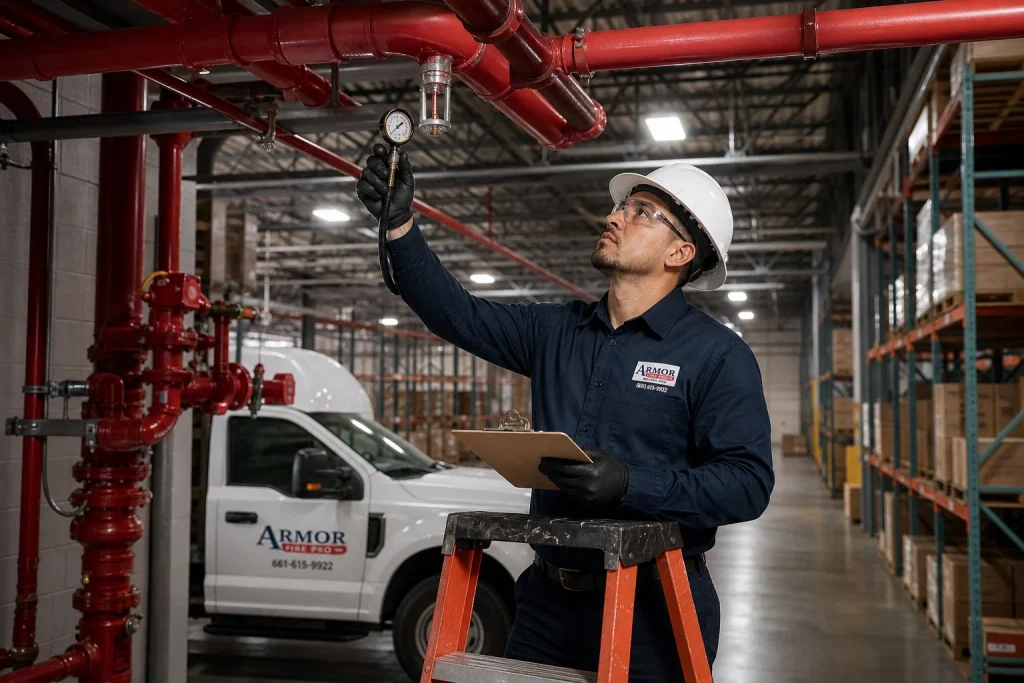
Fire protection technician inspecting a dry fire sprinkler system valve in a cold storage warehouse

Dry Fire Sprinkler Systems: Cold Storage & Freeze-Protected Solutions

By Blog

Dry fire sprinkler systems protect cold storage facilities, unheated warehouses, and parking structures where standing water would freeze and burst pipes long before a fire ever started. By holding back water with pressurized air until heat triggers activation, these systems deliver dependable Fire Sprinklers coverage in freezing environments across the Phoenix area.

By Armor Fire Pro Team, Fire Protection Specialists

Why Dry Fire Sprinkler Systems Matter for Freeze-Prone Buildings

A standard wet pipe sprinkler system keeps water sitting inside the pipes at all times, ready to discharge the instant a sprinkler head activates. That design works fine in heated office space, but it fails in cold storage. Water left in a pipe network at sub-freezing temperatures expands, cracks fittings, and can rupture an entire branch line before a fire ever gets detected. Dry fire sprinkler systems solve that problem by removing standing water from the equation entirely.

Building owners who operate freezers, refrigerated warehouses, unheated loading docks, or exposed parking garages need a sprinkler system engineered for those conditions. Arizona's climate rarely produces freeze events outdoors, but commercial refrigeration units and cold storage rooms create the same risk indoors year round. A dry sprinkler system is the code compliant answer, and it remains one of the most reliable forms of fire protection available for these spaces.

The Mechanics Behind Pressurized Air and Water Flow Delivery

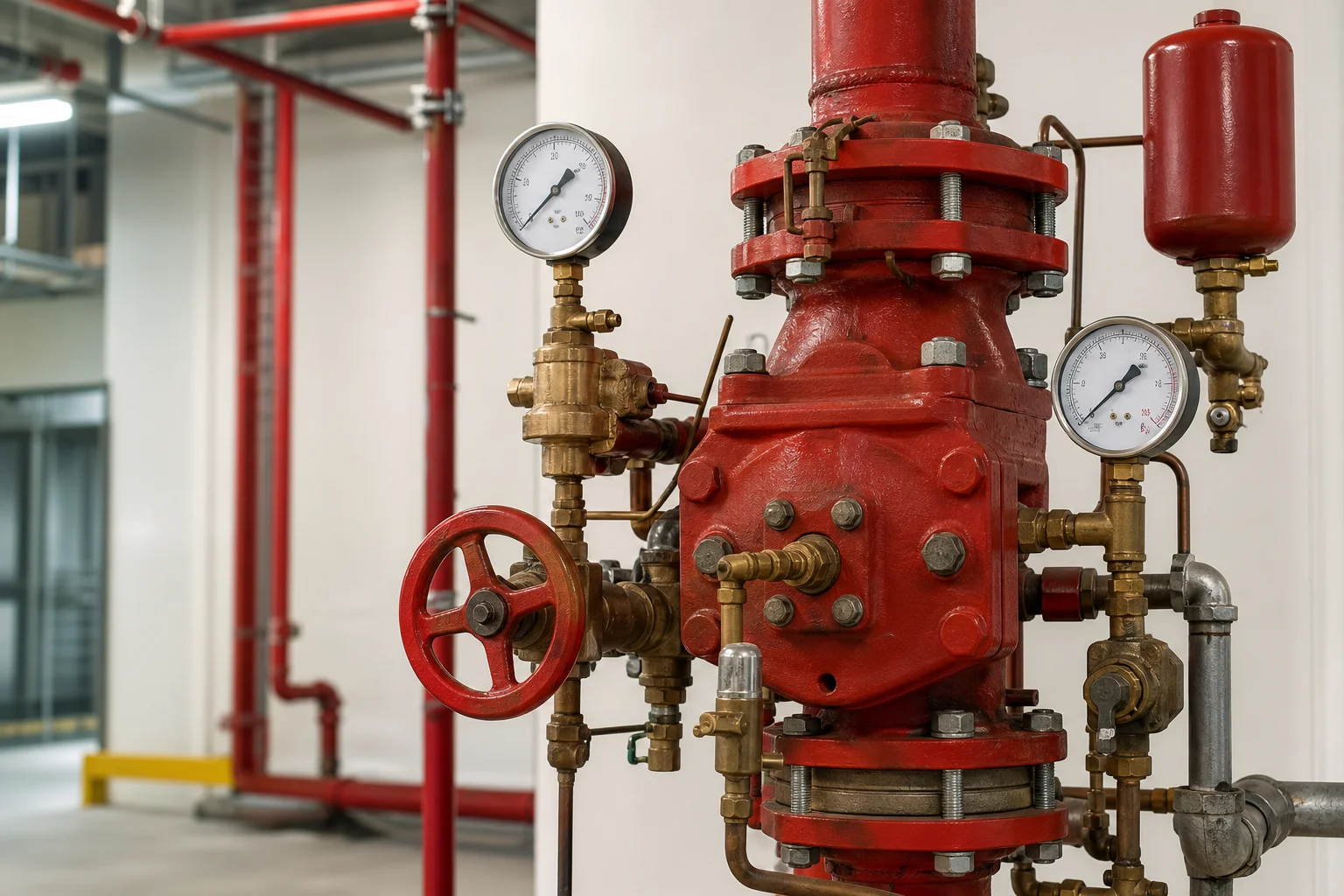
Instead of water, a dry pipe system fills its pipe network with pressurized air nitrogen that holds a dry pipe valve closed at the system riser. Water sits behind that valve, staged and ready, but it never enters the overhead piping until the system actually needs to discharge.

When heat from a fire opens a sprinkler head, the pressurized air escapes through that open head and pressure inside the pipe drops. Once pressure falls below the threshold the dry pipe valve is calibrated to hold, the valve trips open and water flow begins moving through the pipes toward the open head. This sequence adds a short delay compared to a wet system, but it is the tradeoff that keeps a dry sprinkler system from freezing solid in cold areas.

Many contractors now fill the pipe network with nitrogen instead of ordinary compressed air. Air nitrogen reduces the oxygen available inside the pipe, which slows internal corrosion and extends the service life of both the piping and the dry pipe valve itself.

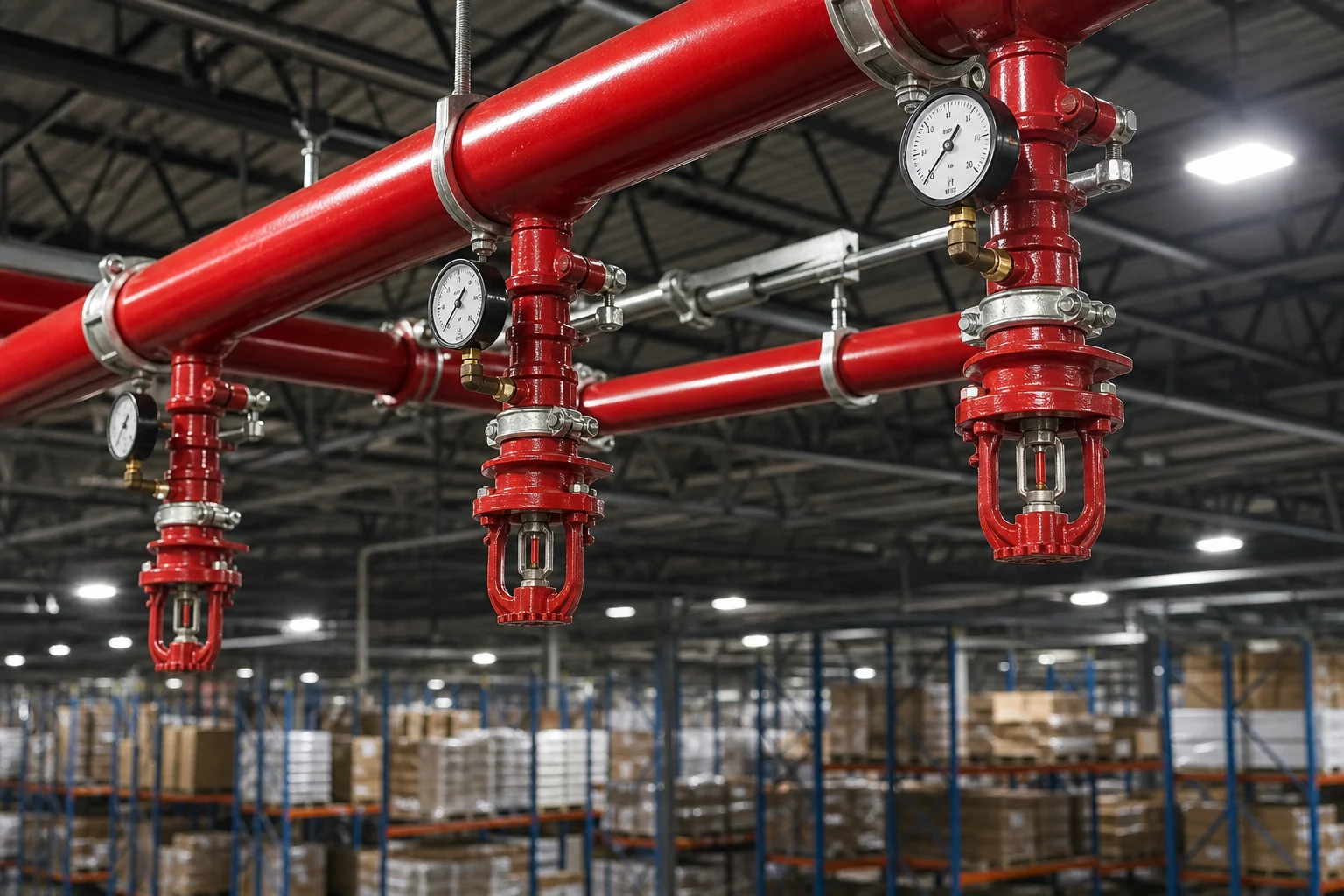
dry fire sprinkler system pipe network with a technician checking a dry pipe valve in a cold storage warehouse

Where Freeze-Protected Sprinkler Systems Are Required

Cold storage warehouses, refrigerated distribution centers, unheated attics, parking structures, and loading docks are the areas where a dry sprinkler system is typically required rather than optional. The National Fire Protection Association addresses these installations directly in NFPA 13, the standard that governs sprinkler system design. Arizona layers its own construction requirements on top of that federal standard, and meeting them starts with understanding the fire code compliance requirements that apply before a project moves forward.

If you are unsure whether your building's cold storage areas already meet current code, our Services team can walk the site and confirm what's required. A full installation follows its own sequence from design through final inspection, and our sprinkler installation process covers what to expect at each stage for a commercial building.

Dry Pipe Valve Operation and Maintenance Considerations

A dry pipe valve is a mechanical device, and like any mechanical device it needs regular attention. NFPA 25 requires an annual full trip test to confirm the valve opens correctly and water reaches the system within the expected time. Air pressure inside the pipe network also needs routine monitoring, since a slow leak can drop pressure enough to cause an unintended trip or, worse, leave the system unable to hold air at all.

Building owners should also watch for corrosion inside older dry pipe systems that still run on compressed air rather than nitrogen. Trapped moisture in humid air is the main driver of internal pipe corrosion, which is why more fire protection contractors now recommend nitrogen generators for facilities that depend on long term reliability. Pairing this maintenance with routine checks on your building's fire alarm and detection equipment keeps detection and suppression working together instead of as separate systems.

Comparing Dry Sprinkler Systems to Wet Pipe Alternatives

Wet pipe sprinkler systems are simpler, less expensive to install, and respond faster because water is already in the pipe. For any heated commercial space, a wet system is usually the right call. But once temperatures in a building or storage area can drop to freezing, even briefly, a wet system becomes a liability rather than protection.

Dry sprinkler systems trade a small amount of response time for freeze resistance. That tradeoff is well worth it in cold storage, unheated warehouses, and any exposed structure where control over temperature isn't guaranteed. Some facilities also pair sprinkler protection with a broader safety plan that ties detection, suppression, and emergency response together instead of running them as separate systems. Smoke and heat detectors provide early warning to occupants and monitoring services, while the sprinkler system provides the active suppression once heat reaches a sprinkler head. Coordinating how these systems work together is worth raising with your fire protection contractor when a cold storage building is being designed or upgraded.

Frequently Asked Questions

What is the difference between a dry fire sprinkler system and a wet system?
A wet system keeps water in the pipes at all times, ready for immediate discharge. A dry fire sprinkler system holds pressurized air in the pipe network instead, with water staged behind a dry pipe valve. Water only enters the pipes after a sprinkler head activates and the valve trips open, which prevents freezing in cold areas.

Why do dry pipe systems use nitrogen instead of regular air?
Air nitrogen reduces the oxygen inside the pipe network, which slows the internal corrosion that ordinary compressed air can cause over time. Facilities that depend on long term reliability in cold storage or unheated buildings often see fewer pipe failures and valve issues after switching to a nitrogen supply.

How often does a dry pipe valve need to be tested?
NFPA 25 requires a full trip test of the dry pipe valve annually to confirm the valve operates correctly and water reaches the system within the required time. Air pressure should also be checked routinely between full trip tests to catch slow leaks before they cause a problem.

Where are dry sprinkler systems typically required?
Cold storage warehouses, refrigerated distribution space, unheated attics, parking garages, and loading docks are the most common areas where a dry sprinkler system is required. Any space where temperatures can drop to freezing, even occasionally, is a candidate for dry pipe protection under current fire code.

Is a dry fire sprinkler system slower to respond than a wet system?
Yes, slightly. Because the pipe network has to fill with water after the dry pipe valve trips, there is a brief delay compared to a wet system where water is already present. Proper design keeps that delay minimal, and the freeze protection it provides outweighs the small difference in response time.

Get a Free Quote for Your Cold Storage Fire Protection

Freeze damage takes a sprinkler system offline right when a building needs it most, and cold storage facilities can't afford that gap in protection. Request a Free Quote and Armor Fire Pro will design a dry pipe system built for your building's specific temperature risks.

Fire protection technician inspecting kitchen fire suppression systems above a commercial kitchen fryer line

Kitchen Fire Suppression Systems: Wet Chemical vs. Dry Chemical for Arizona Restaurants

By Blog

When flames erupt from a fryer or grill, seconds matter. Kitchen fire suppression systems detect heat and release extinguishing agent directly onto cooking equipment before a small flare-up becomes a total loss. For Arizona restaurant owners comparing options, understanding wet chemical and dry chemical suppression starts with our Kitchen Fire Suppression services built for commercial kitchens.

By Armor Fire Pro Team, Fire Protection Specialists

Why Commercial Kitchens Need Fire Suppression Systems

A commercial kitchen combines open flame, hot grease, and constant equipment cycling in a small footprint, exactly the conditions that produce a fast-moving kitchen fire. Grease fires can flash from a smoking pan to a hood fire in under a minute, which is why fire codes require automatic fire suppression systems above every commercial cooking line in Arizona. These systems are designed to detect a rise in heat and respond before staff can react manually.

The National Fire Protection Association sets the baseline standards for kitchen suppression systems under NFPA 96, and Arizona jurisdictions enforce these requirements during plan review and annual inspections. These plan review and inspection standards extend to broader Arizona fire code requirements that apply across an entire commercial building, not just the kitchen line.

Skipping or delaying suppression system installation is not an option for any restaurant, food truck commissary, or cafeteria kitchen in the state. Health departments and fire marshals both check for a current inspection tag before allowing a kitchen to operate, and insurance carriers routinely require proof of a working system before writing a policy. A missed inspection can shut down service on the spot, which makes ongoing maintenance as important as the original installation.

How Wet Chemical Fire Suppression Systems Work

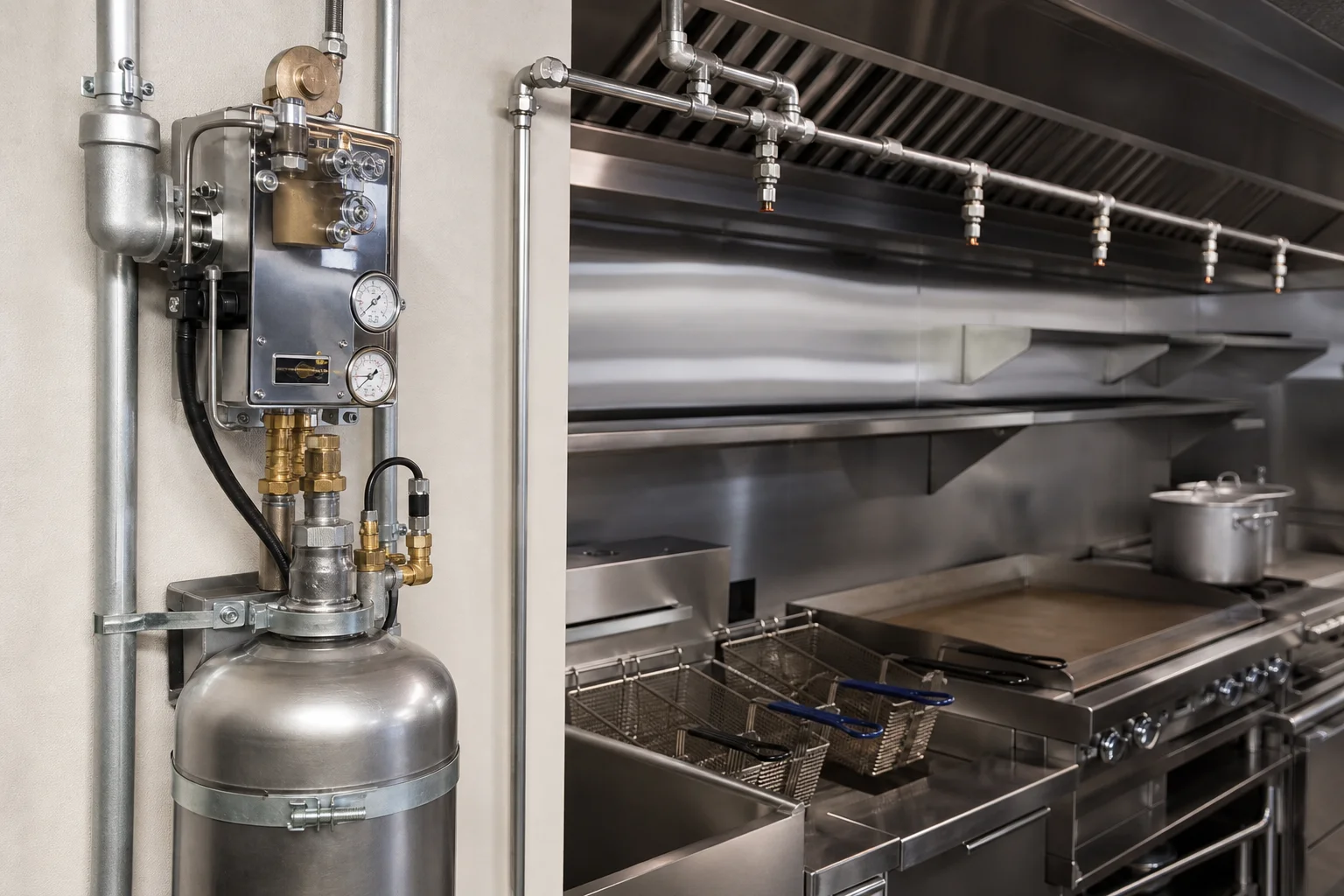
Wet chemical is the dominant type of kitchen fire suppression systems installed in Arizona restaurants today, and for good reason. A wet chemical suppression system uses heat-sensitive detection links mounted above the kitchen hood, fryers, griddles, and cooking appliances. When cooking oil or grease ignites and heat reaches the link's rated temperature, the link separates and triggers automatic activation of the system.

Once activation occurs, the system releases a potassium-based wet chemical agent through nozzles positioned over each hazard area. The agent works two ways: it cools the burning oil rapidly and reacts with the grease to form a soapy foam layer called saponification, which smothers the fire and blocks reflash. Wet chemical suppression is specifically formulated for the deep fat fryers, griddles, and open-flame ranges found in nearly every commercial kitchen, and it remains the best choice for restaurants cooking with oil-based methods.

Most wet chemical systems also shut off the gas or electric supply to the cooking equipment automatically the moment the system fires, cutting fuel to the fire while the agent works. That combination of agent and fuel shutoff is what makes wet chemical suppression so effective against grease and oil fires specifically, and it is why most current commercial kitchen builds in Arizona specify wet chemical from the start rather than treating it as an upgrade.

Fire protection technician inspecting a wet chemical fire suppression system nozzle above a commercial kitchen fryer

How Dry Chemical Systems Compare

Dry chemical suppression systems were the industry standard before wet chemical technology became widely available, and some older Arizona kitchens still operate under grandfathered dry chemical installations. A dry chemical system uses a sodium bicarbonate or similar dry agent, dispersed as a fine powder rather than a liquid, to interrupt the chemical reaction driving the fire.

Dry chemical agent works fast against a flare-up, but it does not create the same saponification barrier that wet chemical produces, so reflash risk is higher once the initial discharge settles. Dry chemical also leaves a heavier cleanup burden across cooking equipment, hoods, and exhaust ductwork after activation, since the powder settles over every surface in the kitchen rather than draining away like a liquid agent. Most current code editions, including NFPA 96, now require wet chemical systems for new commercial kitchen construction, which is why dry chemical systems are becoming less common in new installations across the Phoenix metro.

Wet Chemical vs. Dry Chemical: Which Fits Your Arizona Restaurant

If you are building a new kitchen or replacing an aging system, wet chemical is almost always the right call for Arizona restaurants. It meets current code, handles grease and oil fires more completely, and pairs cleanly with modern hood and duct designs. Dry chemical systems still function in kitchens where they were legally installed under prior code, but most insurance carriers and fire marshals now expect an upgrade path toward wet chemical suppression during any major renovation.

The type of cooking your kitchen does also matters. High-volume fryer operations, wok stations, and char-broilers all benefit from wet chemical's targeted agent delivery and automatic gas shutoff. Kitchens with lighter cooking loads may see a fire marshal accept an existing dry chemical system a while longer, but any new construction or major remodel should plan on wet chemical suppression systems from day one. Our Fire Extinguishers & Accessories inventory also gives kitchen staff a fighting chance against small flare-ups between the automatic system's coverage and a crew's first response, which is why every kitchen should pair suppression coverage with a rated portable extinguisher near the cook line.

Installation, Inspection, and Code Requirements in Arizona

Installing a kitchen fire suppression system in Arizona starts with a site assessment of the hood, duct, and cooking equipment layout, followed by a design that positions nozzles over every hazard area required by NFPA 96. Local fire marshals review the plan before installation and inspect the finished system before issuing an operating permit.

Once installed, kitchen fire suppression systems require semiannual service by a licensed technician, along with functional testing of the detection links, activation mechanism, and manual pull station. A well-maintained system also depends on a properly integrated alarm and detection network, since local fire code often requires the suppression system to signal the building's monitored alarm on activation. That integration is why kitchen suppression works best as part of a broader fire alarm monitoring system rather than a standalone piece of equipment.

Backflow testing is another piece of the compliance picture for kitchens tied into a fire sprinkler water supply, and pairing your kitchen suppression service with sprinkler and life safety coverage closes the remaining gaps in a building's protection. A coordinated service schedule that includes fire and life safety coverage keeps every system, from the kitchen hood down to the sprinkler heads, on the same inspection calendar.

Frequently Asked Questions

How often do kitchen fire suppression systems need service?
Arizona fire code requires semiannual inspection and service of kitchen fire suppression systems by a licensed technician. Each visit checks the detection links, nozzles, agent tank pressure, and manual pull station to confirm the system will activate correctly if a fire starts.

Can a restaurant use a dry chemical system instead of wet chemical?
Existing dry chemical systems installed under prior code may remain in service if properly maintained, but current NFPA 96 requirements call for wet chemical suppression in new commercial kitchen construction. Most insurance carriers now expect an upgrade to wet chemical during any major kitchen renovation.

What triggers activation of a kitchen suppression system?
Heat-sensitive detection links mounted above the hood and cooking equipment separate once they reach a rated temperature, triggering automatic activation. The system then releases wet chemical agent through nozzles positioned over each hazard area and shuts off gas or electric supply to the equipment.

Do kitchen fire suppression systems replace fire extinguishers?
No. A kitchen suppression system protects the hood, duct, and cooking equipment automatically, but a portable extinguisher rated for grease fires should still be mounted nearby for manual response to fires the suppression system does not reach.

Which type of system does a new restaurant build need in Arizona?
Nearly every new commercial kitchen build in Arizona requires a wet chemical fire suppression system to meet current NFPA 96 code. A licensed fire protection contractor can confirm the exact design requirements based on your hood, duct, and cooking equipment layout.

Protect Your Kitchen With a Professional Fire Suppression System

Arizona restaurants depend on a properly designed and maintained kitchen fire suppression system to protect staff, guests, and the building itself from a grease fire that can spread in seconds. Request a Free Quote to get your kitchen evaluated and protected the right way.

Fire protection technician performing fire protection system testing on a sprinkler control valve in a commercial building

Fire Protection System Testing: Annual Inspections & Certification Requirements

By Blog

Fire protection system testing is the annual process of inspecting, testing, and certifying the sprinklers, alarms, and suppression equipment that protect your Phoenix commercial property. Skipping it risks code violations, insurance denials, and system failure during a real fire. Our Fire Sprinklers team handles the full inspection and certification process for Valley businesses.

By Armor Fire Pro Team, Fire Protection Specialists

How Often Fire Protection System Testing Is Required in Arizona

Arizona commercial properties must complete fire protection system testing on a schedule set by NFPA 25 and the local fire code, not on a schedule of convenience. Fire sprinkler systems need monthly gauge checks, quarterly inspections of specific components, and a full annual inspection covering every valve, head, and control assembly. Fire alarm panels follow a similar cadence, with monthly, semi-annual, and annual test intervals depending on the device type. Property owners who skip testing fire protection systems on schedule risk citations from the fire marshal, denied insurance claims after a loss, and equipment that fails exactly when it matters most. The National Fire Protection Association sets the baseline standard, but Phoenix area jurisdictions layer on their own inspection requirements, so a calendar built around NFPA 25 alone can still miss a local deadline.

What NFPA 25 Actually Requires

NFPA 25 is the governing standard for inspection, testing, and maintenance of water based fire protection systems, and it breaks requirements down by component rather than by building. Sprinkler systems require monthly visual checks of gauges and control valves, quarterly tests of waterflow alarms, and annual internal inspections of piping. Fire pumps get a weekly churn test and an annual flow test measuring pressure and output against the original performance curve. Standpipes, backflow preventers, and fire department connections each carry their own pipe testing and pressure testing intervals too, and any pipe run showing signs of corrosion or damage gets flagged for repair before it causes a bigger problem under normal operating conditions. These intervals come straight out of NFPA 25 and the layered Arizona fire code, and checking your building against the full code requirements is the fastest way to catch anything this summary misses. Getting these intervals wrong is one of the most common compliance gaps we find during inspection testing, and it is an easy one to fix once a proper schedule is in place.

What Happens During an Annual Inspection

A proper annual inspection starts with a full walk of the building to visually confirm every sprinkler head, pull station, and alarm device is unobstructed and undamaged. Technicians then move into hands on testing: sprinkler control valves are exercised, waterflow switches are tripped to confirm the alarm signal reaches the panel and the monitoring company, and fire pumps are run under load to verify pressure and flow meet the original design. Fire alarm testing includes every initiating device, notification appliance, and the panel's backup battery and phone line connections. Our Fire Alarms & Lights crews document every device tested, every deficiency found, and every corrective action taken, because that paper trail is what an authority having jurisdiction will ask for during a compliance review. Detection and monitoring hardware works best as one integrated system rather than a stack of separate devices added over time, the same approach behind our Phoenix fire alarm systems work.

Fire protection technician testing a fire sprinkler control valve and pressure gauge during an annual inspection

Common Problems Found During Testing

The same handful of issues show up on inspection reports across almost every property type. Corroded or painted over sprinkler heads that will not activate properly. Fire pump pressure readings that have drifted below the original acceptance test numbers, often from a worn impeller or a failing pressure switch. Alarm panels throwing trouble signals from a dead backup battery or a break in a notification circuit. Backflow preventers that have started to weep or will not hold pressure during testing. None of these are dramatic on their own, but any one of them can mean a sprinkler system that does not deliver water fast enough, or an alarm that does not reach the monitoring station, when it matters. Buildings running older systems installed before current code often show more of these issues, and at some point patching individual deficiencies stops making sense next to a full replacement. When a system reaches that point, replacement typically starts with a design review comparing the existing layout against current code, followed by phased installation work so portions of the building stay protected while the rest is upgraded.

Certification, Documentation, and Staying Compliant

Every fire protection system testing visit should end with a signed inspection report, a list of any deficiencies, and a clear timeline for correcting them, not just a sticker on the panel. Arizona fire marshals and insurance underwriters both rely on these records to confirm a building is meeting code, and a missing or incomplete report can hold up everything from a certificate of occupancy to a renewed policy. Keep at least the last three years of inspection, testing, and repair records on site or with your fire protection provider, since that history is often the first thing an inspector or adjuster asks to see. Buildings that combine sprinkler, alarm, and suppression systems under one testing and documentation plan tend to stay compliant with far less effort. A single calendar covering every system, one point of contact for deficiencies, and one set of records to hand an inspector or adjuster beats juggling three separate files and three separate vendors.

Frequently Asked Questions

How often does fire protection system testing need to happen?
Fire sprinkler systems need monthly, quarterly, and annual testing depending on the component, while fire alarm systems follow monthly, semi-annual, and annual intervals set by NFPA 25. Fire pumps require a weekly churn test and an annual flow test. A licensed inspector can build a single calendar that covers every requirement for your building.

What happens if I skip an annual inspection?
Skipping testing fire protection systems on schedule can result in fire marshal citations, a voided insurance claim after a loss, and equipment that fails during an actual emergency. Most commercial leases and insurance policies also require proof of current inspection and testing, so a lapse can affect financing, occupancy, and coverage as well.

Who can perform fire alarm and sprinkler certification?
Certification must be performed by a licensed, qualified fire protection contractor familiar with NFPA 25 and the local fire code, not general maintenance staff. The technician signs and dates the inspection report, which becomes the official record fire marshals and insurance underwriters rely on to confirm your building is compliant.

What is included in a fire pump annual test?
An annual fire pump test measures flow and pressure output against the pump's original performance curve, confirming the pump still delivers the water needed to fight a fire. Technicians also inspect the driver, controller, and alarm connections tied to the pump, since a pump that runs but does not alarm properly still leaves a building at risk.

What does backflow testing have to do with fire protection?
Backflow preventers on fire sprinkler lines stop contaminated water from siphoning back into the public water supply, and most Arizona jurisdictions require annual backflow testing alongside standard sprinkler and alarm inspections as part of the same compliance visit.

Schedule Your Fire Protection System Testing Today

Overdue inspections and undocumented repairs are the fastest way to fail a fire marshal walkthrough or lose a claim after a loss. Contact our professional team for fire protection services covering pump testing, sprinkler solutions, and full system operation checks built around your building's real world conditions. Get your fire protection system testing and certification scheduled with a Free Quote before your next renewal.

ArmorFirePro technician inspecting industrial fire protection sprinkler system in a Phoenix warehouse

Industrial Fire Protection: Heavy-Duty Systems for Manufacturing & Warehouses

By Blog

Industrial fire protection keeps factories, warehouses, and manufacturing facilities safe from fires that can devastate equipment, inventory, and lives in minutes. The right fire suppression systems must be matched to each facility's specific industrial processes and hazards. ArmorFirePro's Services cover the full range of heavy-duty industrial fire protection needs across the Phoenix area.

By Armor Fire Pro Team, Fire Protection Specialists

Why Industrial Fire Risks Demand Specialized Protection

Manufacturing plants and warehouses operate under fire conditions that standard commercial buildings do not face. Industrial processes commonly involve flammable liquids, combustible dust, high-heat machinery, and dense storage configurations where a single ignition point can escalate faster than standard suppression can respond.

Facilities that carry the highest industrial fire risk include metal fabrication shops, chemical and plastics manufacturing plants, food production facilities with high-temperature ovens, automotive paint booths, and large distribution warehouses. Each environment requires industrial fire protection designed around its specific hazards, not a generic commercial solution.

The National Fire Protection Association (NFPA) classifies manufacturing and warehousing among the highest-risk sectors for fire property loss per incident, based on fire loss data published annually in their fire research reports.

Fire Suppression Systems Built for Industrial Conditions

Fire suppression systems form the backbone of any industrial fire protection plan. The main categories used in manufacturing and warehousing environments include:

Wet Pipe Sprinkler Systems: Pressurized water delivered through pipes to sprinkler heads. Reliable and widely deployed in warehouses and general production spaces where water damage is acceptable.

Dry Pipe Systems: Water is held back by pressurized air or nitrogen until a sprinkler head activates. Used in unheated sections of industrial buildings prone to freezing.

Gaseous Clean-Agent Systems: FM-200 or Novec 1230 for fire suppression in areas housing electronics, control rooms, and precision equipment where water would cause serious secondary damage.

Foam-Based Systems: Required in flammable liquid storage, fuel handling areas, and chemical processing zones. The foam blanket smothers the fire and prevents re-ignition on exposed liquid surfaces.

Facilities planning new construction or upgrades follow a fire sprinkler installation process that runs from permit to final inspection.

High-Piled Storage and Warehouse Sprinkler Requirements

When goods are stored in high racks, flames can travel vertically through the rack structure at a rate that ceiling-mounted systems alone cannot suppress before the fire reaches critical size. NFPA 13, the standard for the installation of sprinkler systems, requires in-rack sprinklers for storage above specified heights depending on commodity classification.

Fire Sprinklers for industrial warehouses are rated for higher water density and pressure than standard commercial systems. Design variables include ceiling height, storage height, commodity classification (Class I through Class IV, plus Group A, B, and C plastics), aisle configuration, and whether materials are packaged or in exposed form. Every engineered design requires hydraulic calculations and approval from the local authority having jurisdiction.

Industrial sprinkler system inspection in progress inside a commercial warehouse with high-rack storage

Detection Technology for Manufacturing and Industrial Settings

Early detection drives effective suppression. Industrial environments present conditions that standard smoke detectors cannot reliably handle, including welding fumes, combustible dust, steam from industrial processes, and exhaust from production equipment. False alarms in production environments disrupt operations and erode worker responsiveness to real alarm signals.

Detection technology suited to the industrial sector includes:

  • Beam smoke detectors for high-bay warehouses and large open production floors
  • Rate-of-rise and fixed-temperature heat detectors for dusty or fume-heavy areas where smoke detection triggers false alarms
  • Flame detectors for chemical production lines, flammable liquid storage, and areas where rapid fire growth is expected before visible smoke appears
  • Aspirating smoke detection for clean-room manufacturing environments and production areas with high-value equipment requiring the earliest possible warning

For Phoenix-area facilities, pairing detection with monitored alarm systems is standard practice. A properly designed fire alarm system combines detection, monitoring, and emergency response, working alongside suppression systems for complete building security.

Industrial Fire Protection Compliance and NFPA Code Requirements

Industrial fire protection in Arizona is a legal requirement, not an optional investment. NFPA codes adopted statewide set the minimum standards for fire safety systems in manufacturing and warehouse buildings. The key standards include:

  • NFPA 13: Installation of sprinkler systems
  • NFPA 72: National Fire Alarm and Signaling Code
  • NFPA 25: Inspection, testing, and maintenance of water-based suppression systems
  • NFPA 10: Portable fire extinguisher requirements
  • NFPA 11 and NFPA 12: Foam and CO2 suppression systems for special hazard applications

OSHA requirements mandate that industrial facilities maintain written fire prevention plans and that all workers receive fire safety training. Non-compliance carries significant fines, and in the event of an incident, inadequate compliance creates major liability exposure.

Inspection frequency under NFPA 25 depends on system type. Wet pipe sprinkler systems require quarterly and annual inspections at minimum. Special hazard suppression systems such as foam or gaseous agents often require more frequent review.

Frequently Asked Questions

What makes industrial fire protection different from standard commercial fire protection?

Industrial fire protection accounts for hazards not found in typical commercial buildings: flammable liquids, combustible dust, high-rack storage, and high-heat machinery. These require specialized suppression systems, higher sprinkler density, and detection suited to fume-heavy or dusty environments. Standard commercial systems are not rated for these conditions and will not provide adequate coverage in a manufacturing or warehousing setting.

How often do industrial fire suppression systems need to be inspected?

Under NFPA 25, wet pipe sprinkler systems require quarterly inspections of certain components and full annual inspections. Facilities with special hazard suppression systems such as foam or gaseous agents often have more frequent requirements. The exact schedule depends on system type, hazard classification, and the authority having jurisdiction for the facility's location.

Do warehouses with high-piled storage need specialized sprinkler systems?

Yes. NFPA 13 sets in-rack sprinkler requirements for storage above 12 feet in most commodity classifications. Standard ceiling-only sprinklers are not adequate for high-piled storage of Class III or IV commodities or Group A plastics. The engineering design must account for rack configuration, commodity class, and aisle spacing, with hydraulic calculations confirming system performance.

Can a manufacturing facility add fire suppression systems without halting production?

Phased installation can often be planned around production schedules to limit downtime. Feasibility depends on existing building infrastructure, available water supply, and the type of suppression system being added. A site assessment by a licensed fire protection engineer is necessary before any retrofit project begins, as constraints vary significantly from facility to facility.

What are the most common industrial fire hazards in Phoenix-area manufacturing facilities?

Flammable liquid storage, combustible dust from machining or finishing operations, high-heat industrial processes such as welding and heat treating, and high-piled storage of combustible goods are among the most frequent hazards. A formal hazard assessment is the required starting point for confirming which suppression systems and detection types are appropriate for each zone within the facility.

Get Reliable Industrial Fire Protection for Your Phoenix Facility

Manufacturing and warehousing operations cannot afford gaps in fire safety. The right fire suppression systems, detection technology, and code-compliant inspection program are what separate a contained incident from a total loss. Contact ArmorFirePro for a site assessment and Free Quote from licensed specialists in industrial fire protection.

Licensed fire protection specialist reviewing NFPA compliance documentation on a clipboard during an Arizona commercial building inspection

NFPA Compliance Guide: Fire Protection Standards & Code Requirements for Arizona

By Blog

This nfpa compliance guide covers the fire protection standards and code requirements Arizona businesses must meet to protect occupants and pass inspection. From NFPA codes governing sprinkler systems to the life safety code for egress and exits, our Services address every compliance requirement your facility faces under current Arizona fire authority standards.

By Armor Fire Pro Team, Fire Protection Specialists

What Is NFPA and Why Arizona Facilities Must Follow It

An nfpa compliance guide for Arizona starts with understanding what the National Fire Protection Association is and what authority its published codes carry. Founded in 1896, NFPA publishes more than 300 codes covering fire alarm system design, fire code compliance, electrical maintenance, occupancy classifications, and suppression system requirements.

In Arizona, the state fire marshal and local authorities having jurisdiction (AHJ) adopt current NFPA editions as the baseline for local fire code enforcement. Phoenix, Scottsdale, Mesa, and most other Valley municipalities reference these standards directly. Facilities that fall out of compliance face failed inspections, permit delays, fines, and risk of forced closure. To view NFPA published code editions, visit the association's website, but confirming which edition applies to your occupancy requires checking directly with your local AHJ.

Key NFPA Codes Commercial Buildings Must Meet

Several standards appear consistently across commercial fire protection inspections in Arizona.

NFPA 1: Fire Code

NFPA 1 is the consolidated fire code covering hazard management, life safety requirements, and facility operations for most commercial occupancy types. It functions as an umbrella document that references dozens of other NFPA standards by chapter.

NFPA 13: Fire Sprinkler Standards

This standard governs automatic fire sprinkler system design and installation. Whether you are fitting out a new commercial space or updating an aging system, your Fire Sprinklers must comply with NFPA 13 specifications for pipe sizing, head placement, hydraulic calculations, and water supply.

NFPA 72: Fire Alarm and Signaling

NFPA 72 covers design, installation, testing, and documentation requirements for fire alarm systems. Annual inspection and testing under NFPA 72 is required for all commercial facilities. System types and testing timelines vary by facility, and our fire alarm systems phoenix page breaks both down in detail.

NFPA 10: Portable Fire Extinguishers

NFPA 10 sets the standard for extinguisher placement, rating, maintenance, and testing schedules. Monthly visual checks and annual servicing are required under this code for all commercial properties.

NFPA 96: Commercial Kitchen Exhaust Systems

Restaurants and food-service operations must comply with NFPA 96, which governs exhaust systems, cooking equipment clearances, grease management, and hood fire suppression.

Understanding the NFPA Life Safety Code (NFPA 101)

The NFPA Life Safety Code, formally NFPA 101, is the most widely adopted life safety standard in the United States. The nfpa life safety code defines how buildings must be designed, constructed, operated, and maintained to protect occupants during a fire or other emergency.

For Arizona facilities, the nfpa life safety code applies across occupancy types: restaurants, medical offices, warehouses, schools, and retail spaces all fall under its scope. Local AHJs determine which edition is in effect. Most Phoenix-area jurisdictions have adopted the 2021 edition.

Key requirements under nfpa life safety include:

  • Unobstructed egress paths and compliant exit door hardware
  • Functional exit signage and emergency lighting
  • Fire separation barriers between distinct occupancy types
  • Documented inspection records for all fire protection equipment

Automatic suppression systems, like sprinklers, work to control or extinguish a fire at its source. Life safety provisions exist separately from that, focused on getting occupants out safely whether or not suppression activates as designed. Codes generally require both systems to function independently, since evacuation should never depend on a sprinkler head firing correctly.

Fire protection technician reviewing NFPA compliance requirements during a commercial building inspection

NFPA Compliance Guide: Inspection, Testing, and Documentation

A complete nfpa compliance guide must address schedules, because NFPA compliance is not a one-time certification. Codes establish defined testing and maintenance intervals, and missing a required service cycle is a safety code violation regardless of whether the equipment is functioning correctly.

Standard required intervals under NFPA include:

  • Monthly: Visual inspection of fire extinguishers and emergency lighting
  • Annually: Full fire alarm testing under NFPA 72, extinguisher maintenance under NFPA 10, and sprinkler inspection under NFPA 25
  • Every 3 years: Fire pump testing per NFPA 25
  • Every 5 years: Sprinkler head replacement in certain environments and internal pipe inspection

Documentation must accompany every inspection. Each service record requires the date, technician credentials, findings, and corrective actions. Facilities without current records are out of compliance on documentation alone, even if all equipment is functioning.

Electrical maintenance is also a compliance risk area. NFPA 70E governs electrical safety in the workplace. Facilities with deferred electrical maintenance increase the risk of arc flash events and equipment-caused fire ignition.

Certain commercial buildings in Phoenix and Scottsdale must also install ERCES (Emergency Responder Communication Enhancement Systems) to ensure emergency responders can communicate reliably inside the structure during an active incident. Confirm with your local AHJ whether ERCES requirements apply to your facility type and size.

Compliant sprinkler installation generally follows a defined sequence: hazard classification and hydraulic calculations, pipe and head layout built around that classification, rough-in with pressure testing, and a final acceptance test witnessed by the AHJ before the system goes into service. Skipping or poorly documenting any of those steps is a common reason systems fail inspection.

How Local Fire Authorities Apply NFPA in Arizona

Arizona does not operate under a single statewide fire code. Local fire authorities having jurisdiction adopt and sometimes amend NFPA standards independently, so requirements in Phoenix may differ from those in Chandler, Gilbert, or unincorporated Maricopa County.

To get updated requirements specific to your occupancy and location, contact your local fire marshal. They can confirm which edition of NFPA codes applies and whether any local amendments affect your compliance posture. Industry best practices point to working with a licensed fire protection contractor who maintains active relationships with local AHJs, which is the most reliable way to close compliance gaps between inspections.

For businesses in outlying fire districts, district-level compliance is equally important, and our Superstition Fire District coverage shows how fire code is applied outside city limits.

Frequently Asked Questions

What does the NFPA Life Safety Code require for existing buildings?

The NFPA Life Safety Code (NFPA 101) applies to both new construction and existing buildings. For existing facilities, it sets ongoing requirements for means of egress, emergency lighting, exit signage, and fire protection system maintenance. Renovations or changes in occupancy type can trigger additional requirements. Building owners should verify compliance status before any significant remodel or change in use.

How often must fire protection systems be inspected under NFPA codes?

Inspection frequency depends on the system type. Fire alarm systems require annual inspection and testing under NFPA 72. Sprinkler systems follow NFPA 25, with annual visual inspections and 5-year internal checks. Portable extinguishers require monthly visual checks and annual maintenance under NFPA 10. Your local AHJ may impose additional inspection schedules based on occupancy classification.

What is the difference between NFPA 1 and NFPA 101?

NFPA 1 is the Fire Code, covering hazard management, compliance inspection protocols, and operational fire safety requirements for commercial facilities. NFPA 101 is the Life Safety Code, focused on how building design, construction, and maintenance protect occupants during emergencies, including egress routes, exit lighting, and occupancy load limits. Most commercial buildings in Arizona must comply with both.

Does my building need an ERCES system?

ERCES requirements apply to buildings above a certain size or height where radio signal penetration for emergency responders falls below the required threshold. Many Arizona jurisdictions have adopted IFC Section 510 or local equivalents that mandate ERCES installation in qualifying structures. Your local AHJ will determine whether your facility meets the threshold and what installation standards apply.

What happens if my facility fails an NFPA compliance inspection?

A failed inspection results in a written notice of violation from the AHJ. Depending on severity, you may have 24 hours to 30 days to correct the deficiency and schedule a reinspection. Uncorrected violations can lead to fines, permit holds, or revocation of your certificate of occupancy. Addressing deficiencies promptly and maintaining current documentation reduces reinspection delays.

Get Your Arizona Facility Into Full NFPA Compliance

ArmorFirePro serves Phoenix-area businesses with licensed inspection, installation, and maintenance across all major NFPA disciplines. Get started with a Free Quote and let our certified team confirm your facility's current compliance status and identify any gaps before your next AHJ inspection.

Fire protection technician inspecting a fire alarm control panel in a Phoenix Arizona commercial building

Fire Alarm Systems Phoenix: Detection, Monitoring & Emergency Response Solutions

By Blog

Fire alarm systems Phoenix businesses and property owners rely on must do more than sound a loud alarm. They detect smoke and heat, transmit signals to central monitoring stations, and integrate with building-wide life safety infrastructure. Choosing the right Fire Alarms & Lights system is the foundation of effective fire protection for any Phoenix-area commercial property.

By Armor Fire Pro Team, Fire Protection Specialists

How Commercial Fire Alarm Systems Work in Phoenix

Modern fire alarm systems operate through a network of detectors, control panels, and notification devices. When a smoke or heat detector triggers at a specific location within a building, it sends a signal to the central fire alarm control panel. The panel activates audible and visual alerts throughout the building and, in monitored installations, notifies a 24/7 central station that dispatches emergency services.

Code-compliant fire alarm systems in Phoenix must include:

  • Smoke and heat detectors placed per NFPA 72 zone requirements
  • Manual pull stations at required exits and stairwells
  • Notification devices including horns and strobes for audible and visual coverage
  • A listed fire alarm control panel with zone mapping capability
  • Remote annunciators for first-responder reference during an emergency

All fire alarm systems installed in Arizona must comply with NFPA 72, the National Fire Alarm and Signaling Code. Local fire authorities in Phoenix also enforce the International Fire Code, which adds occupancy-specific requirements on top of NFPA minimums.

Detection Technologies That Protect Phoenix Buildings

Not all detection technology works the same way. The best fire alarm systems Phoenix commercial properties use combine multiple detection methods to cover different fire types and building environments.

Ionization and Photoelectric Smoke Detection

Ionization detectors respond quickly to fast-flaming fires. Photoelectric detectors are better suited to slow, smoldering fires that generate heavy smoke before open flame develops. The National Fire Protection Association's Fire Protection Research Foundation (2021) found that dual-sensor detectors combining both technologies provide the broadest detection coverage across fire types.

Heat Detection for Special Hazard Areas

In environments where smoke detectors would produce frequent false alarms, heat detectors provide reliable triggering without nuisance trips. Commercial kitchens, paint spray booths, and dusty manufacturing spaces are common examples. Special hazard systems in these environments require a custom engineering approach, and ArmorFirePro designs special hazard fire protection solutions based on the specific risks present in each facility.

Duct Smoke Detectors

Duct smoke detectors installed in HVAC systems prevent smoke from recirculating through a building's air handling network during a fire. These devices are required in most commercial occupancies under Arizona fire code, and improper installation is a common inspection failure point.

Monitoring and Emergency Response Integration

Commercial fire alarm control panel being tested by a certified technician in a Phoenix Arizona office building

A fire alarm that sounds locally only is not enough for most Phoenix AZ commercial buildings. Central station monitoring connects your fire alarm systems to trained operators who verify alarms and dispatch emergency services around the clock. This is especially critical when a fire develops in an unoccupied building after business hours.

Professional monitoring integration provides:

  • Direct communication with Phoenix Fire Department dispatch protocols
  • Remote alarm verification to reduce unnecessary emergency responses
  • Supervisory signals that alert monitoring staff to system faults before they become emergencies

Monitoring is a mandatory requirement for many commercial occupancy types under both NFPA 72 and local Phoenix codes. Never skip content about monitoring requirements when reviewing fire alarm proposals for your business. The difference between a basic phone dialer and a UL-listed central station monitoring service is the difference between a code-compliant installation and a serious liability risk.

Monitoring works best when it is planned as one layer of a complete life safety strategy rather than a stand-alone box to check. Coordinating monitoring with sprinklers, access control, and building evacuation planning from the start gives property owners a stronger, more reliable response when an actual emergency happens.

Access Control Integration with Fire Alarm Systems

In commercial buildings across Phoenix, fire alarm and access control systems are increasingly designed to work together. When a fire alarm activates, access control panels can release magnetic door locks automatically, ensuring all occupants can evacuate without delay. NFPA 101, the Life Safety Code, requires this coordination in many building types including schools, hospitals, and high-rise commercial buildings.

ArmorFirePro installs fire alarm, access control, and security systems that communicate reliably during an emergency. Our fire protection services include full system integration planning for properties where fire alarm, access control, and suppression components must operate as a coordinated life safety solution.

This kind of access control coordination is one piece of broader combined life safety planning that keeps evacuation routes clear and building security intact during an emergency.

Fire Sprinkler and Fire Alarm System Coordination

Most new commercial construction in Phoenix requires both fire alarm systems and a fire sprinkler system operating as a coordinated unit. When a fire sprinkler head activates, it triggers a waterflow switch that sends a signal to the fire alarm control panel. The panel activates building-wide evacuation alarms and simultaneously notifies the monitoring center to dispatch the fire department.

This coordination must be engineered and tested correctly. A waterflow alarm that fails to reach the control panel, or a panel that fails to transmit to the monitoring center, creates a dangerous gap in the emergency response chain.

ArmorFirePro installs Fire Sprinklers and coordinates waterflow detection with fire alarm panels as part of integrated installations, all permitted and inspected by the local authority having jurisdiction.

Getting sprinkler and alarm coordination right means treating the fire alarm, sprinkler, and monitoring components as one integrated fire protection system rather than separately engineered pieces.

Home security alarm systems, including Titan home security product lines, operate under different code standards than the commercial fire alarm systems Phoenix AZ commercial occupancies require. Professional commercial-grade systems must be installed by a licensed fire protection company using UL-listed equipment with verified central station monitoring.

Frequently Asked Questions

How often do fire alarm systems in Phoenix require inspection?

Under NFPA 72 and Arizona State Fire Marshal requirements, most commercial fire alarm systems must be inspected annually at minimum. Specific components, including smoke detectors and manual pull stations, require more frequent testing based on occupancy type. Failure to maintain documented inspection records can result in code violations and increased liability during insurance claims or fire marshal audits.

What is the difference between monitored and unmonitored fire alarm systems?

A monitored fire alarm connects to a central station that receives alarm signals 24 hours a day and dispatches emergency responders. An unmonitored system only triggers local audible and visual alarms. For most Phoenix commercial buildings, monitoring is required by code. Monitored systems reduce emergency response time significantly, limiting fire damage and protecting occupants.

Can fire alarm systems integrate with access control?

Yes. Fire alarm and access control systems can be integrated so that access-controlled doors release automatically during an alarm, enabling safe occupant evacuation. NFPA 101 mandates this integration in many commercial building types. ArmorFirePro designs these systems for reliable performance and full code compliance in Phoenix AZ commercial properties.

How long does commercial fire alarm installation take in Phoenix?

A small commercial space typically takes one to two business days. A multi-floor building with complex detection zones may take one to two weeks. ArmorFirePro provides upfront project timelines and coordinates permitting and final inspection with the local authority having jurisdiction.

What causes frequent false alarms in commercial fire alarm systems?

Common causes include dirty or aging detectors, improper detector placement, and HVAC airflow interference with duct smoke detectors. A licensed fire protection company should inspect and service the system promptly. ArmorFirePro provides inspection and service across the Phoenix area to diagnose and resolve chronic false alarm issues before they create alarm fatigue among building occupants.

Get Expert Fire Alarm Protection for Your Phoenix Property

ArmorFirePro designs, installs, and services the fire alarm systems Phoenix commercial and industrial properties depend on for life safety compliance and fast emergency response. Contact our team today and get a Free Quote for your building.

Licensed technician performing commercial fire sprinkler installation in a Phoenix area warehouse

Commercial Fire Sprinkler Installation: Step-by-Step Process & Cost Breakdown

By Blog

Commercial fire sprinkler installation in a Phoenix-area business typically takes 3 to 10 days on-site, with permits adding 2 to 4 weeks before work starts. Fire Sprinklers are required in most new commercial construction under Arizona's adopted fire codes, and this guide walks through every phase from design to final inspection, plus a realistic cost breakdown.

By Armor Fire Pro Team, Fire Protection Specialists

Why Fire Protection Codes Require Sprinklers in Commercial Buildings

Arizona enforces the International Fire Code alongside NFPA 13, the National Fire Protection Association's standard that governs commercial fire sprinkler systems. Most new commercial buildings over 5,000 square feet must have a fully operational fire sprinkler system in place before receiving a certificate of occupancy. Older buildings that undergo major renovations or a change of occupancy classification often face retrofit requirements under the same codes.

The Phoenix Fire Department applies these standards consistently across office complexes, warehouses, retail centers, and multi-tenant commercial spaces. Fire protection compliance is not a formality in Arizona. It is a condition of doing business.

For restaurant owners and commercial kitchen operators, Kitchen Fire Suppression systems work alongside standard sprinkler coverage because commercial cooking equipment creates concentrated heat zones that standard sprinkler heads alone are not designed to address.

The Commercial Fire Sprinkler Installation Process, Step by Step

Step 1: Site Assessment and Hydraulic System Design

A licensed fire protection engineer begins with a full site assessment. They review architectural drawings, ceiling heights, occupancy classification, and the building's water supply capacity. From that data, they produce hydraulic calculations and a sprinkler design that meets NFPA 13 specifications. The design determines pipe sizing, the number and placement of sprinkler heads, and which system type fits the building's occupancy and layout.

Skipping or compressing this step leads to undersized systems, failed inspections, and costly corrections after pipes are already inside the walls.

Step 2: Permit Submission and AHJ Approval

Design drawings go to the local authority having jurisdiction, which in Phoenix-area projects is typically the city's building and fire marshal's office. Standard permit reviews take 2 to 4 weeks. Expedited review is sometimes available for occupied buildings where delays create operational problems.

Step 3: Pipe Roughing and Sprinkler Head Installation

With permits approved, installation crews set the main supply pipe, branch lines, and sprinkler heads in accordance with the approved drawings. In most commercial buildings, this work runs above drop ceilings or through open-joist assemblies, which limits disruption to occupied tenant spaces. Each sprinkler head is positioned at the intervals specified in the hydraulic calculations.

Step 4: Hydrostatic Pressure Testing

Per NFPA 13, the completed system must hold at 200 psi for two continuous hours without leaking. A fire inspector from the authority having jurisdiction witnesses this test before any ceilings are closed. Joints, fittings, and connection points are all verified under pressure. Any failures require immediate correction and a re-test before work can proceed.

Step 5: Final Inspection and Certificate Sign-Off

After the system passes the pressure test and all deficiencies are resolved, the final inspection clears the building for occupancy. The building owner receives as-built drawings, the official inspection tag, and maintenance records. Insurance carriers for most commercial buildings require these documents as a condition of coverage.

Fire protection technician inspecting commercial sprinkler pipe connections above a drop ceiling during installation

Types of Fire Sprinkler Systems for Commercial Buildings

Wet Pipe Systems

The most common type used in Phoenix commercial buildings. Water sits in the pipes continuously and releases immediately when a sprinkler head activates. Wet pipe fire sprinkler systems are the default for offices, retail spaces, and warehouses because they require the least maintenance and respond faster than any other configuration.

Dry Pipe Systems

Dry pipe systems store pressurized air or nitrogen in the pipes instead of water. When a sprinkler head opens, the air escapes and water fills the line and flows to the activated head. These systems serve areas where freezing temperatures are a concern, including parking structures and unheated storage wings.

Pre-Action Systems

Pre-action fire sprinkler systems require two separate triggers before water discharges: a signal from a fire detection device and the physical activation of a sprinkler head. Data centers and server rooms rely on pre-action systems to eliminate the risk of accidental water release onto sensitive electronics.

Deluge Systems

Deluge systems open every sprinkler head simultaneously when the system activates. They serve high-hazard environments like aircraft hangars and chemical processing facilities where fire suppression must be immediate and total across the entire protected area.

These four system types rarely work in isolation on a real building. Most Phoenix facilities combine them into a broader integrated fire protection system that also covers detection and alarm coverage.

What Commercial Fire Sprinkler Installation Costs in Arizona

Cost depends on four main factors: building square footage, system type, ceiling configuration, and local labor rates. NFPA's Fire Protection Research Foundation has published sprinkler cost benchmarks for commercial occupancies, and Phoenix-area contractor quotes generally fall within these ranges:

  • New construction, wet pipe system: $1.50 to $3.00 per square foot for standard commercial occupancies
  • Retrofit into existing construction: $2.00 to $7.00 per square foot depending on ceiling access and pipe routing complexity
  • Dry pipe or pre-action systems: 20 to 30 percent higher than a comparable wet pipe installation due to added components and controls

A 10,000-square-foot warehouse in Phoenix would run approximately $15,000 to $30,000 installed for a new wet pipe system. A restaurant retrofit with limited ceiling access can reach significantly more depending on the layout.

These figures do not include fire alarm integration, backflow prevention hardware, or annual inspection fees, which are separate permit items under Arizona building codes.

Businesses budgeting for a full fire protection upgrade should request these additional items in the same quote, since alarm integration and backflow prevention often run on their own permit timelines separate from the sprinkler system itself. Bundling every piece into one proposal makes the true project total clear before construction starts.

Keeping Your Fire Sprinkler System Code-Compliant After Installation

NFPA 25, the Standard for the Inspection, Testing, and Maintenance of Water-Based Fire Protection Systems, sets the schedule every building owner must follow after installation. Required maintenance intervals include:

  • Weekly: Visual confirmation that the main control valve is in the open position
  • Quarterly: Alarm valve inspection and water flow alarm test
  • Annual: Full inspection of all sprinkler heads, pipe hangers, and pressure gauges by a licensed contractor
  • Every five years: Internal obstruction investigation of all pipes, especially in dry pipe systems where debris accumulates faster

The most common cause of fire sprinkler system failure during an actual fire is a closed control valve, followed by components that were never tested after installation. Maintenance is what makes the system perform on the one day it matters.

Licensed contractors follow the same NFPA 25 testing intervals regardless of company size, and building owners should expect written documentation after every visit rather than a verbal confirmation that the system passed. That paperwork is usually the first thing an insurance carrier or the AHJ asks for during a renewal or a claim. Buildings that also need coordinated alarm and detection coverage benefit from pairing sprinklers with integrated life safety systems rather than treating each piece separately.

Frequently Asked Questions

How long does commercial fire sprinkler installation take?
Most commercial fire sprinkler installations take 3 to 10 business days on-site once permits are approved. Permit review adds 2 to 4 weeks in most Phoenix jurisdictions. Retrofits in occupied buildings may take longer if the work must be staged in phases to keep tenant operations running during construction.

Do all Arizona commercial buildings need fire sprinklers?
Arizona's adopted version of the International Fire Code requires fire sprinkler systems in most new commercial buildings and in older buildings undergoing significant renovation or a change of occupancy. The specific threshold depends on occupancy classification, square footage, and any local code amendments. A licensed fire protection contractor can confirm the exact requirement for your building.

What is the most common sprinkler head used in commercial buildings?
The most common sprinkler head in commercial buildings is the standard pendent head, which mounts below the branch pipe and distributes water downward in a circular pattern. Concealed pendent heads with flush cover plates are used in spaces where aesthetics matter. Upright heads are standard in open warehouse rack storage areas where overhead obstructions are not a concern.

Who conducts commercial fire sprinkler inspections in Phoenix?
The local authority having jurisdiction inspects the system during and after installation. Ongoing annual inspections must be performed by a state-licensed fire sprinkler contractor. Many commercial insurance carriers also require documentation of third-party inspections as a separate requirement beyond the AHJ sign-off.

What happens if a commercial fire sprinkler system fails inspection?
The authority having jurisdiction issues a written notice of deficiency. Minor corrections, such as a damaged sprinkler head or a missing escutcheon plate, require a follow-up inspection within a set timeframe. Systemic failures may require the building to suspend operations until the system is brought back into full compliance with NFPA 13.

Get a Quote for Your Commercial Fire Sprinkler Installation

Permitting, hydraulic calculations, installation, and final inspection are all handled end to end by ArmorFirePro for Phoenix-area commercial buildings. Request a Free Quote and our licensed fire protection team will assess your building and give you a straight answer on scope, timeline, and cost.

ArmorFirePro technician inspecting commercial fire sprinkler system in warehouse representing grunau fire protection standards

Grunau Fire Protection Standards: Industry Best Practices & Quality Benchmarks

By Blog

Grunau fire protection standards represent a quality benchmark that fire protection companies across the United States reference when designing, installing, and maintaining commercial life safety systems. Understanding these benchmarks helps building owners and facilities managers select a contractor who delivers reliable, code-compliant results on every project, from single-location restaurants to large commercial portfolios.

What Are Grunau Fire Protection Standards?

Grunau fire protection is a name tied to precise installation practices, rigorous hazard assessment, and detailed documentation across commercial fire protection projects. With extensive experience serving markets including Orlando, FL and across the country, the practices Grunau established reflect deep alignment with National Fire Protection Association requirements and a commitment to protecting lives, property, and business continuity.

For owners comparing contractors, understanding what separates minimum code compliance from industry-leading quality is the first step toward making the right choice for their facility.

Core Principles Behind the Standards

Three principles define quality at the Grunau fire protection level:

Design precision: Systems are engineered to match building occupancy type, hazard classification, and suppression demand. No two commercial buildings share identical risk profiles, so design must start with that specific building's layout, contents, and use.

Material quality: All components are listed and labeled, meeting NFPA requirements and local authority having jurisdiction approval before installation begins.

Documentation: Complete as-built drawings, inspection records, and signed corrective action reports are delivered after every service visit, giving customers a full compliance record.

NFPA Codes That Define Quality in the United States

In the United States, the NFPA publishes the model codes that govern fire protection system design and maintenance across commercial, industrial, and residential buildings. Top-tier contractors reference association NFPA standard requirements at every phase of a project, from initial design through ongoing inspection and maintenance.

Key standards include:

  • NFPA 13: Covers sprinkler system layout, pipe sizing, and hydraulic calculations for commercial buildings
  • NFPA 25: Defines inspection frequencies, test procedures, and documentation requirements for water-based systems
  • NFPA 96: Applies to kitchen fire suppression systems in commercial cooking operations, requiring semi-annual service visits

Quality contractors treat these codes as a floor, cross-referencing local amendments and AHJ interpretations before finalizing any installation design.

Quality Benchmarks for Commercial Fire Suppression Systems

Fire protection technician performing hazard assessment in commercial kitchen with suppression system equipment

Comparing fire protection providers requires more than checking license numbers. True quality shows up in three operational benchmarks.

Hazard Assessment Before Design

A qualified contractor completes a thorough hazard assessment before specifying any equipment or laying out a system. This means physically walking the building, identifying high-risk areas such as commercial kitchen equipment zones, chemical storage spaces, and data server rooms, and selecting the suppression type best matched to each specific hazard.

Never skip main hazard assessment steps, even when a client faces a tight construction schedule. Contractors who rush past this phase produce systems with coverage gaps and undersized components that create liability for the building owner.

Inclusive Maintenance Service

Fire protection is not a one-time installation. An inclusive maintenance service agreement covers quarterly valve and gauge inspections, annual sprinkler head and pipe condition checks, five-year internal pipe assessments, and priority response to system impairments. Facilities operating under these schedules consistently pass third-party audits and satisfy insurance carrier requirements.

Documentation and Data Integrity

After every inspection visit, quality contractors provide signed reports, itemized deficiency lists, and corrective action timelines. Reputable companies never sell share or distribute a customer's personal information or facility data to third parties without explicit written authorization. Your inspection history belongs to your business and should stay protected.

Managing Fire Protection Across Multiple Locations

Multi-location businesses, whether a restaurant group based in Orlando, FL or a commercial property portfolio spanning several states, face specific compliance challenges. Tracking inspection schedules, open deficiencies, and service history across dozens of sites requires a systematic approach.

Some platforms use a group API to consolidate inspection scheduling, compliance dashboards, and deficiency tracking into a centralized system. This lets facilities teams identify which sites need back top compliance priority before a regulatory visit, reducing the risk of violations and emergency repair costs.

For companies evaluating enterprise fire protection partnerships, the ability to provide consistent, documented service across all locations is a key quality benchmark to assess. Visit a contractor's website to review their multi-site service capabilities and project portfolio before requesting a proposal.

Evaluating a Contractor's Terms and Service Documentation

Before signing any contract, review a company's terms service agreements thoroughly. Key items to examine:

  • Scope of work: What inspections does the contract include? What triggers additional charges?
  • Response commitments: What is the guaranteed callback window for impairment repairs?
  • Technician credentials: Are field staff NICET-certified? Does the company hold current state contractor licenses?
  • Data handling: How does the company store personal information gathered during facility assessments? Does the company sell share data with affiliates in other countries or third-party vendors without explicit consent?

Codes in the United States differ significantly from those in other countries, which is why hiring a domestically trained, NFPA-compliant contractor is essential for commercial facilities subject to local building and fire codes.

Frequently Asked Questions

What makes Grunau fire protection standards a benchmark for the industry?

Grunau fire protection earned its reputation through design precision, high-quality materials, and thorough documentation on every project. Contractors who match this level treat each facility as a unique project requiring a dedicated hazard assessment rather than a recycled design. The result is a system built to the specific occupancy needs of that building, not a generic installation that meets only minimum requirements.

How often should commercial fire sprinkler systems be inspected?

NFPA 25 requires quarterly inspections of control valves and gauges, annual inspections of sprinkler heads and pipe condition, and a five-year internal pipe assessment. High-hazard occupancies may face more frequent requirements based on AHJ rulings or insurance carrier stipulations. An inclusive maintenance service contract keeps all intervals on schedule without requiring the building owner to track deadlines manually.

What is a kitchen fire suppression system and when is it required?

A kitchen fire suppression system is a fixed automatic suppression system installed above commercial cooking equipment to control grease fires. NFPA 96 requires these systems in any commercial cooking operation producing grease-laden vapors, including full-service restaurants, cafeterias, and hospital kitchen areas. Systems require semi-annual inspection and recharge certification.

How do I verify that a fire protection contractor meets quality benchmarks?

Check for NICET certification, active state contractor licensing, and documented experience on commercial projects similar to your facility. Request sample inspection reports and ask for customer references. A qualified contractor will never skip main qualification documentation during the proposal process and will provide proof of insurance, licensing, and certification on request.

Does ArmorFirePro provide services comparable to Grunau fire protection standards?

ArmorFirePro delivers fire protection services designed to meet and exceed the quality benchmarks that define industry leaders. From initial design and installation through ongoing inspection and inclusive maintenance service, the team brings the technical experience and code compliance focus that Phoenix-area commercial facilities demand.

ArmorFirePro is the Phoenix-area fire protection company built to deliver the precision, documentation, and code compliance your facility needs. Contact today, locations served span the greater Phoenix metro, and request a free quote from our certified fire protection specialists.