
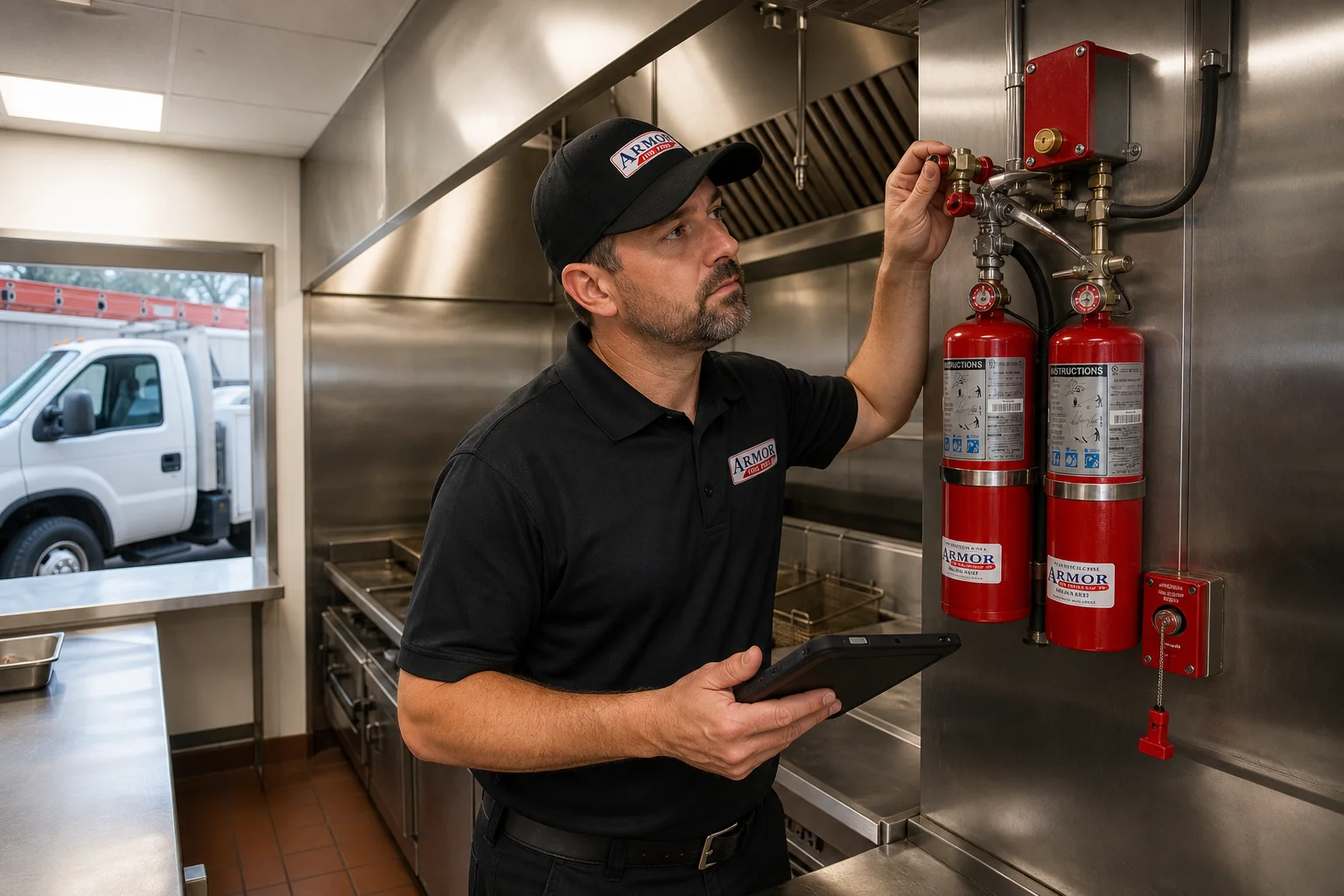
What a commercial hood suppression system costs in the Phoenix metro depends on hood count, chemical type, and how your kitchen is built, not a flat rate. A single-hood UL 300 wet chemical setup costs less than a multi-hood line with a walk-in fryer battery. Here is what actually drives your Kitchen Fire Suppression quote up or down.
By Armor Fire Pro Team, Fire Protection Specialists
Every quote for a kitchen hood suppression system is built from the same handful of line items, whether you are outfitting a single food truck window or protecting a five-hood line against grease fires in a strip-mall restaurant. Equipment costs cover the cylinders, nozzles, detection line, manual pull station, and the fusible links or heat sensors that trigger discharge. Engineering and design costs cover the drawings a licensed fire protection engineer produces to match your exact hood, exhaust duct, and cooking equipment layout, since no two kitchens route ductwork the same way. Labor covers mounting the tank, running the mechanical gas shutoff to the cooking line, and tying the system into your building's fire alarm panel. Permit and plan review fees are set by the jurisdiction, not by us. Pricing each piece on its own, instead of asking for one flat number, is what actually explains why hood count, chemical agent, and building age move the total more than anything else stays fixed.
What Factors Drive the Price of a Hood Suppression System Installation Up or Down
A handful of variables move hood suppression system pricing more than anything else. Hood and nozzle count matter most, since each hood needs its own set of nozzles sized to the cooking equipment underneath it, a charbroiler needs different nozzle placement than a standard fryer battery. Duct length and configuration matter too: a straight exhaust duct run to the roof costs less to protect than duct that snakes through a false ceiling or a shared chase. The chemical agent you need, almost always wet chemical for standard cooking equipment and occasionally a dry chemical or specialty agent for solid fuel cooking, changes both the equipment and the ongoing service plan. Building age plays a role too, since older construction often means asbestos testing, structural bracing, or electrical upgrades before the system can go in. Whether the job is new construction or a retrofit also changes labor scheduling and access costs, covered next.
How Much Does a UL 300 Wet Chemical System Cost Per Hood in Phoenix
Nearly every commercial kitchen suppression system installed in the Phoenix metro today is UL 300 wet chemical, the standard built for the higher grease-fire temperatures modern high-efficiency fryers produce. Ansul is the brand most Valley kitchens already have, and per-hood pricing scales with nozzle count and appliance type rather than hood count alone, since a hood covering a fryer, a griddle, and a charbroiler needs more nozzles than a hood over a single fryer battery. For standard cooking equipment, wet chemical versus dry chemical suppression is rarely a real choice: wet chemical is what UL 300 and most Arizona fire codes require, so the number that actually moves is agent volume, cylinder size, and nozzle count per hood, not the type of chemical itself.
New Restaurant Build vs. Retrofit Installation Cost
Installing a hood suppression system during new construction almost always costs less than adding one after the hood, duct, and finished ceilings are already in place. On a new build, the fire protection contractor coordinates directly with the mechanical contractor before drywall goes up, so cylinder mounting, detection line runs, and the gas shutoff tie-in happen while everything is still open and accessible. A retrofit into a kitchen that is already installed and already cooking is a different job: it usually means cutting into finished ceilings, rerouting conduit around existing duct, and scheduling labor after close so the kitchen does not lose a service day. That access difference, not the equipment itself, is what makes retrofitting more expensive than building suppression in from day one.
Does Phoenix Fire Code or Insurance Requirements Change the Price
Yes, in two separate ways. Phoenix, Scottsdale, Tempe, and Mesa all adopt NFPA 96 and NFPA 17A through the International Fire Code, and the local authority having jurisdiction reviews your plans before permitting installation, which adds a plan review fee and can add engineering revisions if your first submittal is not fully compliant. Insurance carriers layer a second set of requirements on top: many require a monitored connection to a central station so a discharge signals immediately, and some require more frequent inspection than code alone calls for on higher-risk cooking lines like solid fuel cooking. Ask your carrier directly what they require before you request quotes, since a system that is compliant with fire code but not with your policy can still leave you out of compliance at renewal.
Ongoing Inspection, Monitoring, and Maintenance Costs After Installation
A kitchen hood suppression system is not a one-time purchase. NFPA 96 requires semi-annual inspections, twice a year, performed by a certified technician who tests the detection line, checks cylinder pressure, inspects nozzles for grease blockage, and confirms the manual pull station and gas shutoff still function. Monitoring is usually the smaller line: signal reporting typically rides on the same central station account already watching your Fire Alarms & Lights system, so adding hood suppression signal reporting rarely means a second monthly bill, just an added device on an existing 24/7 monitored line. Certification and annual inspection requirements also cover the hood and duct cleaning your insurance and fire marshal expect between suppression service visits, since a grease-caked duct undermines the suppression system even when the cylinders themselves are fully charged. How much this costs per month depends mainly on how many systems you are servicing on one visit and whether you bundle suppression, alarm, and extinguisher service into a single technician trip, usually cheaper than three separate vendors on three separate schedules.
What It Costs to Recharge a System After It Discharges
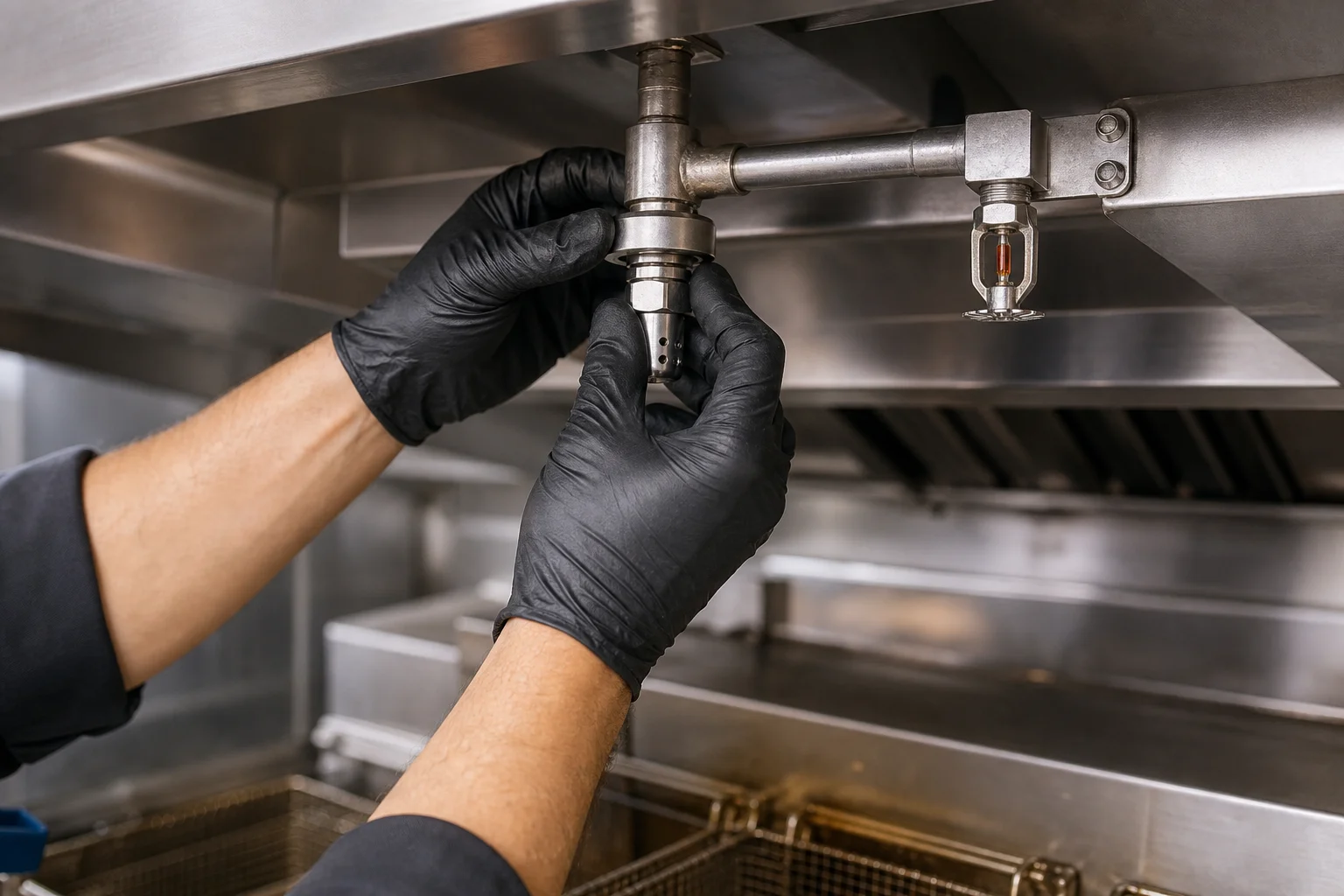
When a hood suppression system discharges, whether from an actual fire or an accidental trip, it has to be fully recharged before the kitchen can legally cook again. Recharge covers refilling or replacing the wet chemical agent cylinders, replacing any fusible links or heat detectors that triggered, resetting the mechanical gas valve, and pressure-testing the system before recertification. Because a discharge also coats the hood, filters, and upper duct in wet chemical agent, most kitchens need a hood and duct cleaning immediately afterward, and some jurisdictions will not sign off on reopening until both are done. Ask whether your service provider treats recharge as part of a maintenance plan or bills it separately after a discharge, since that answer changes what an emergency actually costs you.
Permits for Hood Suppression Installation in Phoenix
Yes. Every city in the Phoenix metro requires a permit for kitchen hood suppression installation, pulled either by the installing fire protection contractor or the general contractor on a new build. The local fire department or building department reviews stamped engineering drawings before work starts, confirms the system meets NFPA 96 and the adopted fire code, and schedules a final inspection before you can operate. Permit timelines vary by city and by how complete your first submittal is, and a kitchen that changes its cooking equipment after the drawings are approved usually triggers a plan revision, which adds both time and cost. Locking equipment specs before your contractor submits for permit is the single biggest thing you can do to keep kitchen hood suppression installation in Phoenix on schedule.
Frequently Asked Questions
What is the average cost of a fire suppression system for a restaurant kitchen?
What a commercial hood suppression system costs in the Phoenix metro varies too much for one average number to mean much, because the total depends on hood count, nozzle count, chemical agent, duct configuration, and whether the job is new construction or a retrofit. Two kitchens with the same square footage can land on very different totals if one has a single fryer hood and the other has a five-hood line with a charbroiler and a solid fuel cooker. A site walk-through is the only way to price it accurately.
How often does a commercial hood suppression system need to be serviced or inspected?
NFPA 96 requires semi-annual service, twice a year, for most commercial kitchens, performed by a certified fire protection technician. Kitchens with heavier grease loads, like solid fuel cooking or 24/7 operations, sometimes need more frequent hood and duct cleaning between suppression service visits even though the suppression inspection itself stays on the standard twice-yearly schedule.
Do I need a permit to install a hood suppression system in Phoenix?
Yes. Every jurisdiction in the Phoenix metro requires a permit and a plan review before installation, and a final inspection before the system is approved for use. Your fire protection contractor typically pulls the permit and coordinates the inspection as part of the installation project.
What information does a contractor need to give me an accurate quote?
Bring your hood and duct layout, the make and model of your cooking equipment, hood count and length, whether the job is new construction or a retrofit, and any insurance requirements around monitoring or inspection frequency. The more of that you can hand over up front, the fewer site visits it takes to get a firm number.
Get a Straight Answer About Your Hood Suppression Quote
Every kitchen's suppression system prices out differently once hood count, chemical agent, and access are factored in, and the fastest way to get an accurate number is a site walk-through instead of a phone estimate. Get in touch for a Free Quote and we will price your kitchen hood suppression system line by line.

