

Fire protection system testing is the annual process of inspecting, testing, and certifying the sprinklers, alarms, and suppression equipment that protect your Phoenix commercial property. Skipping it risks code violations, insurance denials, and system failure during a real fire. Our Fire Sprinklers team handles the full inspection and certification process for Valley businesses.
By Armor Fire Pro Team, Fire Protection Specialists
How Often Fire Protection System Testing Is Required in Arizona
Arizona commercial properties must complete fire protection system testing on a schedule set by NFPA 25 and the local fire code, not on a schedule of convenience. Fire sprinkler systems need monthly gauge checks, quarterly inspections of specific components, and a full annual inspection covering every valve, head, and control assembly. Fire alarm panels follow a similar cadence, with monthly, semi-annual, and annual test intervals depending on the device type. Property owners who skip testing fire protection systems on schedule risk citations from the fire marshal, denied insurance claims after a loss, and equipment that fails exactly when it matters most. The National Fire Protection Association sets the baseline standard, but Phoenix area jurisdictions layer on their own inspection requirements, so a calendar built around NFPA 25 alone can still miss a local deadline.
What NFPA 25 Actually Requires
NFPA 25 is the governing standard for inspection, testing, and maintenance of water based fire protection systems, and it breaks requirements down by component rather than by building. Sprinkler systems require monthly visual checks of gauges and control valves, quarterly tests of waterflow alarms, and annual internal inspections of piping. Fire pumps get a weekly churn test and an annual flow test measuring pressure and output against the original performance curve. Standpipes, backflow preventers, and fire department connections each carry their own pipe testing and pressure testing intervals too, and any pipe run showing signs of corrosion or damage gets flagged for repair before it causes a bigger problem under normal operating conditions. These intervals come straight out of NFPA 25 and the layered Arizona fire code, and checking your building against the full code requirements is the fastest way to catch anything this summary misses. Getting these intervals wrong is one of the most common compliance gaps we find during inspection testing, and it is an easy one to fix once a proper schedule is in place.
What Happens During an Annual Inspection
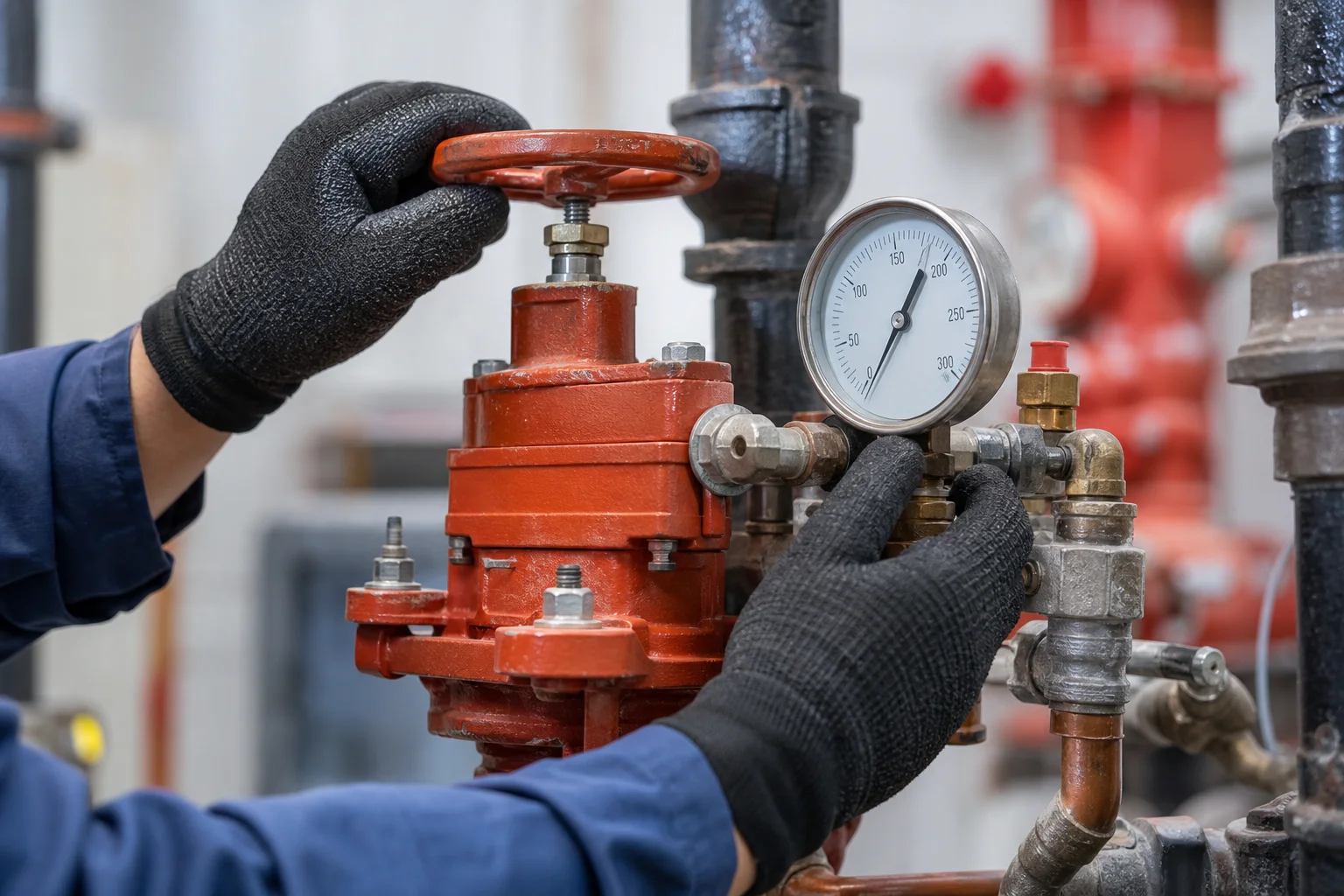
A proper annual inspection starts with a full walk of the building to visually confirm every sprinkler head, pull station, and alarm device is unobstructed and undamaged. Technicians then move into hands on testing: sprinkler control valves are exercised, waterflow switches are tripped to confirm the alarm signal reaches the panel and the monitoring company, and fire pumps are run under load to verify pressure and flow meet the original design. Fire alarm testing includes every initiating device, notification appliance, and the panel's backup battery and phone line connections. Our Fire Alarms & Lights crews document every device tested, every deficiency found, and every corrective action taken, because that paper trail is what an authority having jurisdiction will ask for during a compliance review. Detection and monitoring hardware works best as one integrated system rather than a stack of separate devices added over time, the same approach behind our Phoenix fire alarm systems work.
Common Problems Found During Testing
The same handful of issues show up on inspection reports across almost every property type. Corroded or painted over sprinkler heads that will not activate properly. Fire pump pressure readings that have drifted below the original acceptance test numbers, often from a worn impeller or a failing pressure switch. Alarm panels throwing trouble signals from a dead backup battery or a break in a notification circuit. Backflow preventers that have started to weep or will not hold pressure during testing. None of these are dramatic on their own, but any one of them can mean a sprinkler system that does not deliver water fast enough, or an alarm that does not reach the monitoring station, when it matters. Buildings running older systems installed before current code often show more of these issues, and at some point patching individual deficiencies stops making sense next to a full replacement. When a system reaches that point, replacement typically starts with a design review comparing the existing layout against current code, followed by phased installation work so portions of the building stay protected while the rest is upgraded.
Certification, Documentation, and Staying Compliant
Every fire protection system testing visit should end with a signed inspection report, a list of any deficiencies, and a clear timeline for correcting them, not just a sticker on the panel. Arizona fire marshals and insurance underwriters both rely on these records to confirm a building is meeting code, and a missing or incomplete report can hold up everything from a certificate of occupancy to a renewed policy. Keep at least the last three years of inspection, testing, and repair records on site or with your fire protection provider, since that history is often the first thing an inspector or adjuster asks to see. Buildings that combine sprinkler, alarm, and suppression systems under one testing and documentation plan tend to stay compliant with far less effort. A single calendar covering every system, one point of contact for deficiencies, and one set of records to hand an inspector or adjuster beats juggling three separate files and three separate vendors.
Frequently Asked Questions
How often does fire protection system testing need to happen?
Fire sprinkler systems need monthly, quarterly, and annual testing depending on the component, while fire alarm systems follow monthly, semi-annual, and annual intervals set by NFPA 25. Fire pumps require a weekly churn test and an annual flow test. A licensed inspector can build a single calendar that covers every requirement for your building.
What happens if I skip an annual inspection?
Skipping testing fire protection systems on schedule can result in fire marshal citations, a voided insurance claim after a loss, and equipment that fails during an actual emergency. Most commercial leases and insurance policies also require proof of current inspection and testing, so a lapse can affect financing, occupancy, and coverage as well.
Who can perform fire alarm and sprinkler certification?
Certification must be performed by a licensed, qualified fire protection contractor familiar with NFPA 25 and the local fire code, not general maintenance staff. The technician signs and dates the inspection report, which becomes the official record fire marshals and insurance underwriters rely on to confirm your building is compliant.
What is included in a fire pump annual test?
An annual fire pump test measures flow and pressure output against the pump's original performance curve, confirming the pump still delivers the water needed to fight a fire. Technicians also inspect the driver, controller, and alarm connections tied to the pump, since a pump that runs but does not alarm properly still leaves a building at risk.
What does backflow testing have to do with fire protection?
Backflow preventers on fire sprinkler lines stop contaminated water from siphoning back into the public water supply, and most Arizona jurisdictions require annual backflow testing alongside standard sprinkler and alarm inspections as part of the same compliance visit.
Schedule Your Fire Protection System Testing Today
Overdue inspections and undocumented repairs are the fastest way to fail a fire marshal walkthrough or lose a claim after a loss. Contact our professional team for fire protection services covering pump testing, sprinkler solutions, and full system operation checks built around your building's real world conditions. Get your fire protection system testing and certification scheduled with a Free Quote before your next renewal.

