
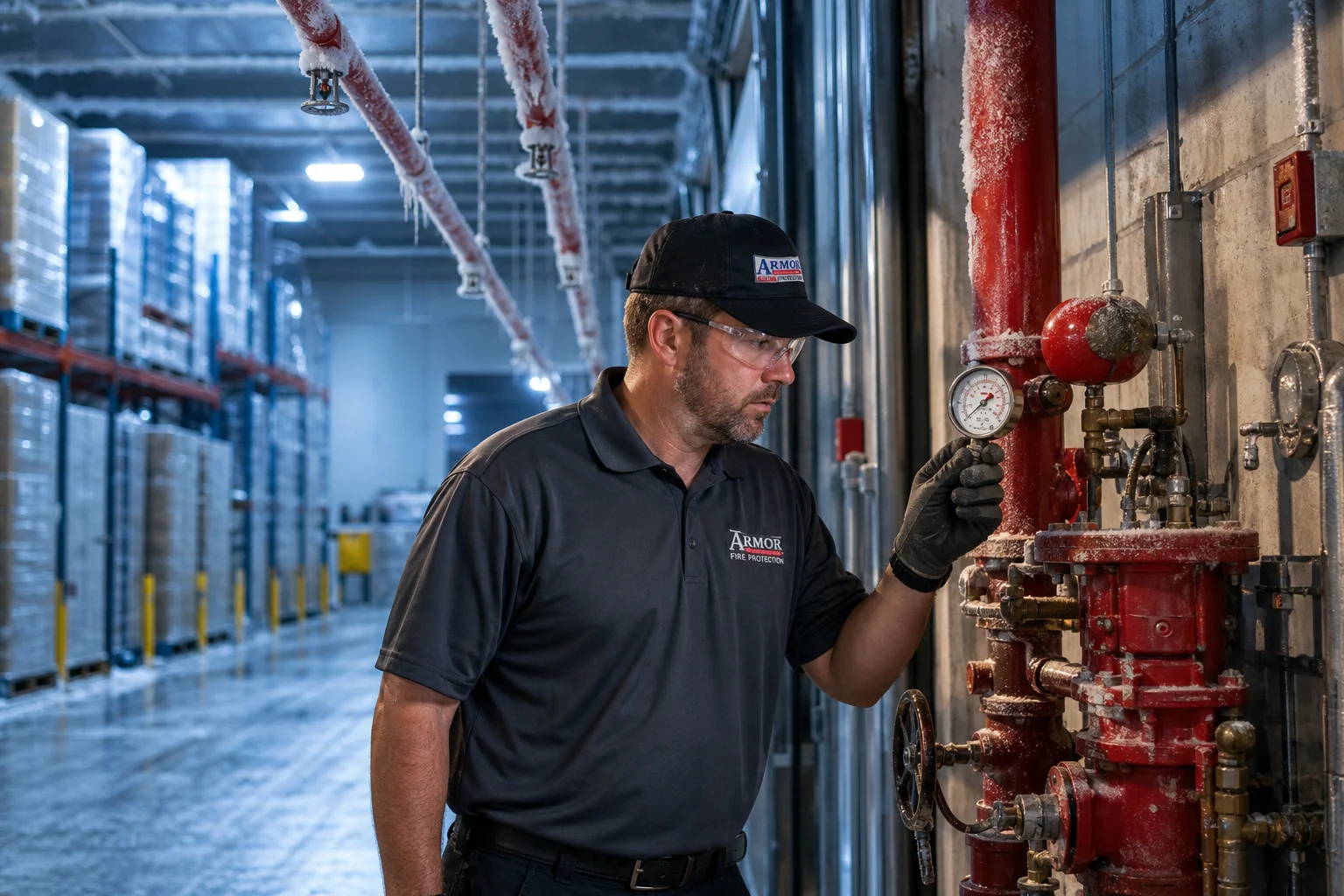
Dry fire sprinkler systems protect cold storage facilities, unheated warehouses, and parking structures where standing water would freeze and burst pipes long before a fire ever started. By holding back water with pressurized air until heat triggers activation, these systems deliver dependable Fire Sprinklers coverage in freezing environments across the Phoenix area.
By Armor Fire Pro Team, Fire Protection Specialists
Why Dry Fire Sprinkler Systems Matter for Freeze-Prone Buildings
A standard wet pipe sprinkler system keeps water sitting inside the pipes at all times, ready to discharge the instant a sprinkler head activates. That design works fine in heated office space, but it fails in cold storage. Water left in a pipe network at sub-freezing temperatures expands, cracks fittings, and can rupture an entire branch line before a fire ever gets detected. Dry fire sprinkler systems solve that problem by removing standing water from the equation entirely.
Building owners who operate freezers, refrigerated warehouses, unheated loading docks, or exposed parking garages need a sprinkler system engineered for those conditions. Arizona's climate rarely produces freeze events outdoors, but commercial refrigeration units and cold storage rooms create the same risk indoors year round. A dry sprinkler system is the code compliant answer, and it remains one of the most reliable forms of fire protection available for these spaces.
The Mechanics Behind Pressurized Air and Water Flow Delivery
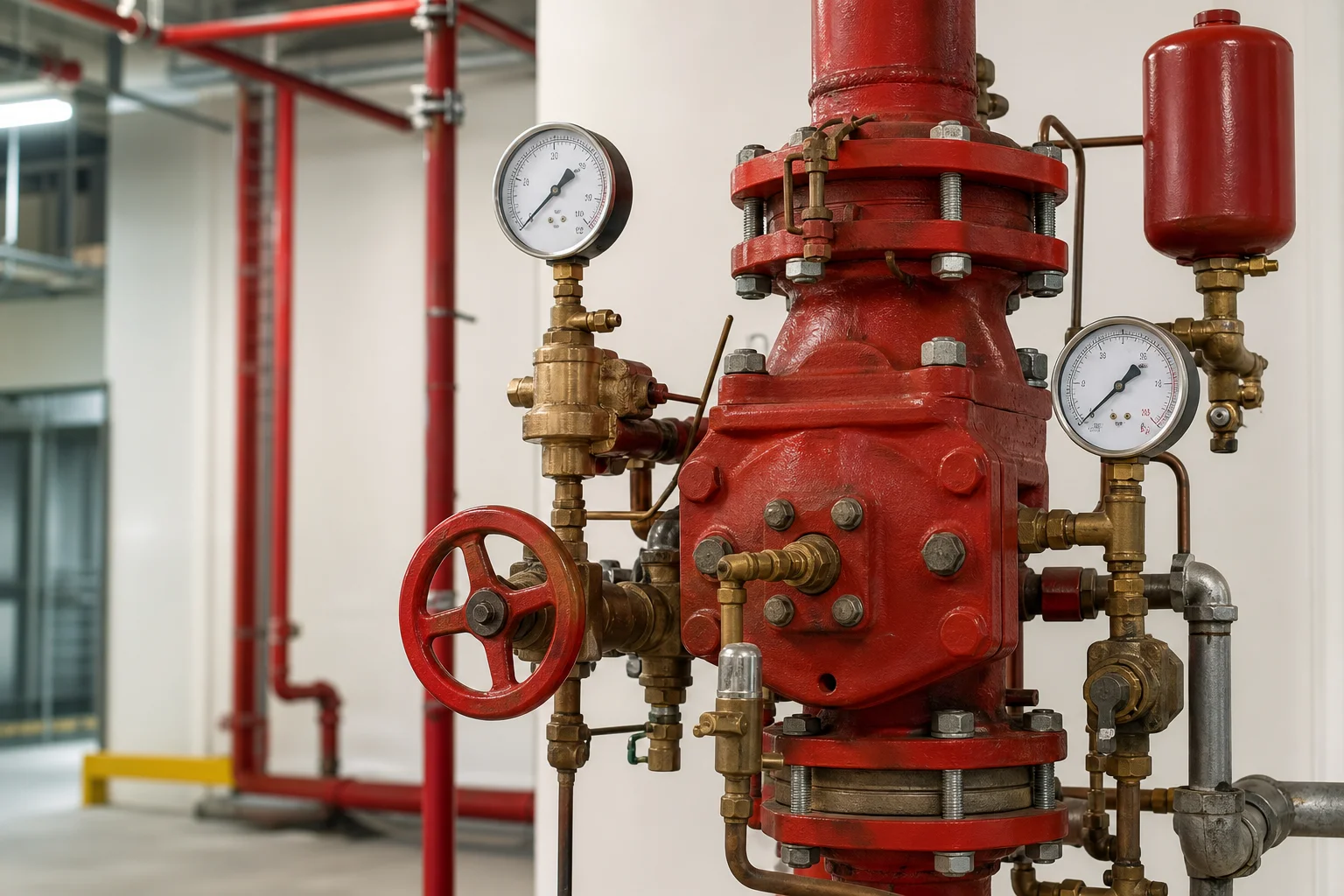
Instead of water, a dry pipe system fills its pipe network with pressurized air nitrogen that holds a dry pipe valve closed at the system riser. Water sits behind that valve, staged and ready, but it never enters the overhead piping until the system actually needs to discharge.
When heat from a fire opens a sprinkler head, the pressurized air escapes through that open head and pressure inside the pipe drops. Once pressure falls below the threshold the dry pipe valve is calibrated to hold, the valve trips open and water flow begins moving through the pipes toward the open head. This sequence adds a short delay compared to a wet system, but it is the tradeoff that keeps a dry sprinkler system from freezing solid in cold areas.
Many contractors now fill the pipe network with nitrogen instead of ordinary compressed air. Air nitrogen reduces the oxygen available inside the pipe, which slows internal corrosion and extends the service life of both the piping and the dry pipe valve itself.
Where Freeze-Protected Sprinkler Systems Are Required
Cold storage warehouses, refrigerated distribution centers, unheated attics, parking structures, and loading docks are the areas where a dry sprinkler system is typically required rather than optional. The National Fire Protection Association addresses these installations directly in NFPA 13, the standard that governs sprinkler system design. Arizona layers its own construction requirements on top of that federal standard, and meeting them starts with understanding the fire code compliance requirements that apply before a project moves forward.
If you are unsure whether your building's cold storage areas already meet current code, our Services team can walk the site and confirm what's required. A full installation follows its own sequence from design through final inspection, and our sprinkler installation process covers what to expect at each stage for a commercial building.
Dry Pipe Valve Operation and Maintenance Considerations
A dry pipe valve is a mechanical device, and like any mechanical device it needs regular attention. NFPA 25 requires an annual full trip test to confirm the valve opens correctly and water reaches the system within the expected time. Air pressure inside the pipe network also needs routine monitoring, since a slow leak can drop pressure enough to cause an unintended trip or, worse, leave the system unable to hold air at all.
Building owners should also watch for corrosion inside older dry pipe systems that still run on compressed air rather than nitrogen. Trapped moisture in humid air is the main driver of internal pipe corrosion, which is why more fire protection contractors now recommend nitrogen generators for facilities that depend on long term reliability. Pairing this maintenance with routine checks on your building's fire alarm and detection equipment keeps detection and suppression working together instead of as separate systems.
Comparing Dry Sprinkler Systems to Wet Pipe Alternatives
Wet pipe sprinkler systems are simpler, less expensive to install, and respond faster because water is already in the pipe. For any heated commercial space, a wet system is usually the right call. But once temperatures in a building or storage area can drop to freezing, even briefly, a wet system becomes a liability rather than protection.
Dry sprinkler systems trade a small amount of response time for freeze resistance. That tradeoff is well worth it in cold storage, unheated warehouses, and any exposed structure where control over temperature isn't guaranteed. Some facilities also pair sprinkler protection with a broader safety plan that ties detection, suppression, and emergency response together instead of running them as separate systems. Smoke and heat detectors provide early warning to occupants and monitoring services, while the sprinkler system provides the active suppression once heat reaches a sprinkler head. Coordinating how these systems work together is worth raising with your fire protection contractor when a cold storage building is being designed or upgraded.
Frequently Asked Questions
What is the difference between a dry fire sprinkler system and a wet system?
A wet system keeps water in the pipes at all times, ready for immediate discharge. A dry fire sprinkler system holds pressurized air in the pipe network instead, with water staged behind a dry pipe valve. Water only enters the pipes after a sprinkler head activates and the valve trips open, which prevents freezing in cold areas.
Why do dry pipe systems use nitrogen instead of regular air?
Air nitrogen reduces the oxygen inside the pipe network, which slows the internal corrosion that ordinary compressed air can cause over time. Facilities that depend on long term reliability in cold storage or unheated buildings often see fewer pipe failures and valve issues after switching to a nitrogen supply.
How often does a dry pipe valve need to be tested?
NFPA 25 requires a full trip test of the dry pipe valve annually to confirm the valve operates correctly and water reaches the system within the required time. Air pressure should also be checked routinely between full trip tests to catch slow leaks before they cause a problem.
Where are dry sprinkler systems typically required?
Cold storage warehouses, refrigerated distribution space, unheated attics, parking garages, and loading docks are the most common areas where a dry sprinkler system is required. Any space where temperatures can drop to freezing, even occasionally, is a candidate for dry pipe protection under current fire code.
Is a dry fire sprinkler system slower to respond than a wet system?
Yes, slightly. Because the pipe network has to fill with water after the dry pipe valve trips, there is a brief delay compared to a wet system where water is already present. Proper design keeps that delay minimal, and the freeze protection it provides outweighs the small difference in response time.
Get a Free Quote for Your Cold Storage Fire Protection
Freeze damage takes a sprinkler system offline right when a building needs it most, and cold storage facilities can't afford that gap in protection. Request a Free Quote and Armor Fire Pro will design a dry pipe system built for your building's specific temperature risks.

