
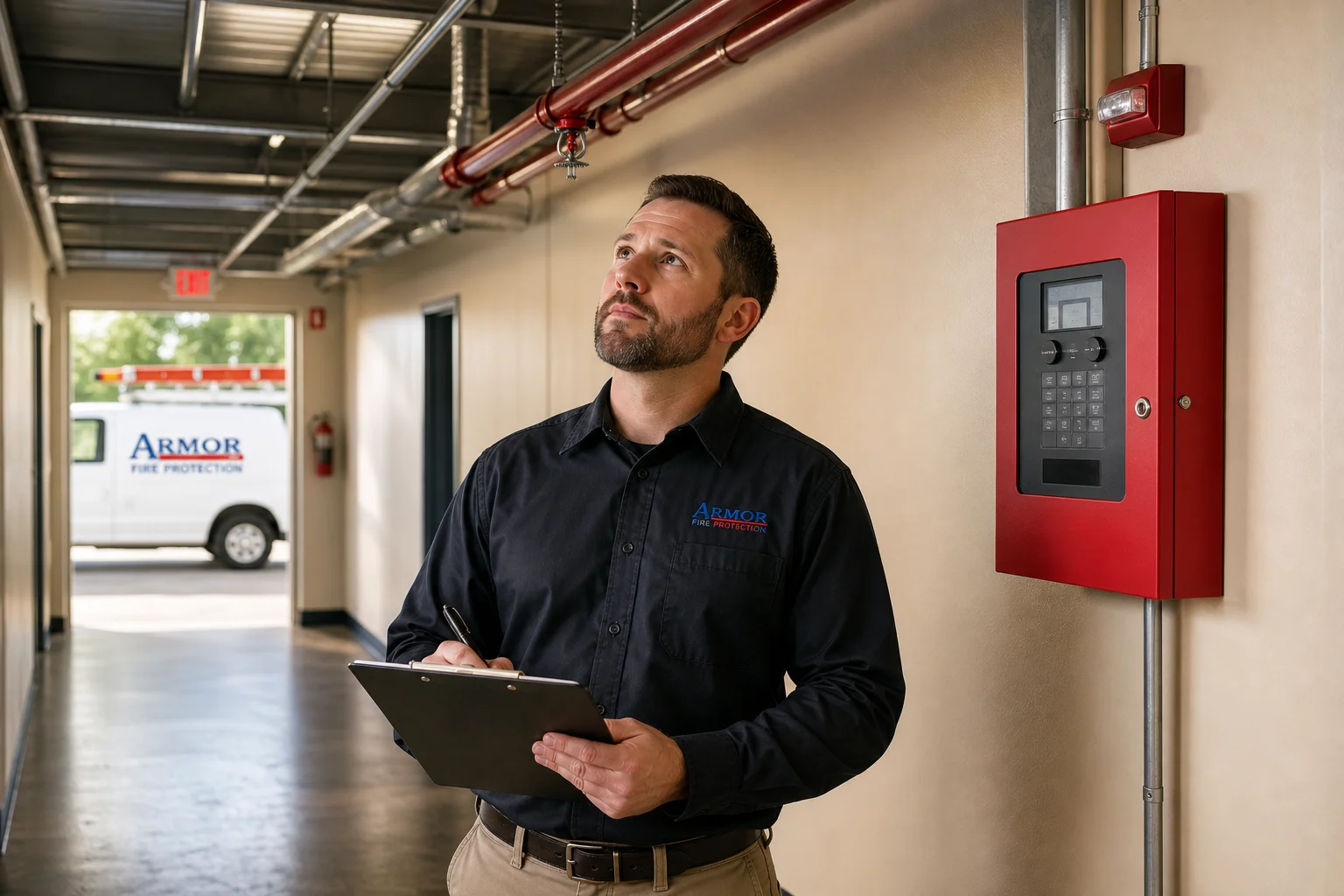
This nfpa compliance guide covers the fire protection standards and code requirements Arizona businesses must meet to protect occupants and pass inspection. From NFPA codes governing sprinkler systems to the life safety code for egress and exits, our Services address every compliance requirement your facility faces under current Arizona fire authority standards.
By Armor Fire Pro Team, Fire Protection Specialists
What Is NFPA and Why Arizona Facilities Must Follow It
An nfpa compliance guide for Arizona starts with understanding what the National Fire Protection Association is and what authority its published codes carry. Founded in 1896, NFPA publishes more than 300 codes covering fire alarm system design, fire code compliance, electrical maintenance, occupancy classifications, and suppression system requirements.
In Arizona, the state fire marshal and local authorities having jurisdiction (AHJ) adopt current NFPA editions as the baseline for local fire code enforcement. Phoenix, Scottsdale, Mesa, and most other Valley municipalities reference these standards directly. Facilities that fall out of compliance face failed inspections, permit delays, fines, and risk of forced closure. To view NFPA published code editions, visit the association's website, but confirming which edition applies to your occupancy requires checking directly with your local AHJ.
Key NFPA Codes Commercial Buildings Must Meet
Several standards appear consistently across commercial fire protection inspections in Arizona.
NFPA 1: Fire Code
NFPA 1 is the consolidated fire code covering hazard management, life safety requirements, and facility operations for most commercial occupancy types. It functions as an umbrella document that references dozens of other NFPA standards by chapter.
NFPA 13: Fire Sprinkler Standards
This standard governs automatic fire sprinkler system design and installation. Whether you are fitting out a new commercial space or updating an aging system, your Fire Sprinklers must comply with NFPA 13 specifications for pipe sizing, head placement, hydraulic calculations, and water supply.
NFPA 72: Fire Alarm and Signaling
NFPA 72 covers design, installation, testing, and documentation requirements for fire alarm systems. Annual inspection and testing under NFPA 72 is required for all commercial facilities. System types and testing timelines vary by facility, and our fire alarm systems phoenix page breaks both down in detail.
NFPA 10: Portable Fire Extinguishers
NFPA 10 sets the standard for extinguisher placement, rating, maintenance, and testing schedules. Monthly visual checks and annual servicing are required under this code for all commercial properties.
NFPA 96: Commercial Kitchen Exhaust Systems
Restaurants and food-service operations must comply with NFPA 96, which governs exhaust systems, cooking equipment clearances, grease management, and hood fire suppression.
Understanding the NFPA Life Safety Code (NFPA 101)
The NFPA Life Safety Code, formally NFPA 101, is the most widely adopted life safety standard in the United States. The nfpa life safety code defines how buildings must be designed, constructed, operated, and maintained to protect occupants during a fire or other emergency.
For Arizona facilities, the nfpa life safety code applies across occupancy types: restaurants, medical offices, warehouses, schools, and retail spaces all fall under its scope. Local AHJs determine which edition is in effect. Most Phoenix-area jurisdictions have adopted the 2021 edition.
Key requirements under nfpa life safety include:
- Unobstructed egress paths and compliant exit door hardware
- Functional exit signage and emergency lighting
- Fire separation barriers between distinct occupancy types
- Documented inspection records for all fire protection equipment
Automatic suppression systems, like sprinklers, work to control or extinguish a fire at its source. Life safety provisions exist separately from that, focused on getting occupants out safely whether or not suppression activates as designed. Codes generally require both systems to function independently, since evacuation should never depend on a sprinkler head firing correctly.
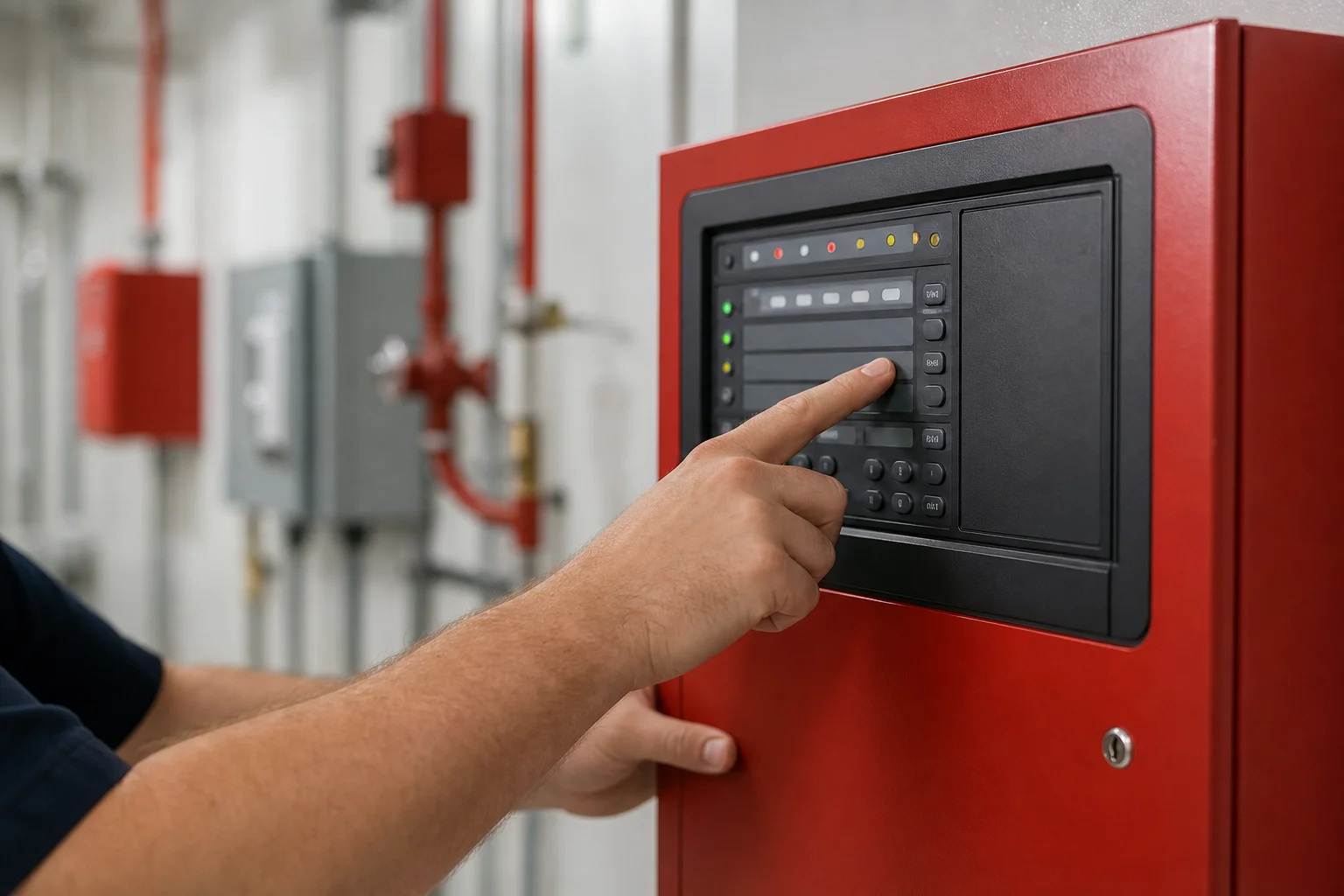
NFPA Compliance Guide: Inspection, Testing, and Documentation
A complete nfpa compliance guide must address schedules, because NFPA compliance is not a one-time certification. Codes establish defined testing and maintenance intervals, and missing a required service cycle is a safety code violation regardless of whether the equipment is functioning correctly.
Standard required intervals under NFPA include:
- Monthly: Visual inspection of fire extinguishers and emergency lighting
- Annually: Full fire alarm testing under NFPA 72, extinguisher maintenance under NFPA 10, and sprinkler inspection under NFPA 25
- Every 3 years: Fire pump testing per NFPA 25
- Every 5 years: Sprinkler head replacement in certain environments and internal pipe inspection
Documentation must accompany every inspection. Each service record requires the date, technician credentials, findings, and corrective actions. Facilities without current records are out of compliance on documentation alone, even if all equipment is functioning.
Electrical maintenance is also a compliance risk area. NFPA 70E governs electrical safety in the workplace. Facilities with deferred electrical maintenance increase the risk of arc flash events and equipment-caused fire ignition.
Certain commercial buildings in Phoenix and Scottsdale must also install ERCES (Emergency Responder Communication Enhancement Systems) to ensure emergency responders can communicate reliably inside the structure during an active incident. Confirm with your local AHJ whether ERCES requirements apply to your facility type and size.
Compliant sprinkler installation generally follows a defined sequence: hazard classification and hydraulic calculations, pipe and head layout built around that classification, rough-in with pressure testing, and a final acceptance test witnessed by the AHJ before the system goes into service. Skipping or poorly documenting any of those steps is a common reason systems fail inspection.
How Local Fire Authorities Apply NFPA in Arizona
Arizona does not operate under a single statewide fire code. Local fire authorities having jurisdiction adopt and sometimes amend NFPA standards independently, so requirements in Phoenix may differ from those in Chandler, Gilbert, or unincorporated Maricopa County.
To get updated requirements specific to your occupancy and location, contact your local fire marshal. They can confirm which edition of NFPA codes applies and whether any local amendments affect your compliance posture. Industry best practices point to working with a licensed fire protection contractor who maintains active relationships with local AHJs, which is the most reliable way to close compliance gaps between inspections.
For businesses in outlying fire districts, district-level compliance is equally important, and our Superstition Fire District coverage shows how fire code is applied outside city limits.
Frequently Asked Questions
What does the NFPA Life Safety Code require for existing buildings?
The NFPA Life Safety Code (NFPA 101) applies to both new construction and existing buildings. For existing facilities, it sets ongoing requirements for means of egress, emergency lighting, exit signage, and fire protection system maintenance. Renovations or changes in occupancy type can trigger additional requirements. Building owners should verify compliance status before any significant remodel or change in use.
How often must fire protection systems be inspected under NFPA codes?
Inspection frequency depends on the system type. Fire alarm systems require annual inspection and testing under NFPA 72. Sprinkler systems follow NFPA 25, with annual visual inspections and 5-year internal checks. Portable extinguishers require monthly visual checks and annual maintenance under NFPA 10. Your local AHJ may impose additional inspection schedules based on occupancy classification.
What is the difference between NFPA 1 and NFPA 101?
NFPA 1 is the Fire Code, covering hazard management, compliance inspection protocols, and operational fire safety requirements for commercial facilities. NFPA 101 is the Life Safety Code, focused on how building design, construction, and maintenance protect occupants during emergencies, including egress routes, exit lighting, and occupancy load limits. Most commercial buildings in Arizona must comply with both.
Does my building need an ERCES system?
ERCES requirements apply to buildings above a certain size or height where radio signal penetration for emergency responders falls below the required threshold. Many Arizona jurisdictions have adopted IFC Section 510 or local equivalents that mandate ERCES installation in qualifying structures. Your local AHJ will determine whether your facility meets the threshold and what installation standards apply.
What happens if my facility fails an NFPA compliance inspection?
A failed inspection results in a written notice of violation from the AHJ. Depending on severity, you may have 24 hours to 30 days to correct the deficiency and schedule a reinspection. Uncorrected violations can lead to fines, permit holds, or revocation of your certificate of occupancy. Addressing deficiencies promptly and maintaining current documentation reduces reinspection delays.
Get Your Arizona Facility Into Full NFPA Compliance
ArmorFirePro serves Phoenix-area businesses with licensed inspection, installation, and maintenance across all major NFPA disciplines. Get started with a Free Quote and let our certified team confirm your facility's current compliance status and identify any gaps before your next AHJ inspection.

