
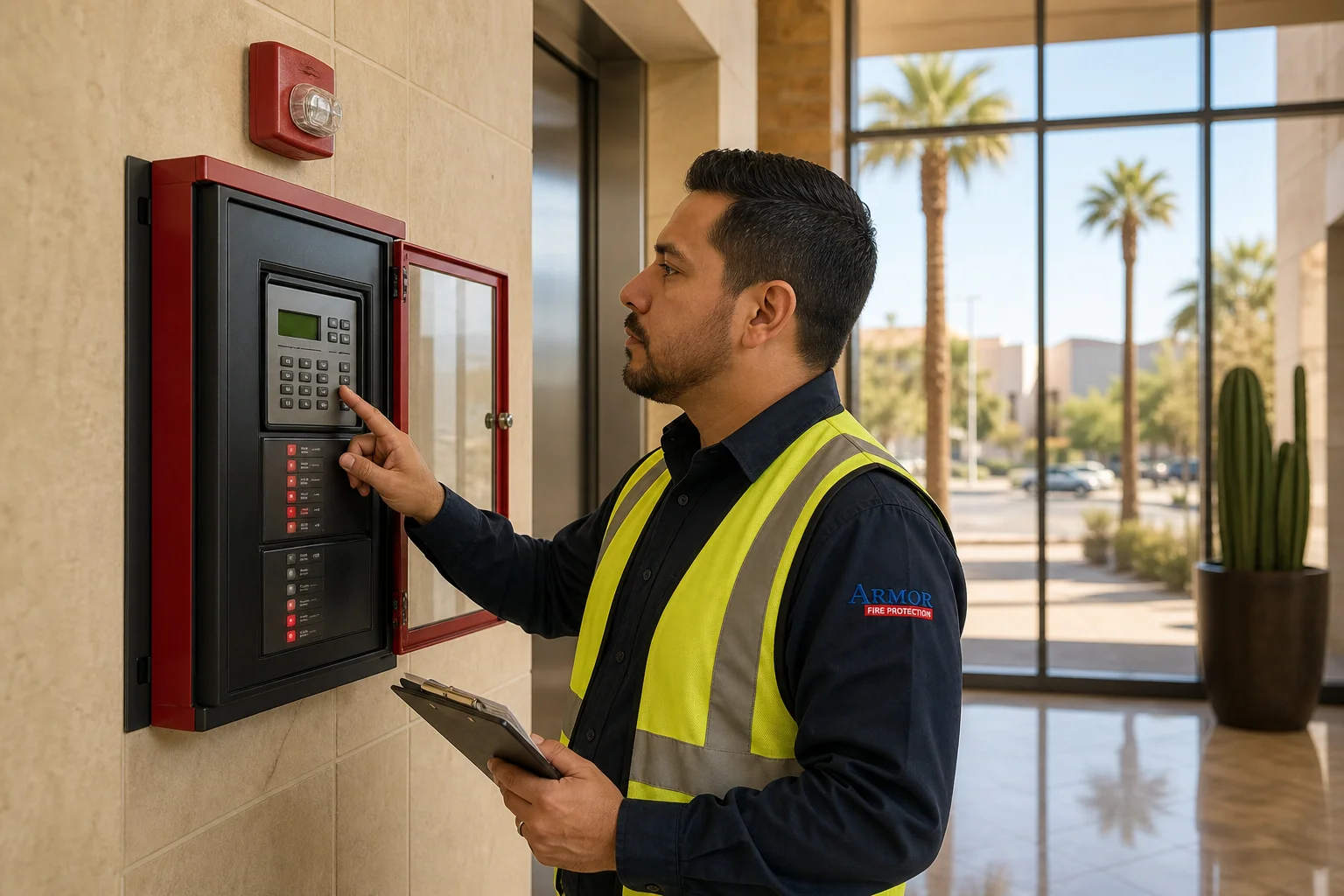
Fire alarm systems Phoenix businesses and property owners rely on must do more than sound a loud alarm. They detect smoke and heat, transmit signals to central monitoring stations, and integrate with building-wide life safety infrastructure. Choosing the right Fire Alarms & Lights system is the foundation of effective fire protection for any Phoenix-area commercial property.
By Armor Fire Pro Team, Fire Protection Specialists
How Commercial Fire Alarm Systems Work in Phoenix
Modern fire alarm systems operate through a network of detectors, control panels, and notification devices. When a smoke or heat detector triggers at a specific location within a building, it sends a signal to the central fire alarm control panel. The panel activates audible and visual alerts throughout the building and, in monitored installations, notifies a 24/7 central station that dispatches emergency services.
Code-compliant fire alarm systems in Phoenix must include:
- Smoke and heat detectors placed per NFPA 72 zone requirements
- Manual pull stations at required exits and stairwells
- Notification devices including horns and strobes for audible and visual coverage
- A listed fire alarm control panel with zone mapping capability
- Remote annunciators for first-responder reference during an emergency
All fire alarm systems installed in Arizona must comply with NFPA 72, the National Fire Alarm and Signaling Code. Local fire authorities in Phoenix also enforce the International Fire Code, which adds occupancy-specific requirements on top of NFPA minimums.
Detection Technologies That Protect Phoenix Buildings
Not all detection technology works the same way. The best fire alarm systems Phoenix commercial properties use combine multiple detection methods to cover different fire types and building environments.
Ionization and Photoelectric Smoke Detection
Ionization detectors respond quickly to fast-flaming fires. Photoelectric detectors are better suited to slow, smoldering fires that generate heavy smoke before open flame develops. The National Fire Protection Association's Fire Protection Research Foundation (2021) found that dual-sensor detectors combining both technologies provide the broadest detection coverage across fire types.
Heat Detection for Special Hazard Areas
In environments where smoke detectors would produce frequent false alarms, heat detectors provide reliable triggering without nuisance trips. Commercial kitchens, paint spray booths, and dusty manufacturing spaces are common examples. Special hazard systems in these environments require a custom engineering approach, and ArmorFirePro designs special hazard fire protection solutions based on the specific risks present in each facility.
Duct Smoke Detectors
Duct smoke detectors installed in HVAC systems prevent smoke from recirculating through a building's air handling network during a fire. These devices are required in most commercial occupancies under Arizona fire code, and improper installation is a common inspection failure point.
Monitoring and Emergency Response Integration
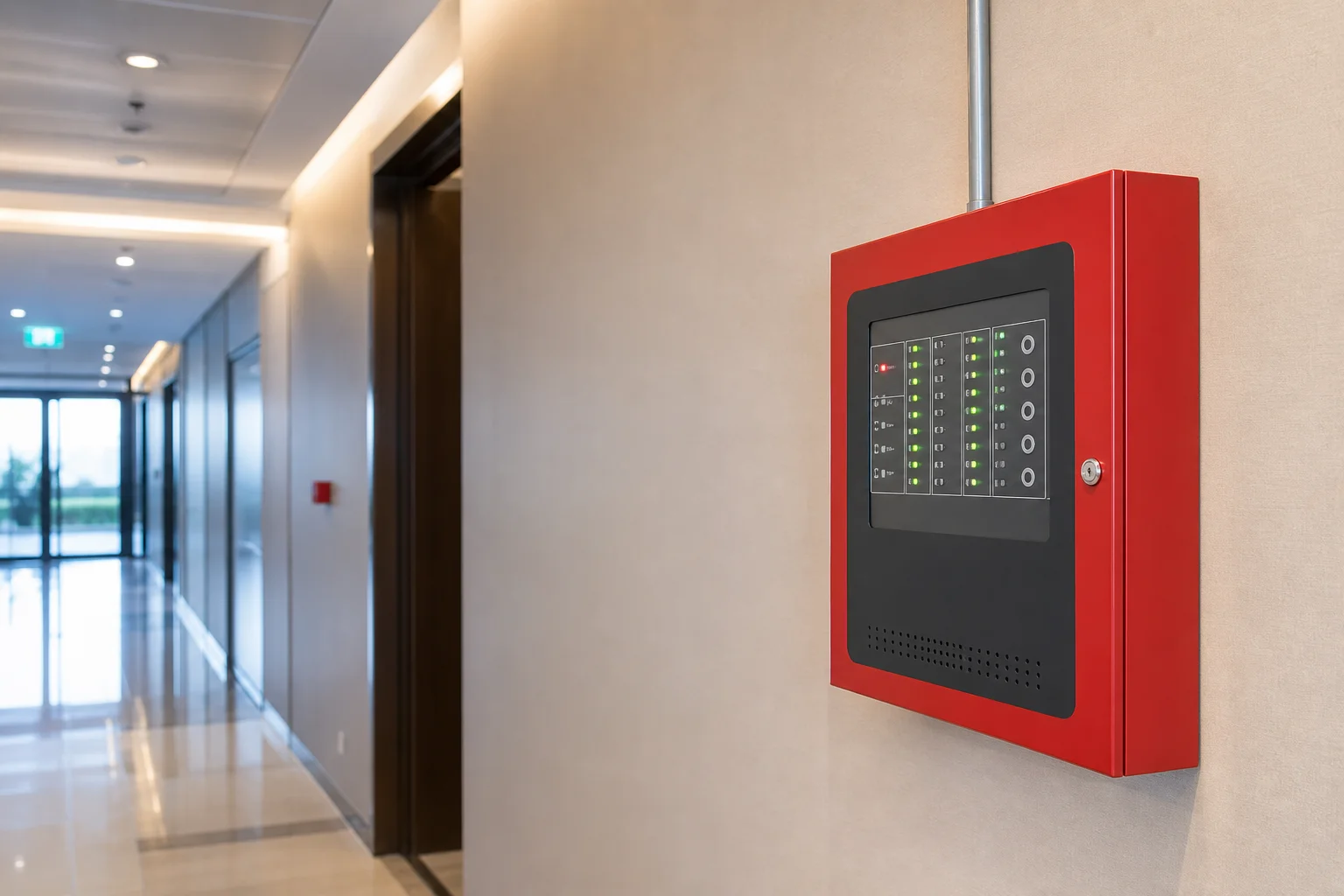
A fire alarm that sounds locally only is not enough for most Phoenix AZ commercial buildings. Central station monitoring connects your fire alarm systems to trained operators who verify alarms and dispatch emergency services around the clock. This is especially critical when a fire develops in an unoccupied building after business hours.
Professional monitoring integration provides:
- Direct communication with Phoenix Fire Department dispatch protocols
- Remote alarm verification to reduce unnecessary emergency responses
- Supervisory signals that alert monitoring staff to system faults before they become emergencies
Monitoring is a mandatory requirement for many commercial occupancy types under both NFPA 72 and local Phoenix codes. Never skip content about monitoring requirements when reviewing fire alarm proposals for your business. The difference between a basic phone dialer and a UL-listed central station monitoring service is the difference between a code-compliant installation and a serious liability risk.
Monitoring works best when it is planned as one layer of a complete life safety strategy rather than a stand-alone box to check. Coordinating monitoring with sprinklers, access control, and building evacuation planning from the start gives property owners a stronger, more reliable response when an actual emergency happens.
Access Control Integration with Fire Alarm Systems
In commercial buildings across Phoenix, fire alarm and access control systems are increasingly designed to work together. When a fire alarm activates, access control panels can release magnetic door locks automatically, ensuring all occupants can evacuate without delay. NFPA 101, the Life Safety Code, requires this coordination in many building types including schools, hospitals, and high-rise commercial buildings.
ArmorFirePro installs fire alarm, access control, and security systems that communicate reliably during an emergency. Our fire protection services include full system integration planning for properties where fire alarm, access control, and suppression components must operate as a coordinated life safety solution.
This kind of access control coordination is one piece of broader combined life safety planning that keeps evacuation routes clear and building security intact during an emergency.
Fire Sprinkler and Fire Alarm System Coordination
Most new commercial construction in Phoenix requires both fire alarm systems and a fire sprinkler system operating as a coordinated unit. When a fire sprinkler head activates, it triggers a waterflow switch that sends a signal to the fire alarm control panel. The panel activates building-wide evacuation alarms and simultaneously notifies the monitoring center to dispatch the fire department.
This coordination must be engineered and tested correctly. A waterflow alarm that fails to reach the control panel, or a panel that fails to transmit to the monitoring center, creates a dangerous gap in the emergency response chain.
ArmorFirePro installs Fire Sprinklers and coordinates waterflow detection with fire alarm panels as part of integrated installations, all permitted and inspected by the local authority having jurisdiction.
Getting sprinkler and alarm coordination right means treating the fire alarm, sprinkler, and monitoring components as one integrated fire protection system rather than separately engineered pieces.
Home security alarm systems, including Titan home security product lines, operate under different code standards than the commercial fire alarm systems Phoenix AZ commercial occupancies require. Professional commercial-grade systems must be installed by a licensed fire protection company using UL-listed equipment with verified central station monitoring.
Frequently Asked Questions
How often do fire alarm systems in Phoenix require inspection?
Under NFPA 72 and Arizona State Fire Marshal requirements, most commercial fire alarm systems must be inspected annually at minimum. Specific components, including smoke detectors and manual pull stations, require more frequent testing based on occupancy type. Failure to maintain documented inspection records can result in code violations and increased liability during insurance claims or fire marshal audits.
What is the difference between monitored and unmonitored fire alarm systems?
A monitored fire alarm connects to a central station that receives alarm signals 24 hours a day and dispatches emergency responders. An unmonitored system only triggers local audible and visual alarms. For most Phoenix commercial buildings, monitoring is required by code. Monitored systems reduce emergency response time significantly, limiting fire damage and protecting occupants.
Can fire alarm systems integrate with access control?
Yes. Fire alarm and access control systems can be integrated so that access-controlled doors release automatically during an alarm, enabling safe occupant evacuation. NFPA 101 mandates this integration in many commercial building types. ArmorFirePro designs these systems for reliable performance and full code compliance in Phoenix AZ commercial properties.
How long does commercial fire alarm installation take in Phoenix?
A small commercial space typically takes one to two business days. A multi-floor building with complex detection zones may take one to two weeks. ArmorFirePro provides upfront project timelines and coordinates permitting and final inspection with the local authority having jurisdiction.
What causes frequent false alarms in commercial fire alarm systems?
Common causes include dirty or aging detectors, improper detector placement, and HVAC airflow interference with duct smoke detectors. A licensed fire protection company should inspect and service the system promptly. ArmorFirePro provides inspection and service across the Phoenix area to diagnose and resolve chronic false alarm issues before they create alarm fatigue among building occupants.
Get Expert Fire Alarm Protection for Your Phoenix Property
ArmorFirePro designs, installs, and services the fire alarm systems Phoenix commercial and industrial properties depend on for life safety compliance and fast emergency response. Contact our team today and get a Free Quote for your building.

