
Published: April 10, 2026 | Last Updated: April 10, 2026
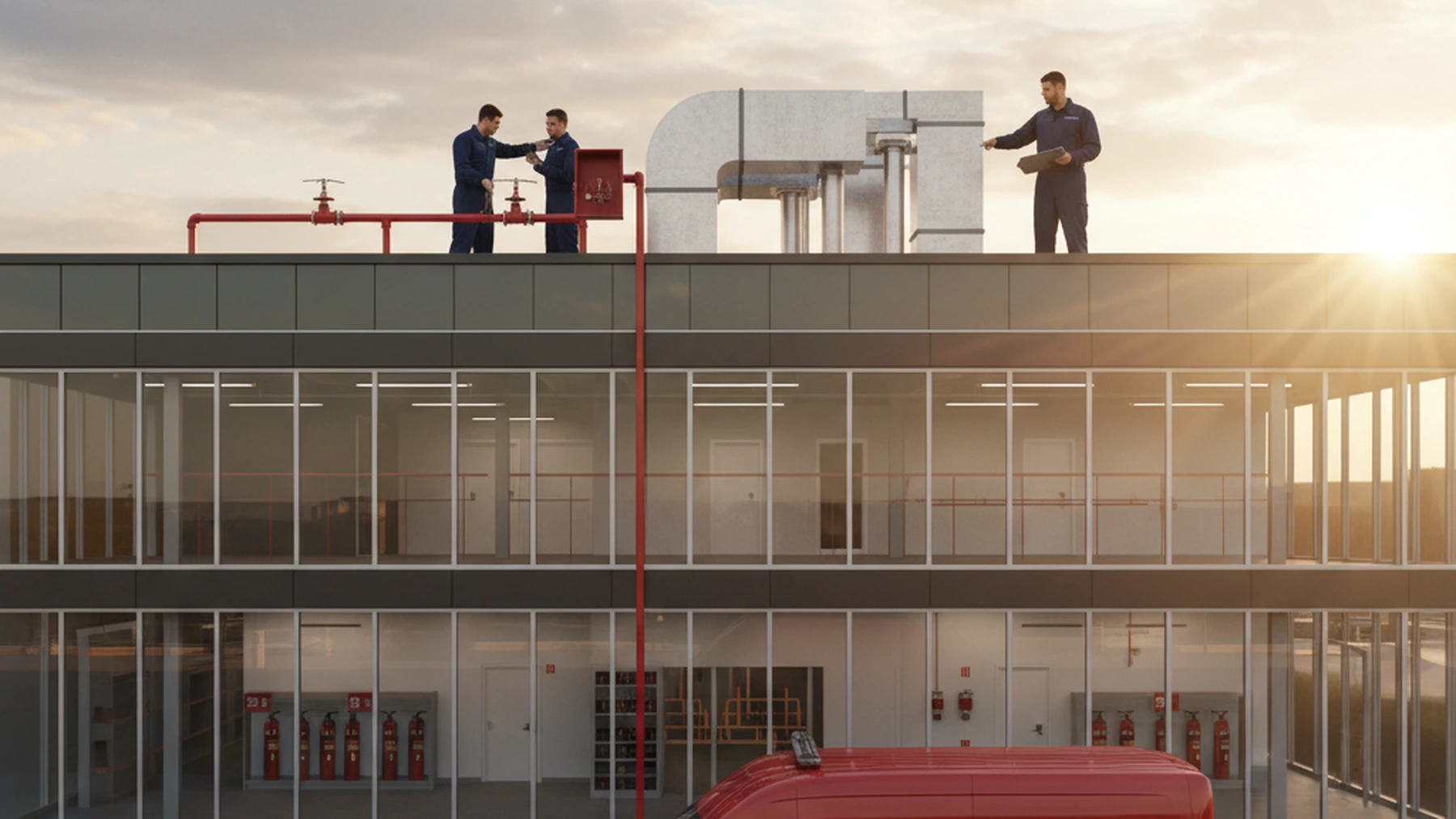
Yes, you can absolutely have both fire protection and life safety protection working together in the same building, and for most commercial properties, you should. A fully integrated approach combines active fire suppression, passive fire resistance, alarm systems, and life safety equipment into one coordinated strategy that reduces damage, protects occupants, and meets code requirements.
What Is the Difference Between Fire Protection and Life Safety Protection
Fire protection and life safety protection are related but distinct disciplines. Understanding how they work together is the first step toward building a complete safety plan.
Fire protection focuses on detecting, suppressing, and containing fires. It includes systems like fire sprinklers, fire extinguishers, kitchen fire suppression systems, and backflow testing that supports water supply integrity. The goal is to limit fire spread and reduce property damage.
Life safety protection is broader. It encompasses everything designed to protect building occupants during an emergency, not just fires. This includes emergency lighting, exit signs, egress routes, and alarm systems that alert and guide people to safety.
The two disciplines overlap significantly. A fire alarm system is both a fire protection tool and a life safety tool. Emergency lighting serves life safety but activates in fire scenarios. The most secure buildings treat these not as separate systems, but as one integrated protection strategy.
Active vs. Passive Fire Protection: Both Matter
A complete fire protection approach uses two categories of systems, and both must be in place for maximum effectiveness.
Active Fire Protection Systems
Active systems respond when a fire occurs. They detect, alert, and suppress. Examples include:
- Fire sprinkler systems that activate automatically when heat is detected, suppressing fires before they spread
- Fire alarm systems with smoke and heat detectors that trigger audible and visual alerts
- Kitchen fire suppression systems that discharge suppression agents directly over commercial cooking equipment
- Portable fire extinguishers positioned throughout the building for immediate response
Active systems are your first line of response. They work in real time to stop fires from spreading and give occupants time to evacuate safely.
Passive Fire Protection Systems
Passive systems do not activate or move. They are built into the structure itself and work continuously, without any trigger. Examples include:
- Fire-rated walls, floors, and ceilings that slow the spread of fire between building sections
- Fire doors that compartmentalize areas and protect egress routes
- Firestopping materials in penetrations around pipes, conduits, and cables
Passive protection buys time. It holds fires in one area long enough for active systems and emergency responders to do their jobs. A building with strong passive protection reduces damage even when active systems are delayed.
Together, active and passive fire protection create a layered defense that is far more effective than either approach alone.
Life Safety Systems That Work Alongside Fire Protection
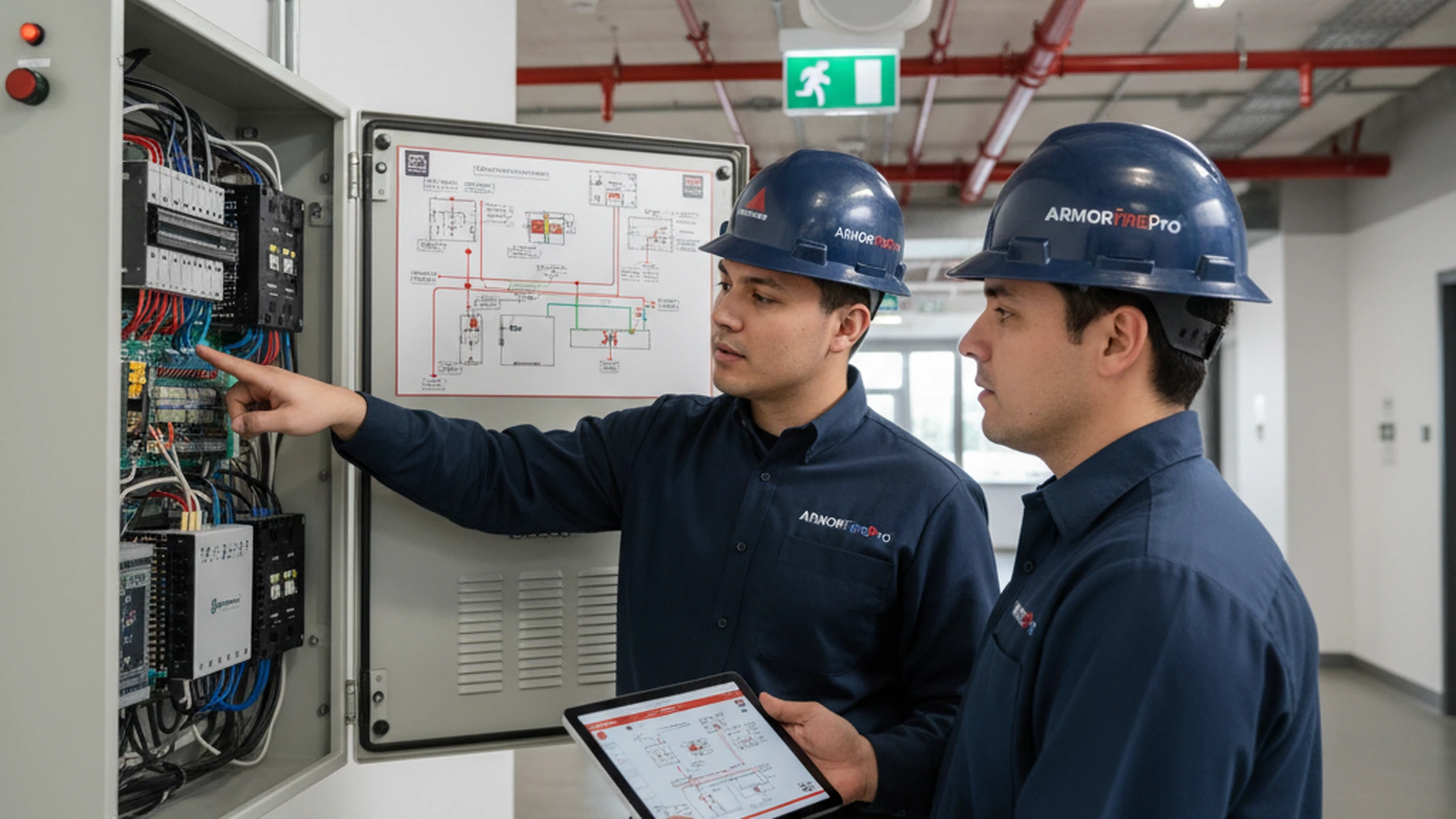
Life safety systems are specifically designed to get people out safely when fires or other emergencies occur. For Phoenix-area commercial buildings, these systems are not optional. They are required by code and subject to regular inspection.
Fire Alarms and Emergency Lighting
Fire alarms and emergency lighting systems are the communication layer of your life safety plan. Alarms notify occupants immediately when sensors detect smoke or heat. Emergency lighting ensures that power failures during a fire do not leave occupants navigating dark corridors.
Both systems must be tested and maintained on a set schedule to remain compliant and functional. A system that has not been tested is not a system you can rely on during an actual emergency.
Exit Signage and Egress Planning
Clear, illuminated exit signage is a life safety requirement under NFPA codes and local Phoenix building ordinances. Every exit route must be marked, unobstructed, and accessible. This means regular inspections to confirm that exits have not been blocked by equipment, stored materials, or construction activity.
Fire Extinguishers as a First-Response Tool
Fire extinguishers and accessories give trained occupants the ability to suppress small fires before they escalate. The right extinguisher type matters. Class K extinguishers are required in commercial kitchens. Class ABC units cover the most common fire types in office and retail environments.
Extinguishers must be inspected annually and recharged or replaced after use. Placing them incorrectly or failing to maintain them eliminates their value entirely.
Why Combined Systems Outperform Single-Layer Approaches
The practice of combining fire protection and life safety systems into one coordinated strategy is not just a best practice. It is how modern fire codes are written.
Consider what happens when systems work together during an actual fire event:
- A smoke detector triggers the fire alarm, alerting occupants and notifying the monitoring center
- The fire sprinkler system activates and begins suppressing the fire at the source
- Emergency lighting activates as power is disrupted, keeping egress routes visible
- Fire doors close automatically, compartmentalizing the fire and slowing its spread
- Occupants follow lit exit routes to safety, guided by visible signage
- First responders arrive with a clear situation report from the monitoring system
Each system in this chain supports the next. Remove any one of them, and the chain breaks. A building with sprinklers but no emergency lighting may have occupants trapped in darkness. A building with alarms but no sprinklers may give people time to evacuate but not time to protect property and structure. Protection company professionals design these systems to work together, not in isolation.
What Phoenix-Area Buildings Need Under Code
Commercial buildings in Phoenix and surrounding areas including Tempe, Gilbert, Mesa, Chandler, and Scottsdale are subject to the International Fire Code (IFC), NFPA 13 for sprinkler systems, NFPA 72 for fire alarm systems, and local amendments adopted by Arizona jurisdictions.
Requirements vary by occupancy type, building size, and construction age. Key code-driven requirements typically include:
- Automatic fire sprinkler systems in buildings over a set square footage or stories
- Monitored fire alarm systems in commercial occupancies
- Emergency and exit lighting tested every 30 days (functional test) and annually (90-minute drain test)
- Annual fire extinguisher inspections
- Regular backflow testing to protect the water supply feeding sprinkler systems
Backflow prevention is one area that gets overlooked. Backflow testing ensures that the water supply feeding your sprinkler system remains uncontaminated and at proper pressure. Most municipalities require annual testing with documentation submitted to the local water authority.
How to Assess Your Building's Current Protection Level
If you are not sure whether your current protection and fire protection setup covers all the necessary components, a professional inspection is the right starting point. A qualified fire protection company will evaluate:
- Whether your sprinkler system coverage matches your current floor plan and occupancy
- Fire alarm panel condition, detector placement, and monitoring status
- Emergency lighting battery backup condition and testing documentation
- Fire extinguisher type, placement, and inspection currency
- Backflow preventer condition and last test date
- Passive fire protection integrity (fire doors closing fully, firestopping in place)
This kind of systematic review often uncovers gaps that building owners did not know existed. Missing inspections, expired equipment, or coverage gaps can result in code violations, insurance complications, and real risk to occupants.
Maintenance Keeps Combined Systems Reliable
Installing the right equipment is only part of the equation. Regular maintenance keeps every component working when it matters. A fire protection and life safety plan without a maintenance schedule is an incomplete plan.
Best practice maintenance intervals for combined systems:
| System | Inspection Frequency |
|---|---|
| Fire sprinkler system | Quarterly (visual) + Annual (full) |
| Fire alarm system | Semi-annual or annual |
| Emergency lighting | Monthly (30-second test) + Annual (90-minute test) |
| Fire extinguishers | Annual inspection + 6-year maintenance |
| Kitchen suppression system | Semi-annual |
| Backflow preventer | Annual |
Some of these inspections produce reports that must be submitted to the local fire authority having jurisdiction (AHJ). Missing these deadlines can result in fines or occupancy issues. A fire protection company that tracks your inspection schedule removes that administrative burden from building owners and facility managers.
Building Maximum Security Through Integration
Maximum building security does not come from one system. It comes from the integration of fire protection systems, life safety equipment, passive construction elements, and a regular maintenance practice that keeps everything functional and code-compliant.
For Phoenix-area businesses, the question is not whether to have protection and fire protection together. The question is whether your current systems are complete, current, and working as a coordinated unit. Explore the full range of fire protection services available for commercial properties in the Phoenix metro area.
If you are ready to assess your building's fire and life safety protection status, the next step is straightforward. Request a free quote from ArmorFirePro and get a clear picture of where your protection stands and what needs attention.
FAQ
Can a building have both fire protection systems and life safety systems at the same time?
Yes. Most commercial buildings are required to have both. Fire protection systems handle detection and suppression. Life safety systems handle occupant notification and evacuation. They are designed to work together and are both required under modern fire codes for commercial properties.
What is the difference between active and passive fire protection?
Active fire protection systems respond when a fire occurs. Examples include sprinklers, alarms, and suppression systems. Passive fire protection is built into the structure itself, including fire-rated walls, fire doors, and firestopping. Both categories are required for a complete protection strategy.
Do fire sprinklers and fire alarms need to be integrated?
They can operate independently, but integration provides better protection and is required in some occupancies. An integrated system ensures that when sprinklers activate, alarms trigger simultaneously, monitoring centers are notified, and emergency lighting activates. Integration reduces response time and improves occupant safety.
How often do life safety systems need to be inspected?
Inspection frequency varies by system. Emergency lighting requires monthly functional tests and annual 90-minute tests. Fire alarms are typically inspected semi-annually or annually. Fire extinguishers require annual inspections. Backflow preventers require annual testing. All inspections should produce documentation for the local fire authority.
What happens if a fire protection or life safety system is not maintained?
Systems that are not maintained may fail during an actual emergency. Beyond the safety risk, deferred maintenance can result in code violations, failed inspections, voided insurance coverage, and potential liability. Regular maintenance is both a code requirement and a practical necessity for buildings that depend on these systems to protect people and property.
ArmorFirePro Team | Fire Protection Specialists

