
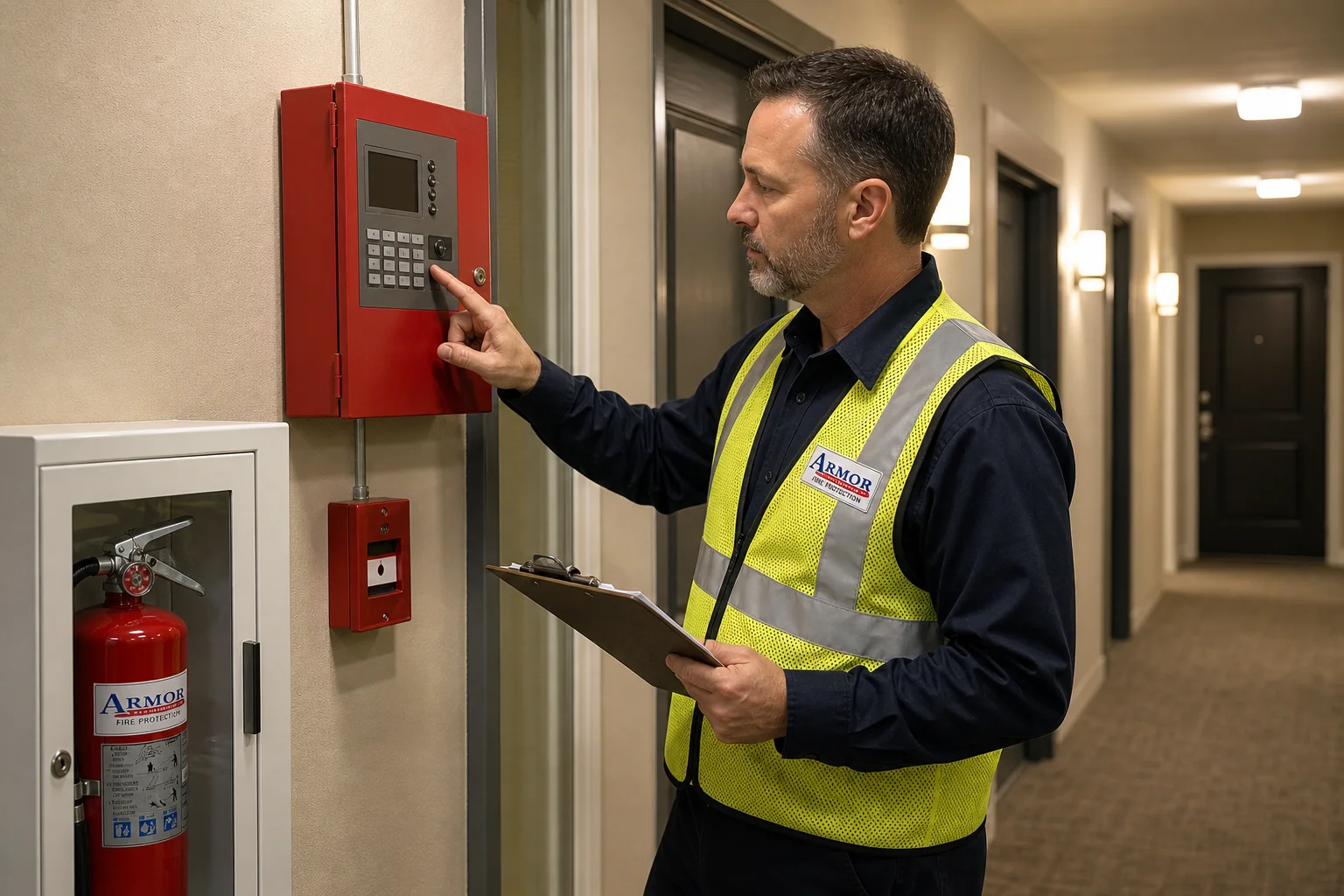
Fire alarm testing requirements for multifamily and HOA properties are set primarily by NFPA 72 and enforced locally, and missing a scheduled test can leave a board, management company, or unit owner exposed to real liability. Armor Fire Pro's Fire Alarms & Lights team explains who is responsible, what the code demands, and what happens when a test gets skipped.
By Armor Fire Pro Team, Fire Protection Specialists
How Often Do Fire Alarm Systems Need to Be Tested in Multifamily and HOA Properties?
Along with fire extinguishers, sprinklers, and emergency lighting, the fire alarm system is one of the most heavily tested life safety systems in a multifamily building. Testing frequency depends on the device, not a single blanket schedule. NFPA 72 divides a fire alarm system into components that each carry their own required test interval: smoke detectors and other initiating devices are typically tested annually, while the fire alarm control panel, notification appliances (horns and strobes), and monitoring connections to the local fire department are checked on a cycle that can include monthly, quarterly, and semiannual visits depending on the equipment and occupancy type. Multifamily and HOA properties usually fall under the same testing table as any other commercial occupancy, since common hallways, stairwells, and shared amenity spaces are treated as commercial space even when the units themselves are residential. Scheduling NFPA 72 fire alarm testing on the correct interval, not just once a year, is the single biggest factor in avoiding a violation. A qualified inspector documents each interval separately, so a property is rarely finished with fire alarm testing after a single annual visit.
Who Is Legally Responsible for Fire Alarm Testing in an HOA or Condo Building?
Responsibility for fire alarm testing usually sits with the entity that owns and controls the building's common areas, which in most HOA and condo structures is the association itself, acting through its board of directors. The board can hire a management company or licensed fire protection contractors to schedule and perform the actual testing, but delegating the task does not delegate the underlying duty. Governing documents such as CC&Rs and bylaws typically confirm that fire safety and life safety systems in common areas are an association responsibility, separate from anything an individual unit owner maintains inside their own unit. In a straight rental apartment community, the property owner or management company holds that same duty. Either way, confirm in writing who is contracted to test the system and how often, rather than assuming it is being handled.
Fire Alarm Testing Requirements for Multifamily and HOA Properties: What NFPA 72 and Local Fire Codes Actually Require
NFPA 72, the National Fire Alarm and Signaling Code, sets the baseline testing methods and minimum frequencies that most fire departments reference, and it is the standard almost every local fire code builds on. Local jurisdictions often adopt NFPA 72 with amendments, so the exact frequency, paperwork, and inspector qualifications that apply to a given building can shift once local Arizona fire code requirements are layered on top of the base standard. That is why the fire alarm testing requirements for multifamily and HOA properties in one city can differ slightly from a neighboring one, even though both reference the same underlying NFPA 72 code. Confirming the locally adopted code edition, and any local amendments to test frequency or reporting, is part of establishing a compliant fire alarm system baseline for any HOA or apartment community.
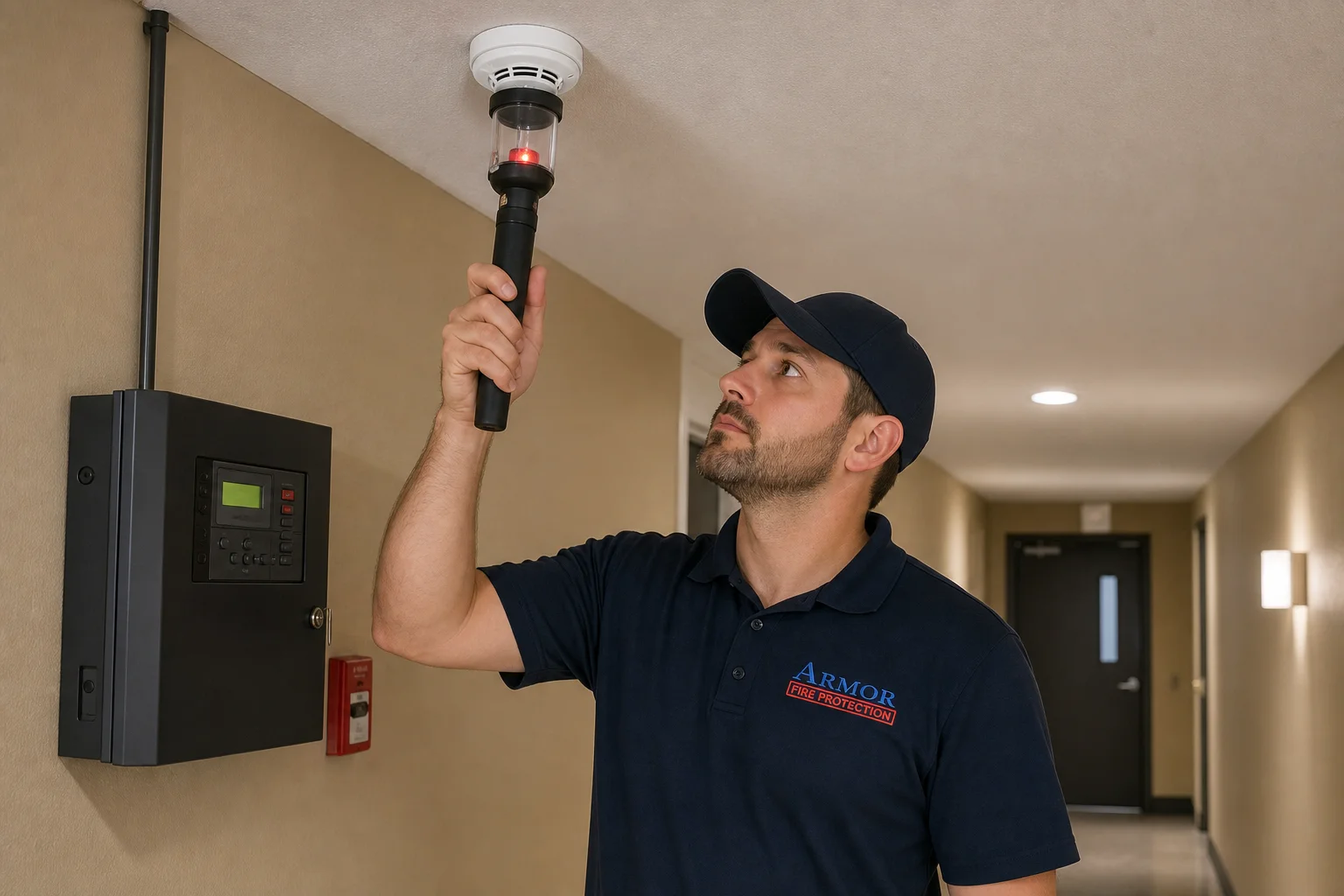
What Happens if an HOA Board or Property Manager Misses a Required Fire Alarm Test?
Missing a scheduled test rarely triggers an immediate penalty, but it starts a chain of exposure that grows the longer it goes uncorrected. A local fire marshal who finds an expired test tag during a routine inspection will typically issue a correction notice with a deadline to retest, and a second missed deadline can escalate to fines, a formal violation on the property's file, or in more serious cases restrictions on occupancy until the fire alarm system is verified working. Beyond the code violation itself, an untested alarm system that fails during an actual fire event turns a compliance problem into a life safety failure, a very different conversation with residents, insurers, and attorneys. Even a partial miss, such as testing devices but skipping the required monitoring connection check, can leave a property technically out of compliance without anyone realizing it until the next inspection.
Can an HOA Board, Management Company, or Unit Owner Be Held Liable for a Missed Fire Alarm Test?
HOA fire alarm liability almost always traces back to whoever held the testing duty and did not act on it. Liability generally follows whoever held that duty, though the exact answer depends on the governing documents, the applicable state law, and the specific facts of what happened. An HOA board that never scheduled testing, or a management company that was contracted to test but did not, can each face separate exposure in a negligence claim if a preventable fire alarm failure contributes to an injury or property loss. Individual unit owners are rarely liable for common-area alarm testing unless the governing documents shift that duty to them directly. A board with any doubt about its exposure should talk to its attorney, and should confirm its testing contract with a licensed fire protection provider covers its full range of Services, not just a partial system check.
Who Is Qualified to Perform Fire Alarm Testing: a Licensed Technician or In-House Staff?
Fire alarm testing is not a task that general maintenance staff can perform and self-certify, even when they are capable of basic troubleshooting. Most jurisdictions require testing to be performed and signed off by a licensed, qualified fire protection contractor, often a technician holding a NICET certification or an equivalent state license, because the test results become part of the official compliance record submitted to the local fire authority. In-house staff can handle day-to-day visual checks, such as confirming a panel shows no trouble signals or that nothing is blocking a smoke detector, but the formal, code-required test and its paperwork need a licensed professional. Hiring a contractor already familiar with a property's specific fire alarm system also tends to catch small issues, like a battery nearing end of life, before they become a failed test.
What Records or Documentation Prove Fire Alarm Testing Compliance to Inspectors or Insurers?
Documentation is what turns a completed test into provable compliance. A complete record typically includes a dated inspection report listing every device tested, any deficiencies found and how they were corrected, the technician's license or certification number, and a current test tag on the control panel itself. These records typically live alongside an annual inspection certification that many local fire departments require the property to keep on site and produce on request. Insurers increasingly ask for the same paperwork during renewal or after a claim, since a lapsed or missing test record can affect how a fire-related claim is handled. Boards and management companies should keep at least the last several years of test reports in an accessible file, since a change in vendors can otherwise create a documentation gap that looks identical to a missed test.
Frequently Asked Questions
Is fire alarm testing legally required for condos and apartment buildings?
Yes. Understanding the fire alarm testing requirements for multifamily and HOA properties starts with knowing that any building with a fire alarm system, condo or apartment, is generally required to have that system tested on the schedule set by NFPA 72 and adopted by the local fire code. This applies to common-area systems even when individual units are privately owned.
What is the fine for not testing a fire alarm system in a multifamily property?
Fines vary by jurisdiction and by how long a violation goes uncorrected, so there is no single number that applies everywhere. A first missed test often results in a correction notice rather than an immediate fine, but repeated or ignored violations can escalate into recurring fines and, in serious cases, occupancy restrictions until the system passes inspection.
Does homeowners or HOA insurance still pay out if a fire alarm was never tested?
It depends on the policy, but an untested or non-compliant fire alarm system can give an insurer grounds to dispute or reduce a claim, particularly if the lack of testing contributed to how much damage occurred. Reviewing the policy's maintenance and compliance requirements with the association's insurance agent is the safest way to confirm coverage before a loss happens, not after.
How much does fire alarm testing cost for an HOA or apartment complex?
Cost depends on the size of the property, the number and type of devices on the system, and how the local code requires those devices to be tested. A small community with a basic system generally costs less to test than a large complex with multiple buildings and a monitored, multi-zone system. A licensed provider can give an accurate cost after reviewing the property.
Who is liable if someone is hurt in a fire and the alarm system wasn't working?
Liability in that situation typically depends on who had the duty to maintain and test the system and whether that duty was met, a fact-specific negligence question decided under state law. An HOA board, a management company, or a testing contractor could each potentially share responsibility depending on what the investigation and governing documents show, which is why legal counsel should be involved early after any injury.
Get a Free Quote for Fire Alarm Testing and Compliance
Armor Fire Pro tests, maintains, and certifies fire alarm systems for HOA boards, condo associations, and apartment communities across the Phoenix area, so your property stays code compliant and residents stay safe with real peace of mind. Request a Free Quote to get your installed system's testing schedule and next inspection date on the calendar.

