
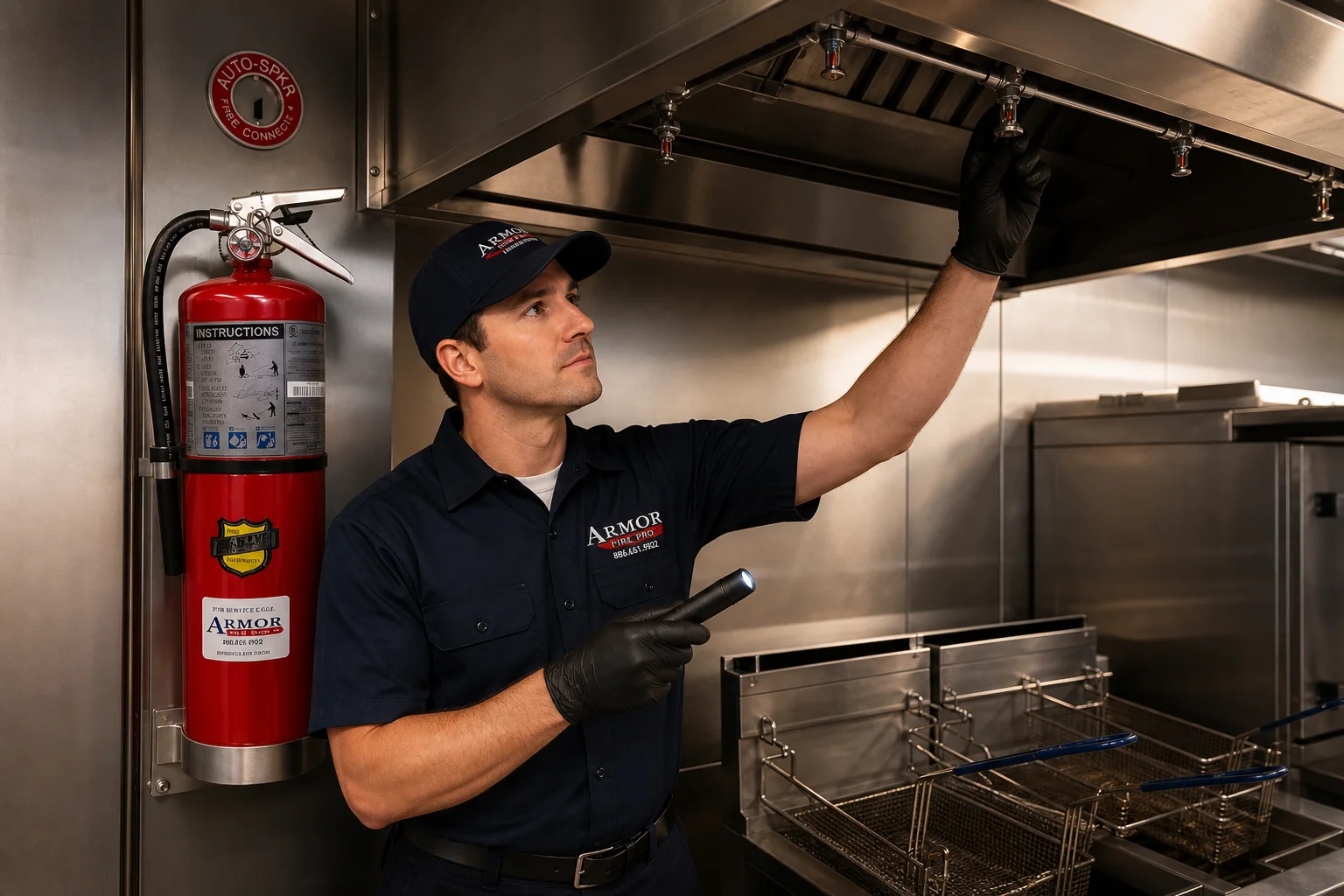
When flames erupt from a fryer or grill, seconds matter. Kitchen fire suppression systems detect heat and release extinguishing agent directly onto cooking equipment before a small flare-up becomes a total loss. For Arizona restaurant owners comparing options, understanding wet chemical and dry chemical suppression starts with our Kitchen Fire Suppression services built for commercial kitchens.
By Armor Fire Pro Team, Fire Protection Specialists
Why Commercial Kitchens Need Fire Suppression Systems
A commercial kitchen combines open flame, hot grease, and constant equipment cycling in a small footprint, exactly the conditions that produce a fast-moving kitchen fire. Grease fires can flash from a smoking pan to a hood fire in under a minute, which is why fire codes require automatic fire suppression systems above every commercial cooking line in Arizona. These systems are designed to detect a rise in heat and respond before staff can react manually.
The National Fire Protection Association sets the baseline standards for kitchen suppression systems under NFPA 96, and Arizona jurisdictions enforce these requirements during plan review and annual inspections. These plan review and inspection standards extend to broader Arizona fire code requirements that apply across an entire commercial building, not just the kitchen line.
Skipping or delaying suppression system installation is not an option for any restaurant, food truck commissary, or cafeteria kitchen in the state. Health departments and fire marshals both check for a current inspection tag before allowing a kitchen to operate, and insurance carriers routinely require proof of a working system before writing a policy. A missed inspection can shut down service on the spot, which makes ongoing maintenance as important as the original installation.
How Wet Chemical Fire Suppression Systems Work
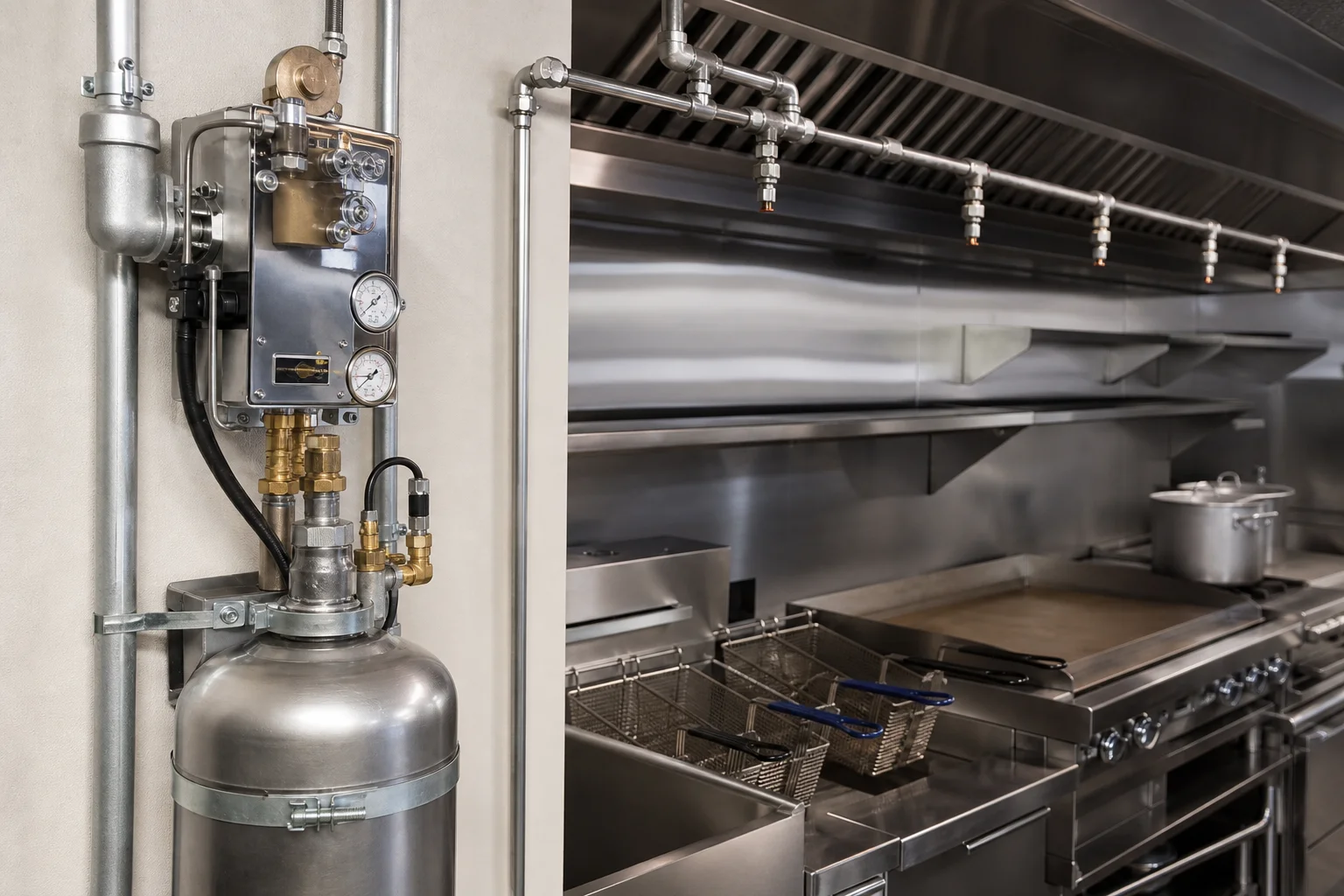
Wet chemical is the dominant type of kitchen fire suppression systems installed in Arizona restaurants today, and for good reason. A wet chemical suppression system uses heat-sensitive detection links mounted above the kitchen hood, fryers, griddles, and cooking appliances. When cooking oil or grease ignites and heat reaches the link's rated temperature, the link separates and triggers automatic activation of the system.
Once activation occurs, the system releases a potassium-based wet chemical agent through nozzles positioned over each hazard area. The agent works two ways: it cools the burning oil rapidly and reacts with the grease to form a soapy foam layer called saponification, which smothers the fire and blocks reflash. Wet chemical suppression is specifically formulated for the deep fat fryers, griddles, and open-flame ranges found in nearly every commercial kitchen, and it remains the best choice for restaurants cooking with oil-based methods.
Most wet chemical systems also shut off the gas or electric supply to the cooking equipment automatically the moment the system fires, cutting fuel to the fire while the agent works. That combination of agent and fuel shutoff is what makes wet chemical suppression so effective against grease and oil fires specifically, and it is why most current commercial kitchen builds in Arizona specify wet chemical from the start rather than treating it as an upgrade.
How Dry Chemical Systems Compare
Dry chemical suppression systems were the industry standard before wet chemical technology became widely available, and some older Arizona kitchens still operate under grandfathered dry chemical installations. A dry chemical system uses a sodium bicarbonate or similar dry agent, dispersed as a fine powder rather than a liquid, to interrupt the chemical reaction driving the fire.
Dry chemical agent works fast against a flare-up, but it does not create the same saponification barrier that wet chemical produces, so reflash risk is higher once the initial discharge settles. Dry chemical also leaves a heavier cleanup burden across cooking equipment, hoods, and exhaust ductwork after activation, since the powder settles over every surface in the kitchen rather than draining away like a liquid agent. Most current code editions, including NFPA 96, now require wet chemical systems for new commercial kitchen construction, which is why dry chemical systems are becoming less common in new installations across the Phoenix metro.
Wet Chemical vs. Dry Chemical: Which Fits Your Arizona Restaurant
If you are building a new kitchen or replacing an aging system, wet chemical is almost always the right call for Arizona restaurants. It meets current code, handles grease and oil fires more completely, and pairs cleanly with modern hood and duct designs. Dry chemical systems still function in kitchens where they were legally installed under prior code, but most insurance carriers and fire marshals now expect an upgrade path toward wet chemical suppression during any major renovation.
The type of cooking your kitchen does also matters. High-volume fryer operations, wok stations, and char-broilers all benefit from wet chemical's targeted agent delivery and automatic gas shutoff. Kitchens with lighter cooking loads may see a fire marshal accept an existing dry chemical system a while longer, but any new construction or major remodel should plan on wet chemical suppression systems from day one. Our Fire Extinguishers & Accessories inventory also gives kitchen staff a fighting chance against small flare-ups between the automatic system's coverage and a crew's first response, which is why every kitchen should pair suppression coverage with a rated portable extinguisher near the cook line.
Installation, Inspection, and Code Requirements in Arizona
Installing a kitchen fire suppression system in Arizona starts with a site assessment of the hood, duct, and cooking equipment layout, followed by a design that positions nozzles over every hazard area required by NFPA 96. Local fire marshals review the plan before installation and inspect the finished system before issuing an operating permit.
Once installed, kitchen fire suppression systems require semiannual service by a licensed technician, along with functional testing of the detection links, activation mechanism, and manual pull station. A well-maintained system also depends on a properly integrated alarm and detection network, since local fire code often requires the suppression system to signal the building's monitored alarm on activation. That integration is why kitchen suppression works best as part of a broader fire alarm monitoring system rather than a standalone piece of equipment.
Backflow testing is another piece of the compliance picture for kitchens tied into a fire sprinkler water supply, and pairing your kitchen suppression service with sprinkler and life safety coverage closes the remaining gaps in a building's protection. A coordinated service schedule that includes fire and life safety coverage keeps every system, from the kitchen hood down to the sprinkler heads, on the same inspection calendar.
Frequently Asked Questions
How often do kitchen fire suppression systems need service?
Arizona fire code requires semiannual inspection and service of kitchen fire suppression systems by a licensed technician. Each visit checks the detection links, nozzles, agent tank pressure, and manual pull station to confirm the system will activate correctly if a fire starts.
Can a restaurant use a dry chemical system instead of wet chemical?
Existing dry chemical systems installed under prior code may remain in service if properly maintained, but current NFPA 96 requirements call for wet chemical suppression in new commercial kitchen construction. Most insurance carriers now expect an upgrade to wet chemical during any major kitchen renovation.
What triggers activation of a kitchen suppression system?
Heat-sensitive detection links mounted above the hood and cooking equipment separate once they reach a rated temperature, triggering automatic activation. The system then releases wet chemical agent through nozzles positioned over each hazard area and shuts off gas or electric supply to the equipment.
Do kitchen fire suppression systems replace fire extinguishers?
No. A kitchen suppression system protects the hood, duct, and cooking equipment automatically, but a portable extinguisher rated for grease fires should still be mounted nearby for manual response to fires the suppression system does not reach.
Which type of system does a new restaurant build need in Arizona?
Nearly every new commercial kitchen build in Arizona requires a wet chemical fire suppression system to meet current NFPA 96 code. A licensed fire protection contractor can confirm the exact design requirements based on your hood, duct, and cooking equipment layout.
Protect Your Kitchen With a Professional Fire Suppression System
Arizona restaurants depend on a properly designed and maintained kitchen fire suppression system to protect staff, guests, and the building itself from a grease fire that can spread in seconds. Request a Free Quote to get your kitchen evaluated and protected the right way.

