
NFPA 96 hood system inspection intervals for commercial kitchens range from monthly to annual depending on how much grease your equipment produces, and a failed inspection can cost far more than the cleaning bill itself, from a fire marshal shutdown to a denied insurance claim tied to your Kitchen Fire Suppression system. Here's the schedule, and the fallout.
By Armor Fire Pro Team, Fire Protection Specialists
How Often Does NFPA 96 Require Hood System Inspection Intervals for Commercial Kitchens?
NFPA 96 hood system inspection intervals for commercial kitchens aren't one-size-fits-all. The standard sorts every kitchen into a cooking volume tier, and that tier sets how often a technician inspects and cleans the exhaust hood, ductwork, and fan. Kitchens that cook around the clock or run solid fuel equipment like charcoal or wood-fired grills sit on the shortest interval, monthly, while a typical full-service restaurant lands on a quarterly schedule. Lower-volume kitchens, think a church hall or a seasonal snack bar, may only need semiannual or annual service. Your local fire marshal has final say on which tier applies, so the interval on paper is a starting point until confirmed for your kitchen.
What Determines Whether You're Quarterly, Semiannual, or Annual
Hood cleaning frequency depends on cooking volume, not restaurant size. A kitchen frying and grilling twelve or more hours a day produces far more grease vapor than one running a light lunch menu three days a week, and that volume is what a contractor measures before assigning your interval. Solid fuel cooking produces sticky, harder-to-remove residue than a typical fryer line, which is why those systems usually get bumped to monthly regardless of covers served. High-volume kitchens rarely qualify for anything longer than quarterly. If your cooking style changed since your last inspection, say you added a wok station or a charbroiler, flag it, since it can shorten your interval.
What Happens During an NFPA 96 Hood System Inspection?
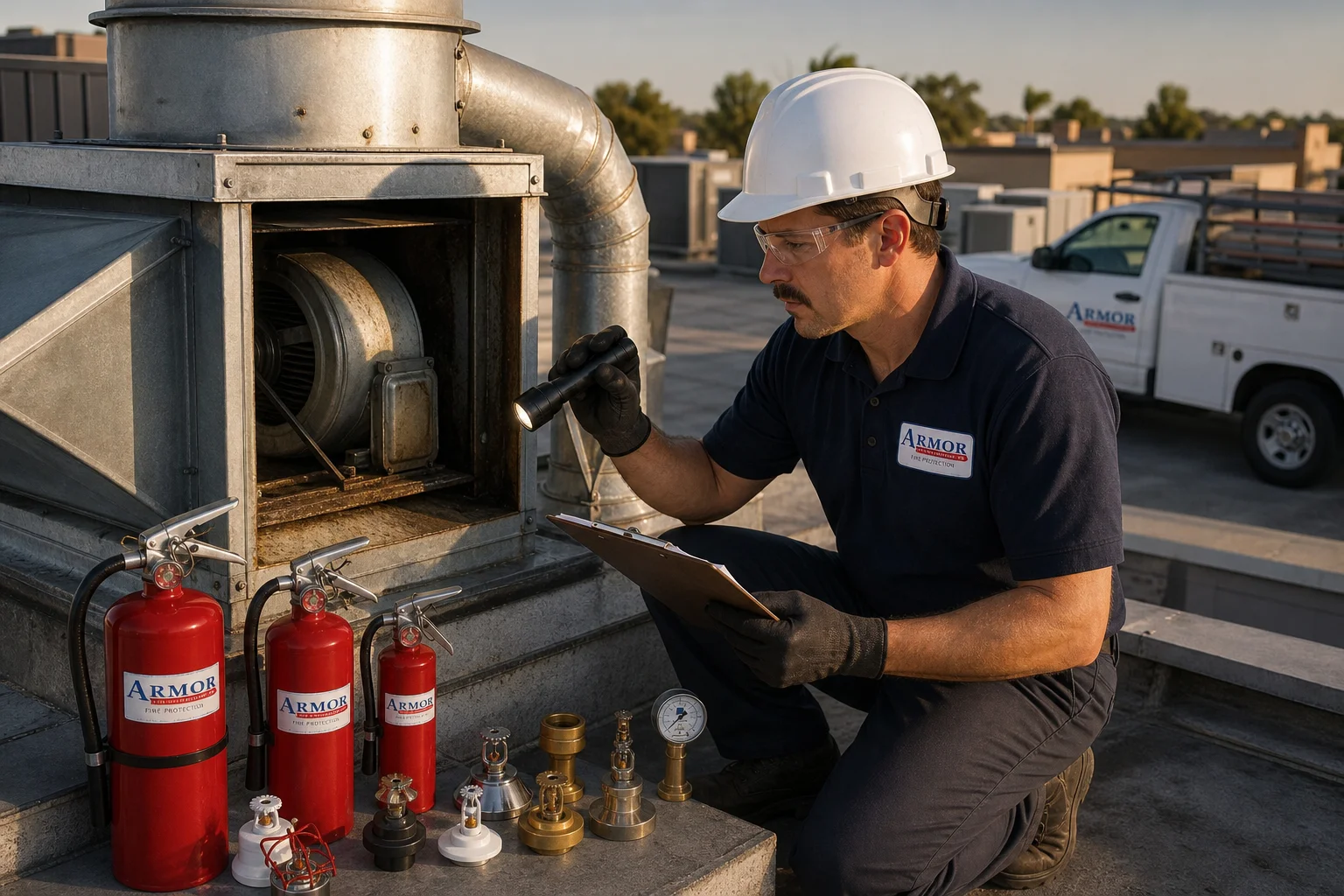
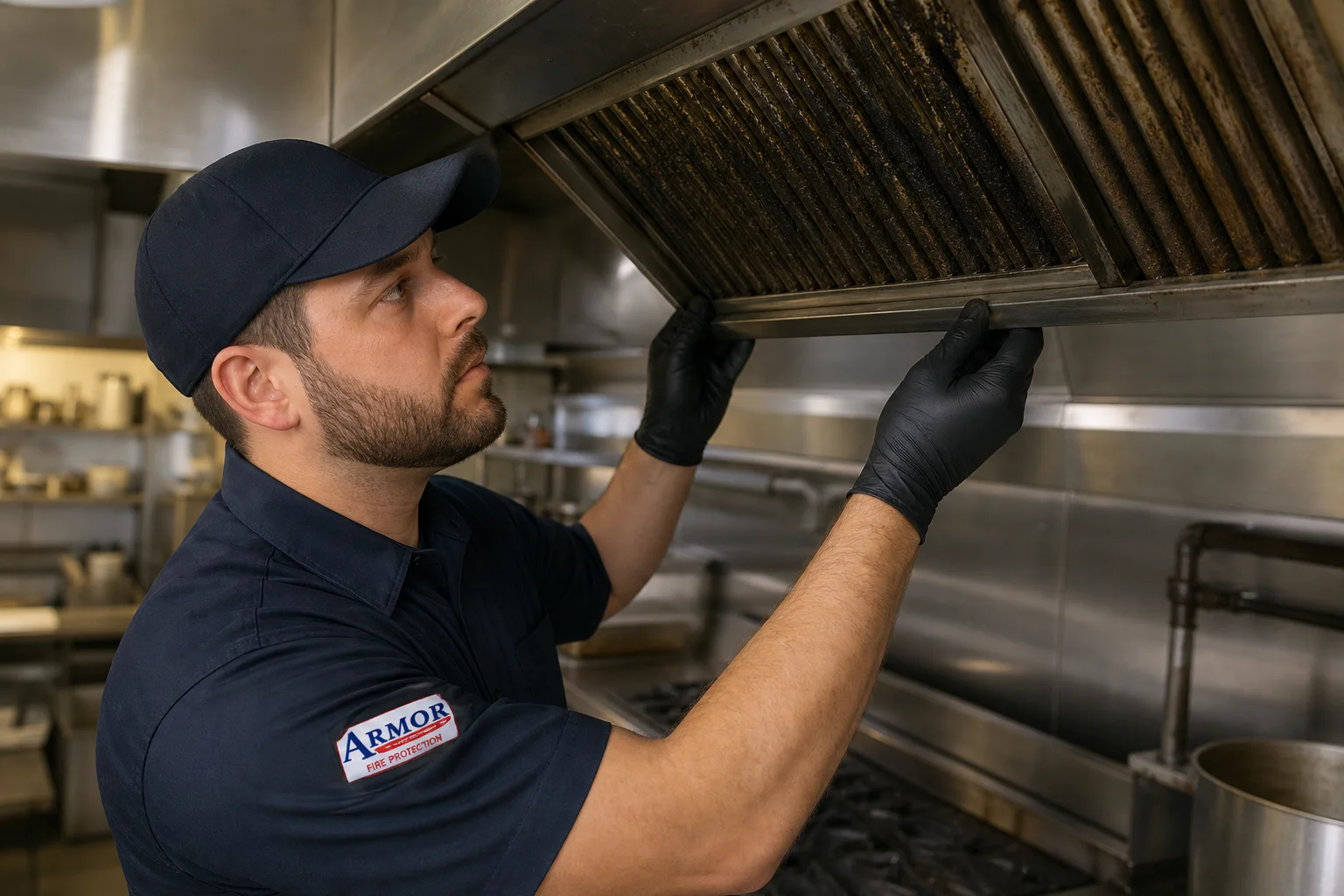
A real inspection covers the whole exhaust path, not just the visible hood panels. A qualified technician checks grease buildup inside the hood, ductwork, and rooftop fan, confirms access panels are actually accessible instead of painted or bolted shut, and verifies the fan and ductwork are structurally sound enough to help control a fire if grease ignites inside the system. A complete visit typically also confirms your Fire Extinguishers & Accessories are charged, tagged, and mounted where code requires, since fire marshals commonly check both during the same walk-through. The technician also checks that the wet chemical suppression system has full nozzle coverage and a current service tag, since a blocked nozzle can't stop a fire even when the hood is spotless. Pairing that check with your wet chemical suppression systems service on the same visit avoids scheduling two contractors for one exhaust system.
Who Is Qualified to Perform NFPA 96 Hood Inspections and Cleanings?
Hood cleaning and inspection work should go to a trained fire protection contractor familiar with NFPA 96, not general janitorial staff. The job requires knowing where grease hides inside ductwork, how to safely access a rooftop fan, and what actually satisfies the standard versus what just looks clean from the floor. Many technicians carry certification through IKECA, the trade association built around kitchen exhaust cleaning, and a documented service tag left after each visit is what proves the work happened if a fire marshal or adjuster ever asks.
Who Enforces These Requirements in Your Kitchen
The local fire marshal, acting as the authority having jurisdiction, actually enforces NFPA 96 in a commercial kitchen. NFPA 96 itself is a set of guidelines until a city or county adopts it into local fire code, at which point following it stops being optional. That adoption is why fire protection for commercial kitchens looks the same on paper nationwide but gets enforced locally, through the same fire code requirements that govern the rest of your building's fire protection systems and the same fire marshal who signs off on your occupancy.
What Does It Cost When a Commercial Kitchen Fails a Hood Inspection?
The real cost isn't one number, it's a stack of line items that shows up after the fact: a corrective cleaning to bring the system up to code, a re-inspection fee to get the fire marshal back out, and if the failure forces an unplanned shutdown, a rush service premium. Damage like a warped filter, a fan that won't spin freely, or a misaligned suppression nozzle adds repair labor on top.
A few factors move that total more than anything else. Hood count and linear footage of ductwork is the biggest driver, since labor scales with how much surface a technician has to scrape. How overdue the cleaning is matters almost as much: a kitchen cleaned two years late has hardened grease layers needing multiple passes, versus a light job for one cleaned six months late. Roof access matters too, a fan needing a ladder or lift adds time a ground-level unit doesn't. And cooking type matters: solid fuel and high-volume operations build tar-like residue that takes longer to strip than a standard fryer line.
Hood cleaning and fire suppression service are commonly billed as separate line items even though an AHJ often checks both on the same visit, so ask directly whether a quote covers just the hood or the full protection scope. A few questions get an accurate number: how many hoods and duct run, what's cooked and how often, when was the system last serviced, and does roof access need special equipment. Give a contractor those details, plus your last service date, and understanding your NFPA 96 interval before asking for a quote keeps the number honest instead of generic.
What Are the Consequences of Failing an NFPA 96 Inspection Beyond the Cleaning Bill?
A failed hood inspection is a life safety finding, not a paperwork issue, and the fire marshal treats it that way. Beyond corrective service, a kitchen can face a formal notice of violation, a set deadline to fix the problem, and in serious cases, an order to stop cooking on that line until it passes re-inspection. Repeat failures draw closer scrutiny on future visits, and some jurisdictions escalate to fines.
What Happens Immediately After a Restaurant Fails a Hood Inspection
Expect a written notice describing exactly what didn't pass, grease buildup, a blocked access panel, or a suppression system out of service, along with a correction window, often measured in days rather than weeks. If the suppression system itself is non-functional, some fire marshals order the cooking line shut down immediately, since an unmanaged fire can spread fast without a working system to contain it. Getting a contractor scheduled the same day is usually the fastest way to reopen the line.
Will Insurance Pay for a Kitchen Fire If Hood Inspections Were Skipped?
It depends on the policy, worth confirming directly with your carrier rather than assuming either way. Many commercial property and liability policies for restaurants include maintenance language expecting documented, code-compliant upkeep of fire protection systems, hood cleaning included. If an insurer can show a fire started or spread because scheduled hood cleaning or suppression service was skipped, that clause can become grounds to deny or reduce a claim. Keeping every service tag, invoice, and inspection report on file is what lets a kitchen prove compliance if a claim is ever challenged.
Frequently Asked Questions
How long does an NFPA 96 hood inspection take?
Most inspections for a single hood system run one to a few hours, depending on how many hoods are involved and how much grease has built up since the last visit.
Can a commercial kitchen stay open with a failed hood inspection?
Sometimes. If the hood is dirty but the fire suppression system is still functional and access isn't blocked, many fire marshals allow the kitchen to keep operating during a short correction window. If the suppression system itself is out of service, or the violation is severe, the AHJ can order the cooking line closed until a passing re-inspection is completed.
Does NFPA 96 apply to wood or charcoal cooking equipment?
Yes. Solid fuel operations like wood-fired ovens, charcoal grills, and char-broilers fall under NFPA 96 and typically need the shortest cleaning interval of any kitchen type, often monthly, because solid fuel cooking produces heavier, harder-to-remove grease and tar deposits than standard fryers or flat-top grills.
What's the difference between hood cleaning and a hood inspection?
Hood cleaning removes grease from the hood, ductwork, and fan. An inspection is broader: it checks whether the whole exhaust and fire protection system, cleaning included, still meets NFPA 96 and local fire code.
Who keeps the compliance records after each hood service visit?
The kitchen owner or manager is ultimately responsible for keeping service tags, invoices, and inspection reports on file, even though the contractor typically leaves documentation behind at every visit. Those records are what a fire marshal or adjuster will ask to see first if compliance is ever questioned.
Get Your Kitchen on a Compliant Inspection Schedule
Skipping or guessing at your NFPA 96 hood system inspection intervals for commercial kitchens is the expensive way to find out where your kitchen actually falls. Request a Free Quote or contact Armor Fire Pro Team directly, and our fire protection services will confirm your cooking volume, your current schedule, and exactly what a compliant visit covers before the fire marshal has to.

