
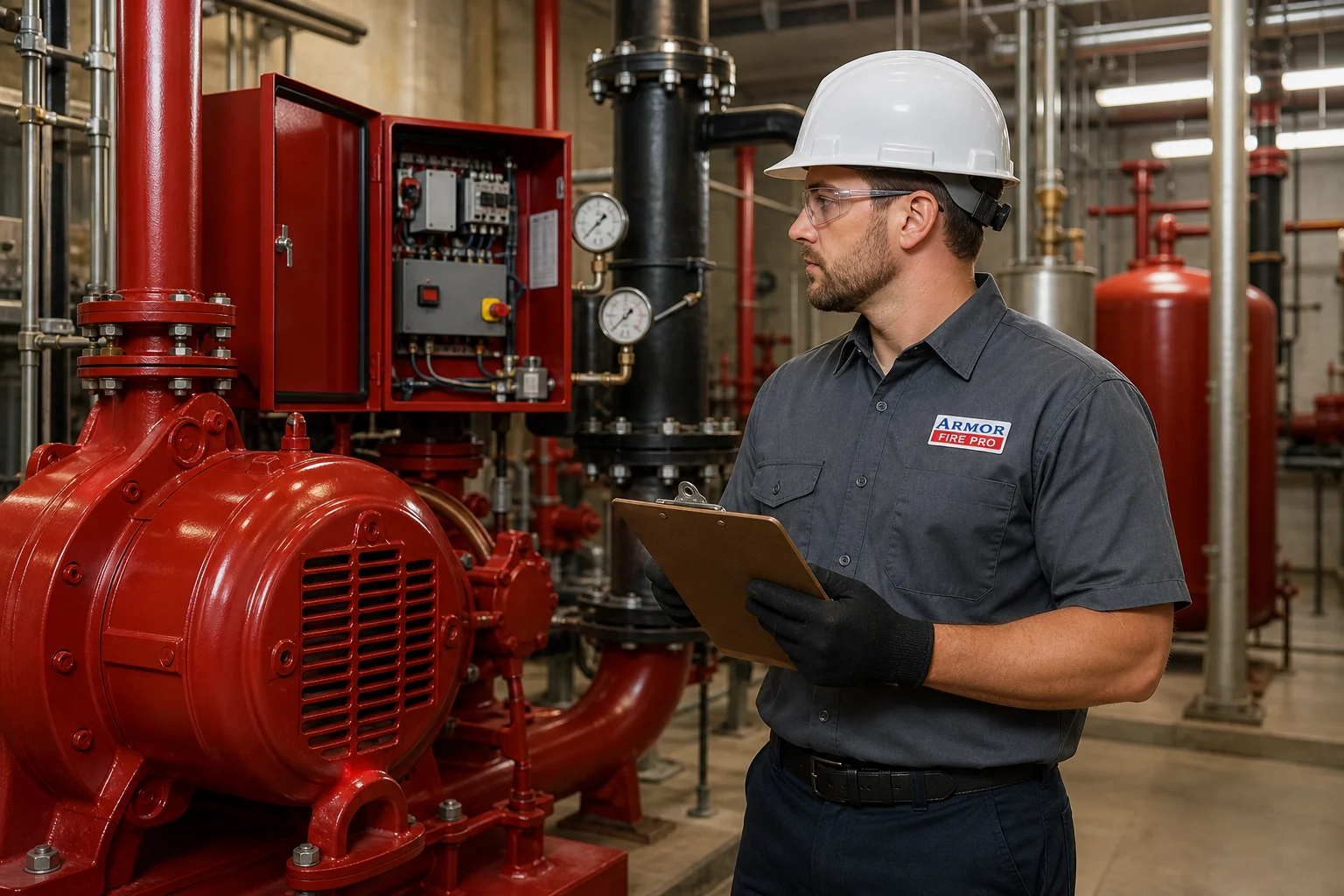
Commercial fire pump installation in Phoenix gives buildings with weak municipal water pressure the boosted flow their sprinklers and standpipes need to meet code during a fire. This guide covers selecting, installing, and maintaining a fire pump system that works alongside properly designed Fire Sprinklers to protect life and property.
By Armor Fire Pro Team, Fire Protection Specialists
What Is a Commercial Fire Pump System and How Does It Work?
A commercial fire pump system sits between the water supply and a building's sprinklers or standpipes, boosting pressure and flow whenever the municipal supply cannot deliver what the fire protection design requires. When a sprinkler head opens, pressure drops, a sensing line detects that drop, and the pump starts automatically to restore the flow needed to control a fire. Because a fire pump protects human life first, NFPA treats it as life safety equipment, not ordinary mechanical equipment. Fire pumps are sized around hydraulic calculations, not guesswork, so each one matches the real fires it may need to fight.
Electric vs. Diesel-Driven Fire Pumps
Fire pumps run on either an electric motor or a diesel engine. Electric-driven pumps are quieter and simpler to maintain, and work well with a reliable utility feed. Diesel-driven pumps carry their own fuel and start on battery power, so they keep running through a utility outage, which is why buildings that cannot risk losing fire protection often choose diesel. Either type must be listed for fire pump service and installed to NFPA 20.
How Do You Choose the Right Fire Pump for a Commercial Building?
Selecting a fire pump starts with a hydraulic calculation comparing the water supply at the property against the flow and pressure the sprinkler or standpipe design needs. A fire protection engineer measures static and residual pressure, factors in elevation and pipe friction loss, then sizes a pump rated in gallons per minute and pounds per square inch to close that gap. Undersizing leaves a building without enough water where it matters most; oversizing wastes budget and can damage piping.
Does Every Commercial Building Need a Fire Pump?
Not every commercial building needs one. A fire pump is only required when the municipal water supply cannot, on its own, deliver the pressure and flow the design calls for. Many single-story retail and light commercial buildings in Phoenix sit on a water main with enough natural pressure to meet demand. Taller buildings, large warehouses, and high-hazard occupancies like commercial kitchens usually do need one. The hydraulic calculation, reviewed by the local authorities having jurisdiction, settles the question for a given site.
What NFPA 20 Code Requirements Apply to Fire Pump Installation in Phoenix?
Meeting NFPA 20 fire pump requirements in Phoenix starts with a licensed, listed installation, not just paperwork. NFPA 20, the Standard for the Installation of Stationary Pumps for Fire Protection, governs how a fire pump is selected, installed, and tested. It sets requirements for the pump room: fire-rated construction, freeze protection, ventilation that supplies combustion air and vents engine heat, drainage for test water, emergency lighting, and heat and smoke detection, plus listed and labeled pump, controller, and driver assemblies. In Phoenix, the Phoenix Fire Department, alongside neighboring Valley fire agencies, checks plans against NFPA 20 and the broader Arizona fire code compliance requirements before issuing a permit, and again during an official acceptance test.
Fire Pump Installation in Phoenix: Cost, Timeline, and Licensing
What Does Commercial Fire Pump Installation Cost in Phoenix?
Cost depends on the pump's flow rating, whether the driver is electric or diesel, the pump room construction, and how much fire protection piping already exists on site. A retrofit into an older building without a dedicated pump room typically costs more than new construction, where the room and piping are planned in from the start. Armor Fire Pro prices each building after reviewing its hydraulic calculation, and a Free Quote is the fastest way to get real numbers.
How Long Does Fire Pump Installation Take From Permit to Inspection?
Timeline varies with permit review load and how quickly equipment can be procured, since pumps and controllers are often built to order. Design, permitting, equipment lead time, installation, and the final acceptance test typically run several weeks to a few months from first visit to passed inspection.
Who Is Licensed to Install and Service Fire Pumps in Phoenix, Arizona?
Arizona requires fire pump installation and service to be performed by a contractor holding the appropriate Arizona Registrar of Contractors fire protection license, with techs certified in fire pump systems where the scope calls for it. The Phoenix Fire Department confirms licensing at plan review and again at acceptance testing, and property management teams overseeing multiple sites benefit from keeping that process with one contractor.
How Often Should a Fire Pump Be Inspected, Maintained, and Tested?
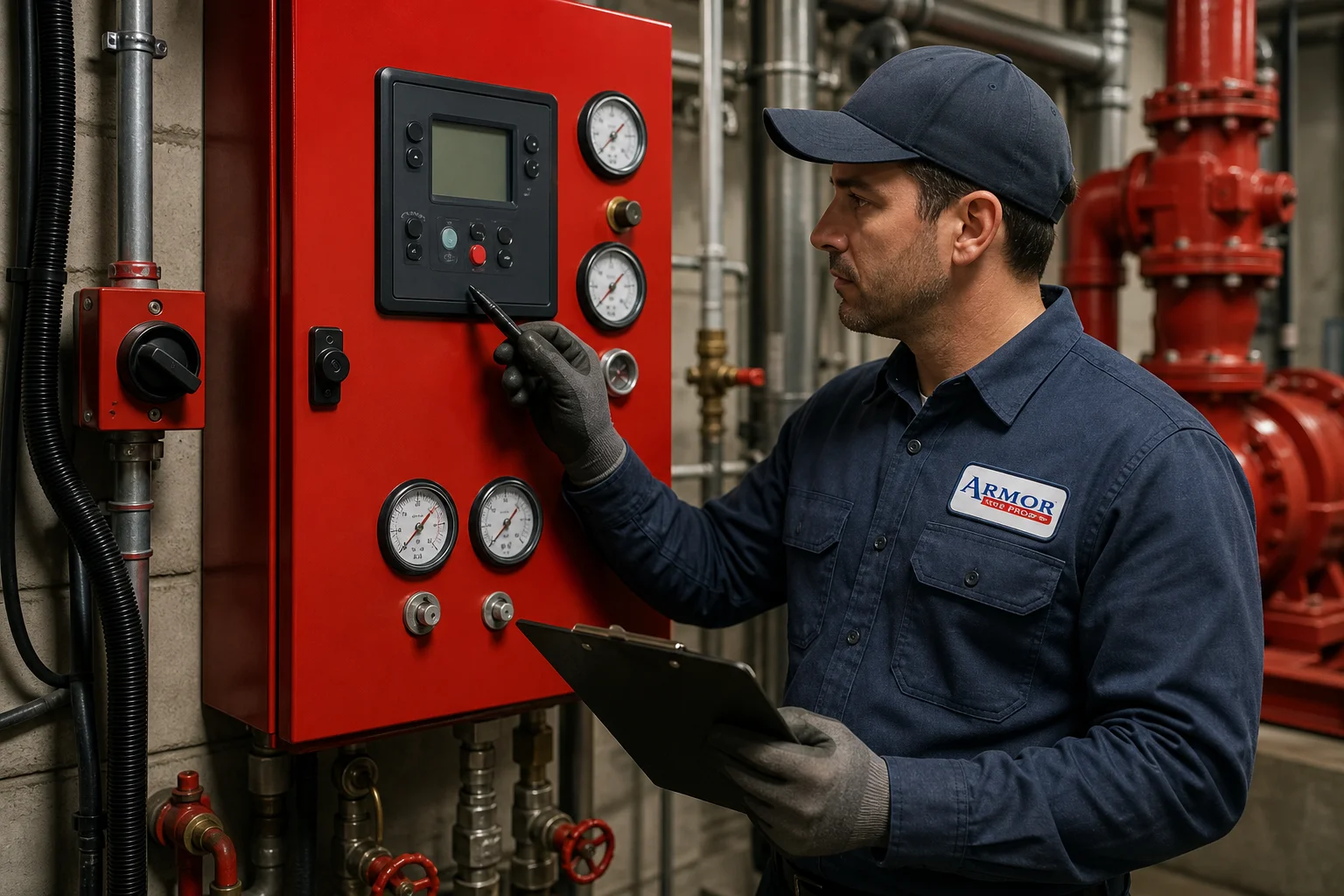
NFPA 25, the standard for inspecting, testing, and maintaining water-based fire protection systems, sets the schedule a fire pump has to follow. A no-flow churn test confirms the pump starts and runs correctly: electric-driven pumps are typically tested monthly, while diesel-driven pumps are usually run weekly to keep the engine and fuel system ready. NFPA 25 also calls for an annual flow test that verifies the pump still delivers its rated pressure and flow while the building stays live and occupied. These tests run alongside the same annual inspections and certification requirements that apply to the rest of a building's fire protection systems, so most owners schedule everything on one visit. Every test has to be logged in a written record, and a documented service history protects an owner if a pump's performance is ever questioned after a loss. Newer controllers often log run time and pressure data automatically, making a decline easier to catch.
Frequently Asked Questions
How much does it cost to install a fire pump in a commercial building in Phoenix?
Cost depends on the pump's flow rating, driver type, pump room construction, and whether the piping already exists on site. New construction with the room planned from the start typically costs less than retrofitting an older building, so requesting a quote is the fastest way to get an accurate number.
How long does fire pump installation take?
Timeline depends on permit review time and how quickly the pump and controller can be manufactured, since equipment is often built to order, with design through acceptance testing typically taking several weeks to a few months.
Does every commercial building need a fire pump?
No. A fire pump is only required when the municipal water supply cannot deliver the pressure and flow the sprinkler or standpipe design calls for on its own. A hydraulic calculation, reviewed by the authority having jurisdiction, determines whether a specific building needs one.
What's the difference between an electric and a diesel-driven fire pump?
An electric-driven fire pump runs off utility power and is quieter and simpler to maintain. A diesel-driven fire pump carries its own fuel and starts on battery power, so it keeps running during a utility outage, which is why buildings without reliable dual power feeds often choose diesel.
How often does NFPA require fire pump testing?
NFPA 25 calls for a no-flow churn test, usually weekly for diesel-driven pumps and monthly for electric-driven pumps, plus an annual flow test that verifies the pump still delivers its rated pressure and flow. Skipping these tests is a common inspection finding, and results have to be logged in a written record.
Get a Fire Pump Installation Quote From Armor Fire Pro
Armor Fire Pro designs, installs, and maintains fire pump systems for commercial buildings across Phoenix, backed by licensed technicians who handle the NFPA 20 paperwork and testing from day one. Reach out today to see how our full range of fire protection services can keep your building's water supply ready when it matters most.

