
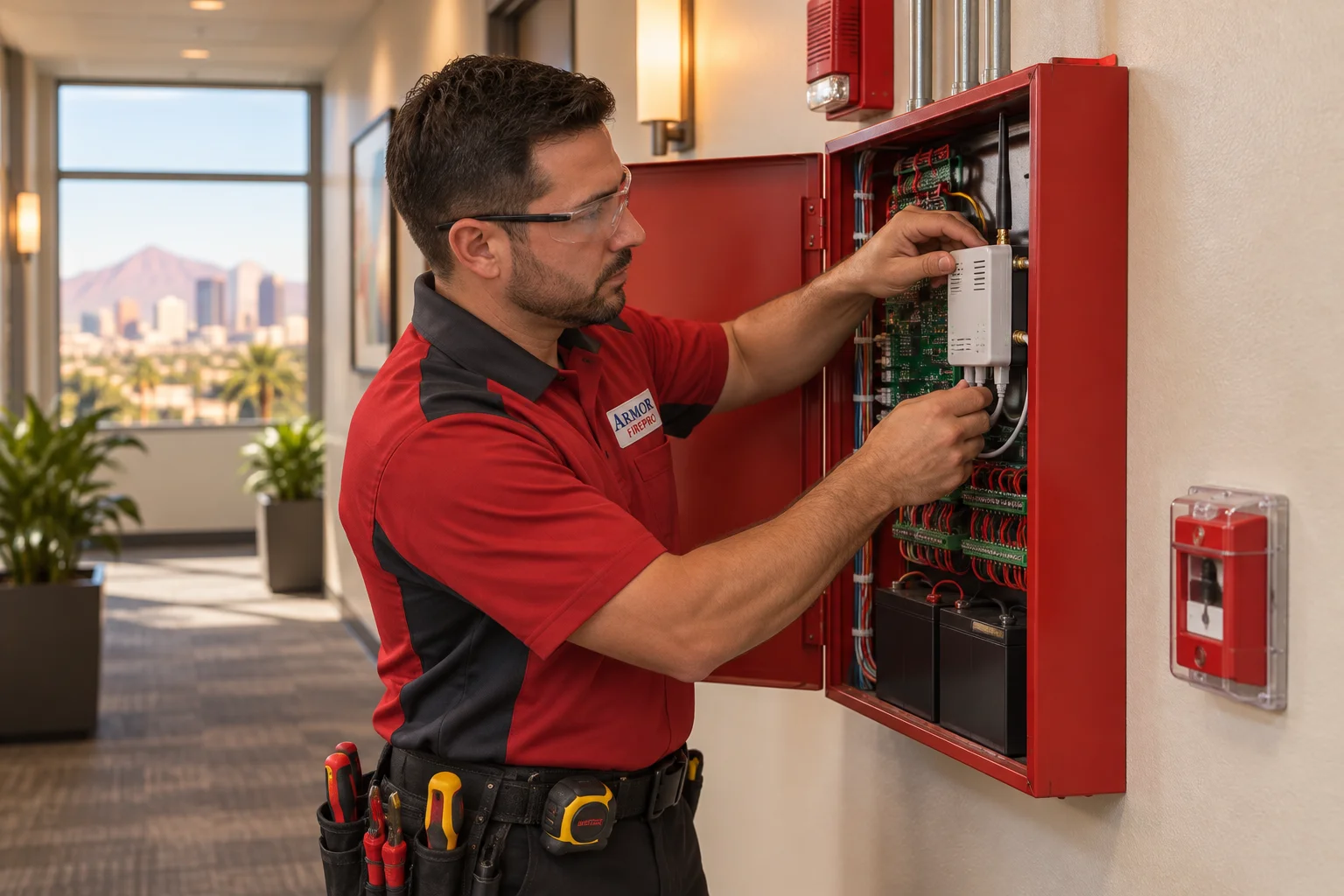
Phoenix carriers are retiring copper landlines, and any fire alarm system that still dials out over a phone line loses its reporting path the moment that circuit goes dark. A fire alarm cellular communicator upgrade swaps the old dialer for a dedicated radio inside your Fire Alarms & Lights setup, keeping the panel connected once phone service disappears.
By Armor Fire Pro Team, Fire Protection Specialists
Why Fire Alarm Phone Line Dialers Are Being Phased Out in Phoenix
Major Arizona carriers, including Cox and CenturyLink, have retired copper phone lines for years, and the FCC allows providers to discontinue analog service wherever a comparable replacement exists. For a fire alarm system built around a phone-line dialer, that retirement isn't a billing inconvenience, it's the loss of the only path to your monitoring company.
Older alarm systems use a dialer module that calls a phone number to report events. Once the carrier disconnects that line, the module has nothing to dial into, and the alarm system goes silent to the outside world even though it still detects smoke and heat correctly on-site.
What Happens If Your Fire Alarm Phone Line Gets Disconnected Before You Upgrade
Most panels flag a trouble condition once the phone line stops sending a dial tone, and your monitoring company loses the ability to confirm alarms remotely. A fire alarm system that cannot report to a central station usually cannot pass inspection, putting your certificate of occupancy at risk until the communication path is restored.
What Is a Cellular Communicator for a Fire Alarm System?
A cellular communicator is a radio device wired into your fire alarm panel that transmits signals over a cellular network instead of a landline. When a smoke detector, pull station, or sprinkler flow switch trips, the panel sends that event to the communicator, which reports it to the central monitoring station over cellular rather than a dial tone. Cellular communicators are now standard equipment across modern alarm systems, not just fire alarm systems in older Phoenix buildings still catching up.
Because the communication path no longer depends on a copper line, the alarm system stays connected even after a provider disconnects phone service, but that signal is only useful when the rest of your monitoring and detection hardware, initiating devices, panel, and notification appliances, is also functioning.
Signs Your Fire Alarm Still Uses a POTS Line
If your panel is wired to a standard phone jack, and your bill includes a line item from the phone company for an alarm circuit, your system is almost certainly still running on POTS lines (plain old telephone service, built for voice calls, not modern life-safety monitoring). A technician can confirm this in minutes. If you're not sure, Armor Fire Pro can inspect the panel during a routine test and tell you exactly what you're running.
Is a Cellular Communicator Upgrade Required by Code for Phoenix Businesses?
Local fire code, enforced through NFPA 72 and adopted by the Phoenix Fire Department and surrounding jurisdictions, generally requires a fire alarm system to maintain a working path to a supervising station. That requirement doesn't name cellular specifically, but once your phone line is disconnected, a cellular communicator becomes the practical way to keep that path open and stay in compliance. Requirements vary by occupancy type and authority having jurisdiction, so most Phoenix businesses will need some form of upgrade once their landline goes away, though the exact code and timeline depend on your building.
Which Businesses in Phoenix Are Most Affected by Phone Line Dial-Out Shutoffs
Older commercial buildings, restaurants with legacy panels, and multi-tenant properties that haven't touched their fire alarm systems in a decade carry the highest exposure. Multifamily and HOA properties often carry the oldest dialer hardware in the Valley, since board-run associations can go years between capital upgrades, and many are now navigating multifamily and HOA testing requirements at the same time their dialer gets forced out. Any business running a system installed before cellular communicators became standard should treat a disconnection notice as urgent, not routine mail.
What a Fire Alarm Cellular Communicator Upgrade Costs and Involves
Pricing depends on your panel brand, the number of zones monitored, and whether your monitoring company requires a dual-path device pairing cellular with internet for redundancy. Armor Fire Pro handles this upgrade alongside the rest of our fire protection Services, so the same technicians who inspect your sprinklers and extinguishers can evaluate your panel and give you a firm figure before any work begins.
What the Upgrade Process Involves
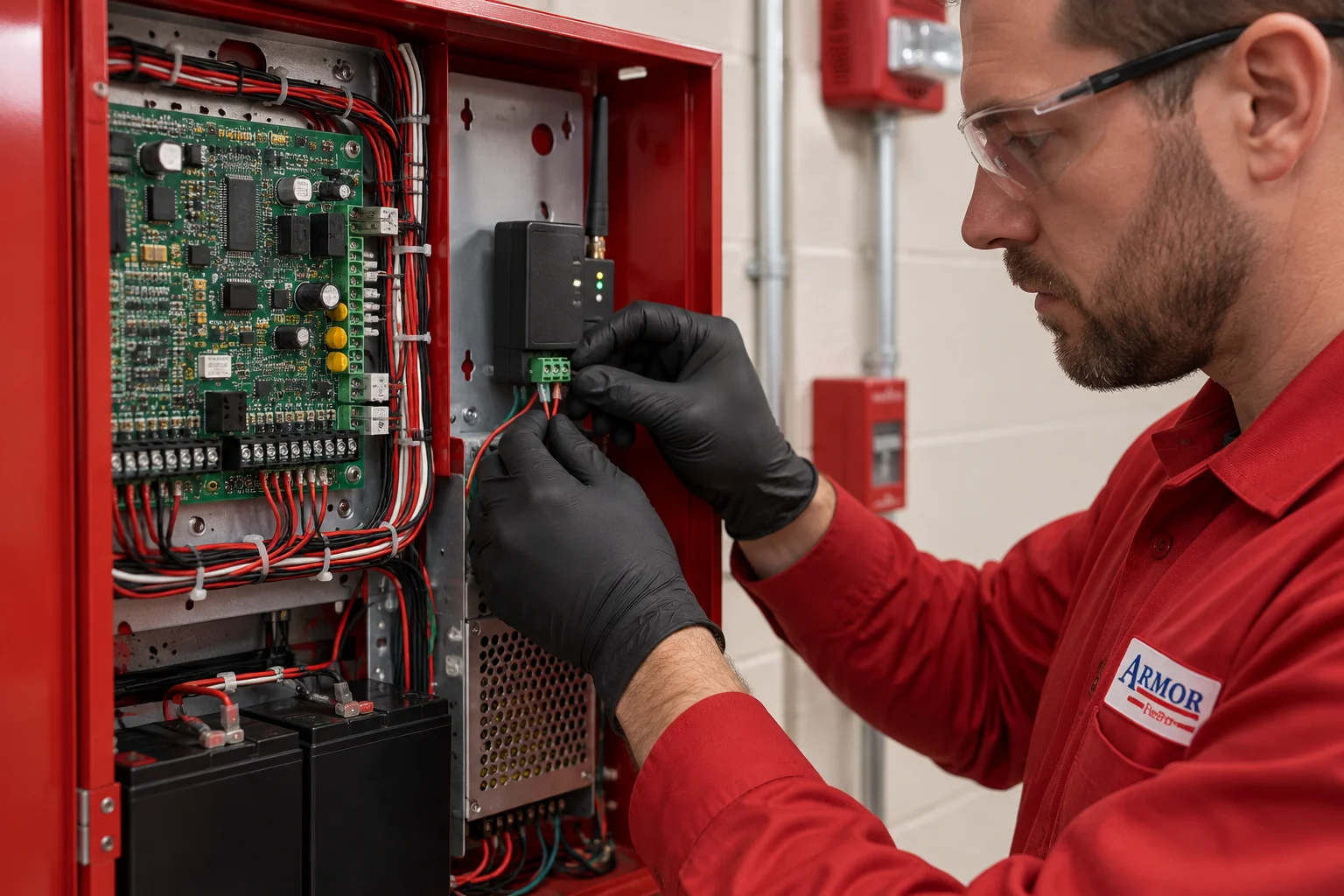
A technician first inspects your existing panel and dialer module to confirm compatibility, then orders a communicator built for your panel's brand and firmware. Installation involves wiring the device into the panel, running a cellular antenna to a location with reliable signal, and programming the unit to report to your monitoring service. Once set, the technician runs a full transmission test with the central station to confirm every zone reports correctly.
Does It Require Replacing Your Whole Fire Alarm Panel?
Usually not. In most cases, the communicator is an add-on device that connects to your existing panel, and the panel itself, along with your detectors, pull stations, and notification devices, stays exactly as it is. The exception is a panel old enough that it can't support a modern communicator, in which case a broader panel replacement may make more sense than patching an aging board.
How Long Does It Take to Install a Cellular Fire Alarm Communicator?
A standard installation and test typically takes a single service visit for one panel. Buildings with multiple panels, poor cellular signal in the equipment room, or additional programming for a monitoring company changeover can extend that timeline, so your technician will set expectations after the initial inspection.
Keeping a Landline Backup and What Happens to Your Monthly Monitoring Cost
Some owners ask whether they can keep the landline as a backup after installing a cellular communicator. A dual-path setup pairing phone and cellular is technically possible, but if your carrier is shutting down copper service in your area, keeping an old line open buys very little extra reliability. Most monitoring companies now pair cellular with an internet connection for backup instead, since that combination doesn't depend on the infrastructure being retired.
Monthly cost usually shifts rather than jumps: the phone company's per-line charge disappears, and your monitoring company may add a modest fee for the cellular connection, so the net change is often small. Ask your provider for a side-by-side of your bill, and use whatever app they offer to confirm the system checks in around the clock.
Frequently Asked Questions
Do I need to keep a phone line after installing a cellular communicator?
No, in most cases. Once a cellular communicator is active and has passed its transmission test, the phone line is no longer part of the reporting path, and many businesses cancel it entirely. The exception is a system that specifically requires a dual-path setup for redundancy, which your monitoring company or authority having jurisdiction can confirm.
Will my fire alarm still work if the cellular network has an outage?
Local cellular outages are uncommon but not impossible, which is why many Phoenix businesses pair a cellular communicator with an internet-based backup path instead of relying on cellular alone. Detection and local notification, the horns, strobes, and sprinklers, keep working regardless of network status. A network outage affects the signal reaching your monitoring station, not the system's ability to protect the building.
How do I know when my POTS line will actually be disconnected?
Carriers typically send written notice before discontinuing service to a line, but those notices go to whoever is listed on the phone account, which isn't always the person managing the fire alarm system. Rather than wait for a letter, ask Armor Fire Pro to check your panel's communication path now so the upgrade happens on your schedule.
Is a cellular communicator upgrade worth it for a small business?
Yes, for most small businesses this is a straightforward life-safety investment, since it protects a compliance requirement you already have to meet. A single communicator swap, done before your line goes dead, avoids the more disruptive scenario of a fire alarm system that fails inspection or can't report during an emergency.
What is the difference between a cellular communicator and a dual-path communicator?
A cellular-only communicator sends every signal over the wireless network. A dual-path communicator uses cellular alongside a second route, usually an internet connection, so a problem with one path doesn't take down monitoring entirely. Dual-path solutions cost a bit more but give buildings with weaker cellular coverage extra redundancy.
Get Your Fire Alarm Off a Dying Phone Line
If your panel is still listening for a dial tone, don't wait for the disconnection notice to force the issue. Request a Free Quote for your fire alarm cellular communicator upgrade and Armor Fire Pro will inspect your panel, confirm what it needs, and give you a firm price before your line goes dead.

