
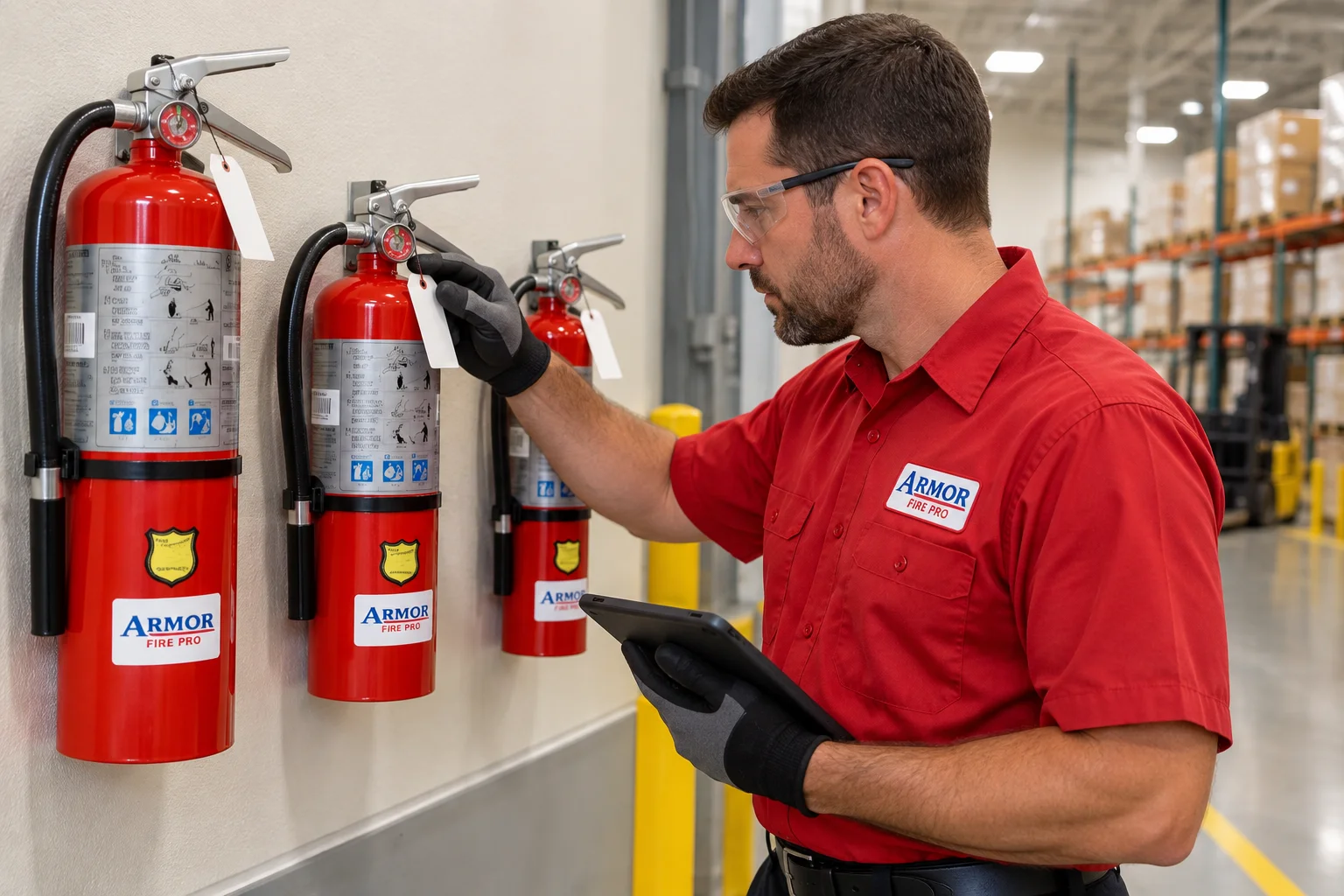
NFPA 10 extinguisher service intervals break down into four checkpoints: a monthly visual inspection, annual maintenance by a certified technician, a six-year internal examination, and hydrostatic testing on a schedule set by extinguisher type. Missing any one of them can leave your building out of compliance and your Fire Extinguishers & Accessories unreliable when you need them most.
By Armor Fire Pro Team, Fire Protection Specialists
Why NFPA 10 Extinguisher Service Intervals Exist
NFPA 10, the National Fire Protection Association's Standard for Portable Fire Extinguishers, is the code Phoenix-area fire marshals reference when they check whether your fire extinguishers are current, and it defines its inspection, maintenance, and testing terms in Section 3.1. NFPA 10 is the portable-extinguisher standard most Arizona fire jurisdictions adopt into local fire code, covering businesses, warehouses, and commercial kitchens, though exactly how it applies always depends on local adoption. Getting a location's fire extinguisher certification current means meeting whichever of these intervals apply to each unit on the wall.
Monthly Visual Inspections
A monthly fire extinguisher inspection is quick and doesn't require a license: anyone on staff can walk the property and confirm each unit is in its designated spot, unobstructed, and undamaged. The check covers the pressure gauge (needle in the green zone, not empty or overcharged), the pin and tamper seal, the nozzle for cracks or blockage, and the cylinder for dents, rust, or corrosion. A business owner or employee can handle this monthly check themselves, as long as someone initials the tag each time, since that dated record is usually the first thing an inspector looks for.
Annual Maintenance by a Certified Technician
Annual fire extinguisher maintenance goes well beyond the monthly walk-through. NFPA 10 requires a licensed, certified technician to examine each extinguisher at least once every 12 months, verifying full pressure, correct mechanical operation, and that the extinguishing agent hasn't clumped or settled. The technician typically removes the cap to check internal components on rechargeable units, weighs stored-pressure units to confirm the correct fill, and replaces the tamper seal with a new tag showing the service date and license number.
Armor Fire Pro's technicians handle this annual maintenance testing as part of our broader Services, so extinguishers stay synced with the same schedule as your sprinklers and alarms.
Six-Year Internal Examination and Hydrostatic Testing Explained
Two intervals get confused most often: the six-year internal examination and hydrostatic testing. They are not the same service, and they do not always land in the same year.
What Happens During the Six-Year Service
Every 6 years, NFPA 10 requires a full internal examination of rechargeable, stored-pressure fire extinguishers, primarily dry chemical units. The technician empties the cylinder, inspects the inside walls for corrosion, replaces the internal o-rings and seals, refills the agent, and recharges the unit to its rated pressure. This six-year service catches internal wear a monthly or annual check cannot see from the outside, which is why it carries its own tag.
Why Extinguisher Type Changes the Schedule
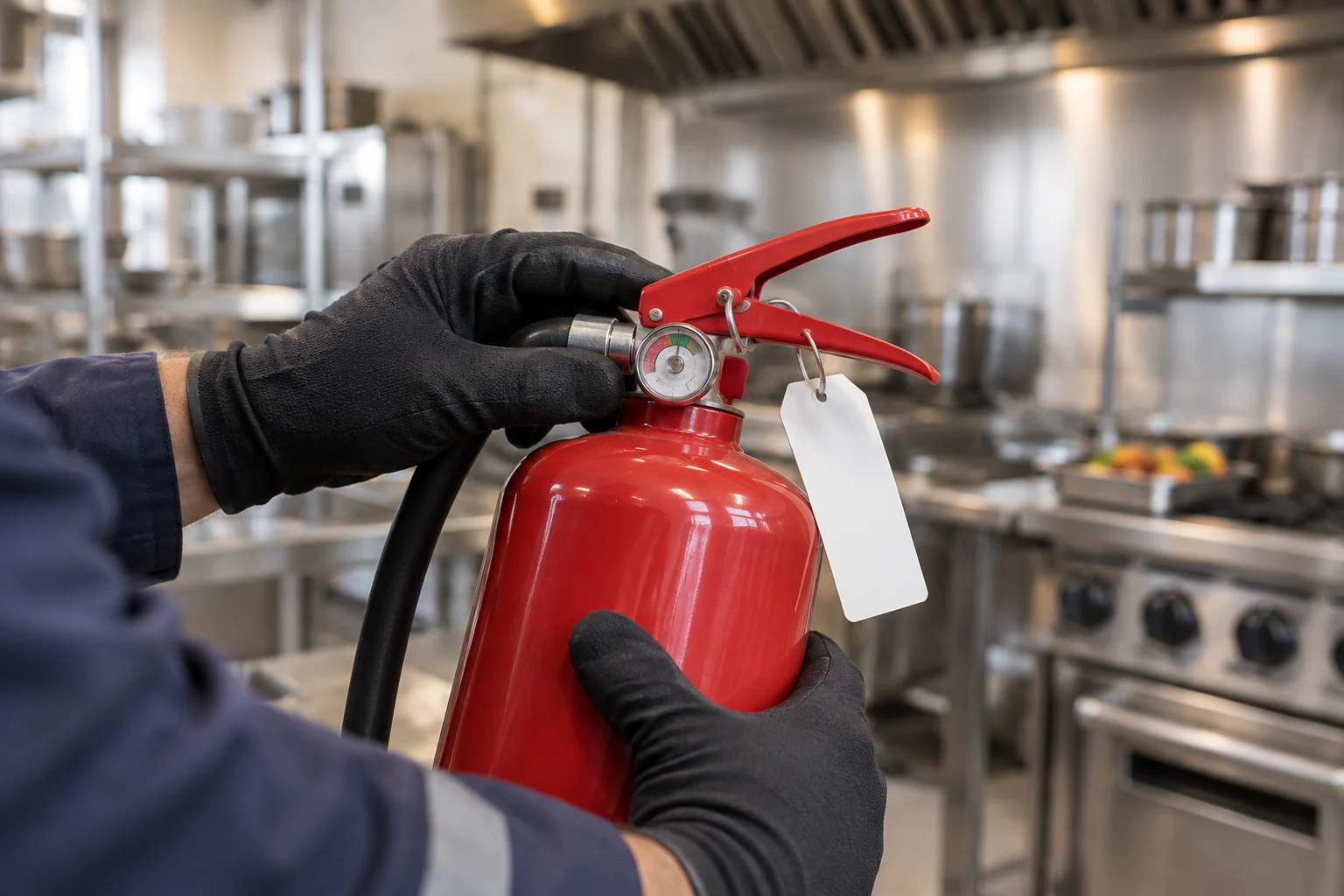
The extinguisher types installed in a building drive both the annual maintenance details and the hydrostatic test interval. ABC dry chemical units cover ordinary combustibles, flammable liquids, and electrical equipment hazards found in most offices and warehouses. Wet chemical Class K extinguishers are built for commercial kitchens and commercial cooking equipment, where grease fires need an agent that cools and saponifies hot oil rather than just smothering it. Commercial kitchens also run a separate hood suppression system with its own inspection interval, and that hood system inspection schedule rarely lines up with the portable Class K extinguisher mounted next to the range. Clean agent extinguishers protect sensitive electrical equipment without leaving a residue behind, and dry powder extinguishers, rated for combustible metals (Class D), are far less common outside manufacturing shops.
Hydrostatic Testing Intervals by Extinguisher Type
How often a fire extinguisher needs hydrostatic testing depends on what's inside the cylinder. Carbon dioxide (CO2), wet chemical, and most water and foam units require hydrostatic testing every 5 years. Dry chemical extinguishers with steel cylinders typically run on a 12-year cycle, though the exact number always comes from the manufacturer's data plate, not a general rule of thumb. The test itself pressurizes the empty cylinder well beyond its rated working pressure to confirm the metal hasn't weakened from age or repeated use, and a cylinder that fails gets condemned and replaced rather than returned to service.
Who Is Qualified to Inspect and Service Fire Extinguishers?
Anyone can perform the monthly visual check, but annual maintenance, six-year service, and hydrostatic testing all require a licensed technician. In Arizona, that usually means someone licensed through the state fire marshal's office under Arizona fire code and certified on the specific extinguisher types they're servicing, since a CO2 certification doesn't automatically cover dry chemical or clean agent units. When comparing providers, ask to see the technician's current license and confirm the company holds its own fire protection contractor license, not just a technician's individual card. Armor Fire Pro's technicians handle extinguisher service alongside sprinkler and alarm inspections, which lets a building run its fire systems on one combined annual certification cycle instead of juggling separate vendor visits.
How to Tell When Your Fire Extinguisher's Service Is Overdue
Reading the Service Tag
Every serviced fire extinguisher carries a service tag, usually zip-tied to the handle, marking the month and year of its most recent annual maintenance. The technician's initials or license number should be on that same tag, along with the servicing company's name. Six-year service and hydrostatic testing often show up as a separate marking, either a metal collar stamped near the valve or a second tag, since those services don't happen every year. If the tag is missing, torn, or shows a date more than 12 months old with no monthly initials logged, treat the unit as due for service rather than guessing.
Warning Signs of an Overdue Extinguisher
A few visible clues tell you a fire extinguisher's service is overdue before you ever check the tag's date. The pressure gauge needle sitting outside the green zone, on either the empty or overcharged side, is the clearest sign. Others include a missing or bent safety pin, visible rust or dents on the cylinder, a nozzle clogged with old agent residue, or a cracked, brittle hose. Any one of these should trigger a call for extinguisher service rather than waiting for the next scheduled inspection.
What Happens If You Miss an NFPA 10 Service Interval?
Missing a required interval under NFPA 10 usually surfaces at the worst possible time: during a fire marshal's inspection, an insurance audit, or an actual fire. A citation for expired extinguisher tags is one of the most common findings on a Phoenix fire inspection, and it can hold up a certificate of occupancy or business license renewal until corrected. Insurance carriers may also point to lapsed extinguisher service when denying a claim if the extinguisher on scene turns out unpressurized or past its hydrostatic test date. Beyond the paperwork, an overdue extinguisher may simply fail to discharge when someone needs it, the real hazard behind every one of these intervals. The right next step is usually a technician's assessment, not an assumed fine or full replacement.
Frequently Asked Questions
Do all fire extinguisher types require the same 6-year maintenance interval?
No. The 6-year internal examination applies to rechargeable, stored-pressure extinguishers, primarily dry chemical units. Non-rechargeable, disposable extinguishers aren't subject to the 6-year service; they're typically replaced once they reach the end of their service life or fail an annual check. The data plate and service tag on your unit usually show which category it falls into.
What's the difference between recharging a fire extinguisher and hydrostatic testing it?
A fire extinguisher recharge refills the agent and pressure after use, or during annual maintenance, and happens far more often than hydrostatic testing, which pressure-tests the cylinder itself every 5 to 12 years depending on extinguisher type to confirm the metal can still safely hold pressure. An extinguisher gets recharged after every discharge, but only needs hydrostatic testing on its set interval.
Does NFPA 10 apply to fire extinguishers in a home, or only in businesses?
NFPA 10 is written primarily for extinguishers in commercial, industrial, and institutional occupancies, and that's where its intervals are enforced by local fire code. Homeowners typically aren't required to follow the same formal schedule, though a residential unit's manufacturer guidelines still apply. A business operating in Phoenix, including a home-based one open to the public, generally falls under NFPA 10.
How long can a fire extinguisher go without any service?
In practice, not long. NFPA 10 requires a monthly visual check at minimum, so a properly maintained extinguisher is never more than 30 days from an inspection. Going beyond 12 months without annual maintenance, or beyond the applicable hydrostatic testing or 6-year interval, generally puts a business out of compliance and the unit's reliability in question.
Get Your NFPA 10 Extinguisher Service Scheduled
If it's been more than a year since your NFPA 10 extinguisher service intervals were checked, or you're unsure when the last six-year or hydrostatic service happened, Armor Fire Pro can pull your service history and get you back on schedule. Request a Free Quote and we'll walk your property to confirm exactly which intervals are due.

