
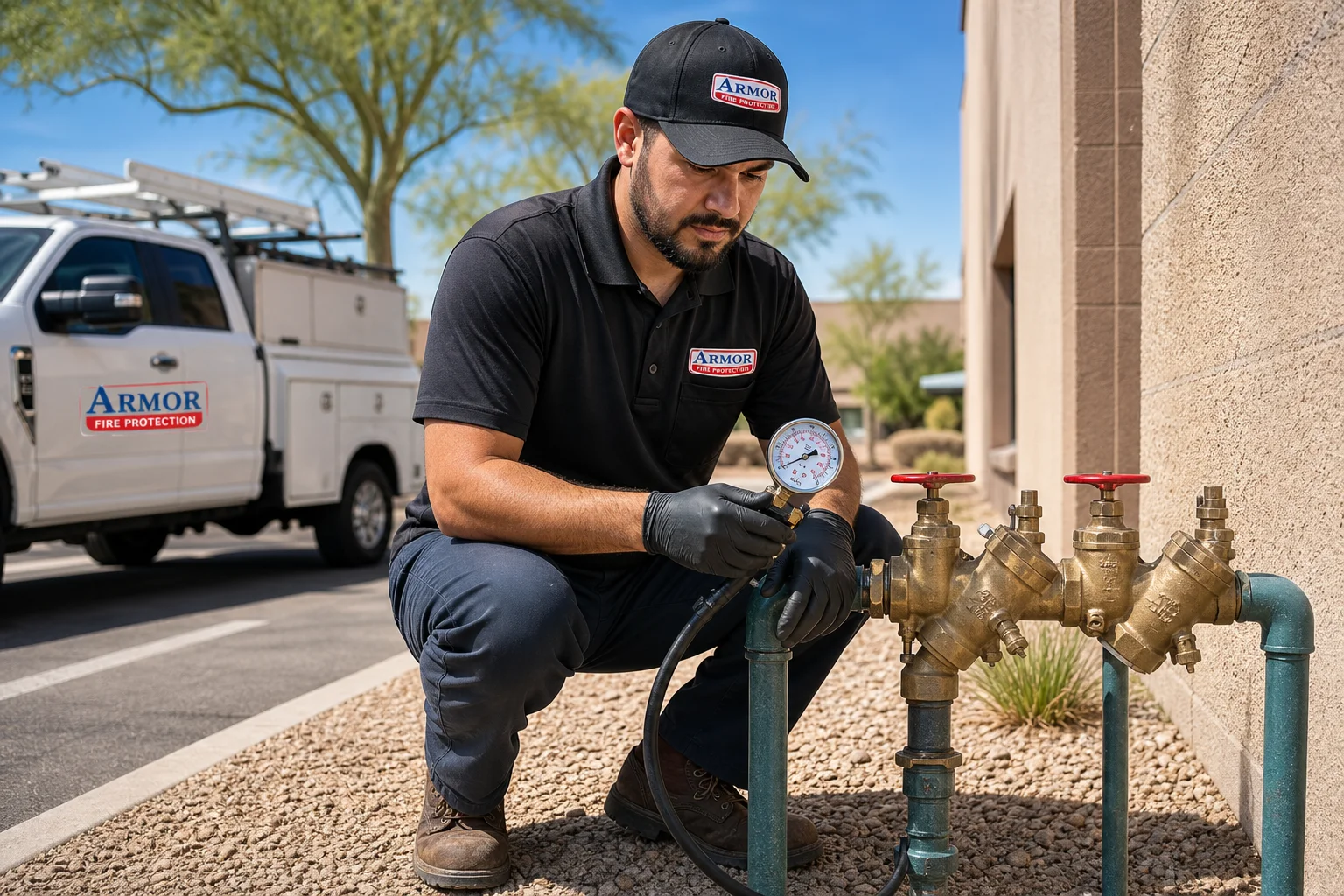
Backflow testing in Phoenix AZ confirms that your property's backflow prevention device is stopping contaminated water from siphoning back into the clean water supply. The City of Phoenix requires annual testing on every installed assembly, and Armor Fire Pro's Backflow Testing team handles the inspection, testing, and paperwork so you stay compliant.
By Armor Fire Pro Team, Fire Protection Specialists
What Backflow Testing in Phoenix AZ Actually Checks
Backflow testing in Phoenix AZ is the annual inspection that verifies a backflow prevention device is doing its one job: stopping used or contaminated water from reversing direction and flowing back into the clean water supply that serves your building and your neighbors. When pressure drops on the city main during a break or a heavy demand spike, a cross connection at an irrigation line, a fire sprinkler riser, or industrial process equipment can pull chemicals, fertilizer, or stagnant water backward into the potable system. A properly installed and certified backflow prevention device closes automatically the moment flow tries to reverse, and that closure is exactly what a technician confirms during testing.
Commercial buildings, restaurants, medical facilities, apartment complexes, and any property with an irrigation system or fire suppression line typically has at least one backflow prevention device on site. If your property has never been tested, or if you are not sure where your device is located, that is the first thing a certified backflow testing visit will identify, along with whether the device is even the correct type for your water service.
How a Backflow Prevention Device Protects Your Water Supply
A backflow prevention device works through a set of internal check valves that only allow water to move in one direction. A double check valve assembly uses two independent check valves in series. If one valve fails to seat completely, the second still stops reverse flow before contaminated water reaches the local water main. A reduced pressure zone assembly adds a relief valve between the two check valves, so if either valve leaks, the relief valve opens and discharges water rather than letting it flow backward into the clean water supply.
Most commercial Fire Sprinklers systems tie directly into the domestic water supply, which is exactly why the City of Phoenix requires a dedicated backflow prevention device on every fire line, not just irrigation and process water connections. Standing water inside a sprinkler system, combined with any chemical additives used for corrosion control, is treated as a contamination risk the same as an irrigation cross connection, and it gets tested on the same annual schedule.
When Annual Backflow Testing Is Required in Phoenix
The City of Phoenix cross connection control program requires annual backflow testing on every backflow prevention device installed on a commercial, industrial, or irrigated property. The requirement applies whether the device sits on a domestic water line, a fire line, or an irrigation meter. Property owners typically receive a renewal notice from the city ahead of the due date, but the responsibility to schedule arizona backflow testing on time stays with the property owner, not the water department.
Missing the annual backflow testing deadline can result in a locked meter or a formal notice of non-compliance, since the city treats an untested device as an unverified contamination risk to the local water system. Backflow testing is one piece of a property's broader compliance calendar, alongside required inspections for fire alarms, sprinklers, and suppression systems, so it helps to track the renewal date alongside those other annual inspections rather than as a standalone deadline.
What Happens During a Certified Backflow Testing Appointment
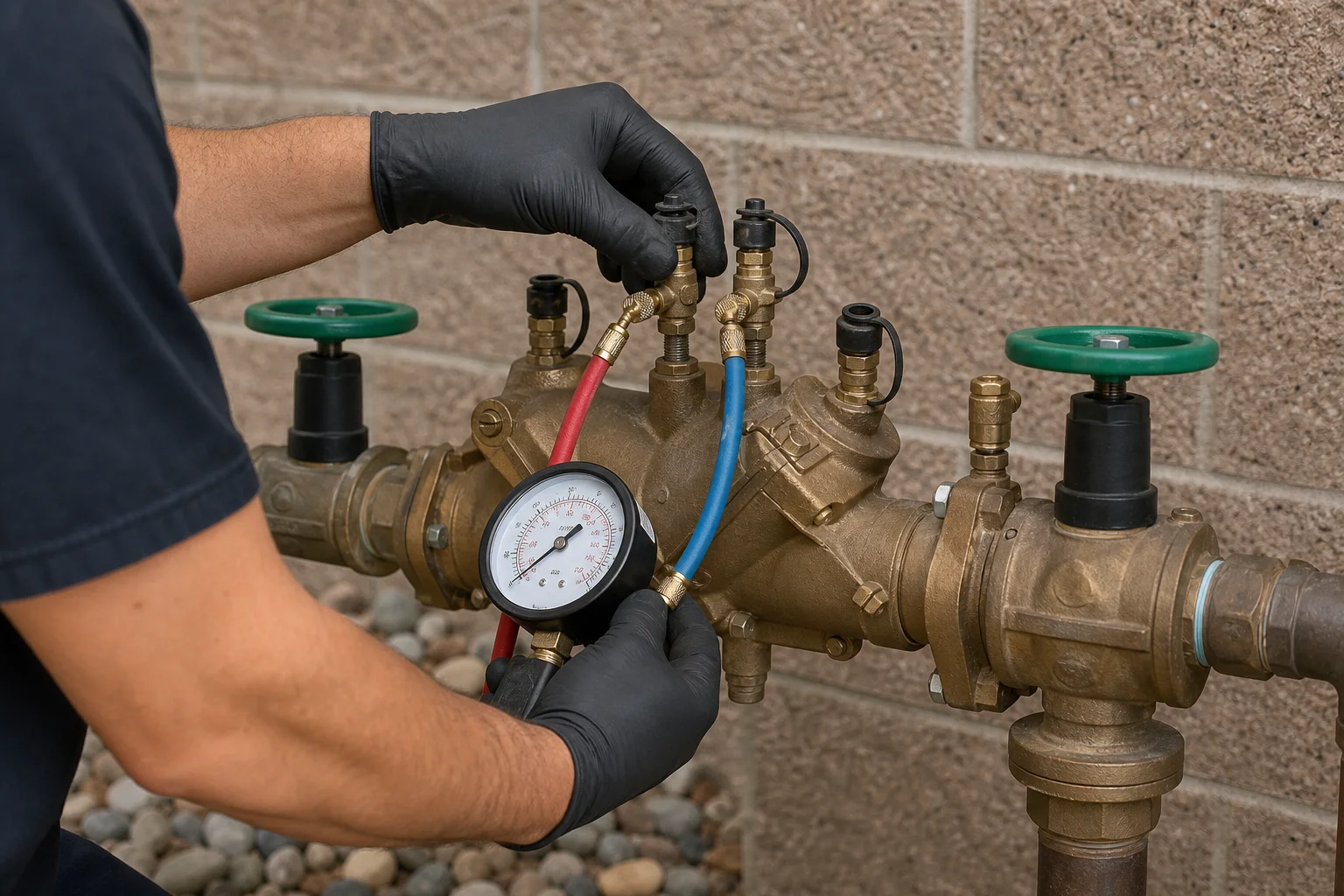
A certified backflow testing appointment starts with the technician locating the device and confirming the make and model against city records. Using a calibrated differential pressure gauge, the technician isolates the assembly, then tests each check valve and, on a reduced pressure zone assembly, the relief valve, all while the device stays under normal supply pressure. Each valve has to hold within a specific pressure differential to pass, and the technician checks flow in both directions before signing off.
The technician records the test results on a standardized city form, submits a copy directly to the City of Phoenix water services department, and you receive a copy of the results for your own compliance file. If a device fails, the technician explains what part needs repair or replacement, since a failed backflow prevention device has to be corrected and retested before the city will mark the property compliant. Most straightforward tests take under an hour to perform, and no water service interruption is needed for the building beyond the isolated line.
Choosing a Certified Backflow Testing Provider in Arizona
Not every plumber or fire protection company holds current backflow tester certification, and the City of Phoenix only accepts test results submitted by a certified backflow tester on file with the water department. Armor Fire Pro's technicians hold that certification and bring years experience testing devices across restaurants, medical offices, warehouses, and multi-family properties throughout the Phoenix area, so the paperwork gets filed correctly the first time.
Working with a local provider matters too. A team that already services your fire alarm, sprinkler, and suppression systems can schedule backflow testing alongside other annual inspections, which keeps trucks off your property and cuts down on repeat scheduling. If your backflow prevention device installed years ago is due for a broader compliance check, that review often overlaps with Arizona fire code compliance requirements, and with how backflow prevention gets built into new sprinkler system installations from day one.
Frequently Asked Questions
How often is backflow testing required in Phoenix?
The City of Phoenix requires annual backflow testing on every installed backflow prevention device, whether it protects a domestic water line, a fire sprinkler system, or an irrigation meter. The city mails a renewal notice, but scheduling the test on time is the property owner's responsibility, not the water department's.
Who can perform certified backflow testing in Arizona?
Only a certified backflow tester on file with the local water department can perform testing the City of Phoenix will accept. Armor Fire Pro's technicians hold current certification and submit test results directly to the city on your behalf, then send you a copy for your records.
What happens if my backflow prevention device fails testing?
The technician documents which valve failed to hold pressure, recommends the repair or replacement needed, and retests the device once the work is complete. The city will not mark a property compliant until a passing test result is on file with the water department.
Do I need a backflow prevention device on my fire sprinkler system?
Yes. Any fire sprinkler system connected to the domestic water supply needs its own backflow prevention device, and that device is subject to the same annual backflow testing requirement as irrigation or process water connections on the property.
Will I receive a copy of my test results?
Yes. After the technician submits results to the City of Phoenix, you receive a copy of the results for your own records, which you should keep alongside your other fire and water compliance documentation for future inspections.
Schedule Your Backflow Testing in Phoenix AZ Today
A backflow prevention device only protects your water supply if it is tested and documented every year, and Armor Fire Pro's certified technicians handle the testing, paperwork, and city submission in one visit. Request a Free Quote to get your property scheduled before your next renewal notice arrives.

