
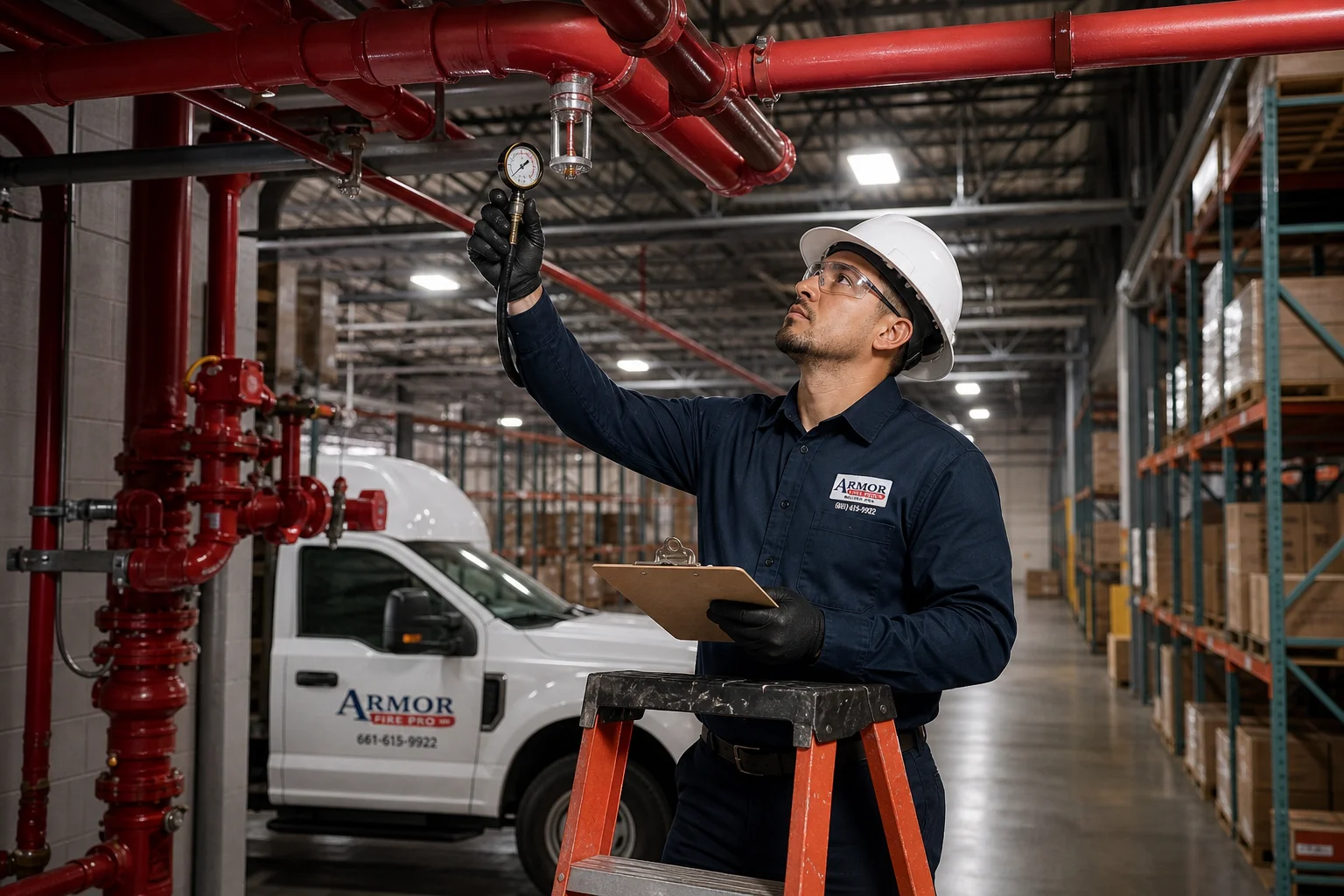
Industrial fire protection keeps factories, warehouses, and manufacturing facilities safe from fires that can devastate equipment, inventory, and lives in minutes. The right fire suppression systems must be matched to each facility's specific industrial processes and hazards. ArmorFirePro's Services cover the full range of heavy-duty industrial fire protection needs across the Phoenix area.
By Armor Fire Pro Team, Fire Protection Specialists
Why Industrial Fire Risks Demand Specialized Protection
Manufacturing plants and warehouses operate under fire conditions that standard commercial buildings do not face. Industrial processes commonly involve flammable liquids, combustible dust, high-heat machinery, and dense storage configurations where a single ignition point can escalate faster than standard suppression can respond.
Facilities that carry the highest industrial fire risk include metal fabrication shops, chemical and plastics manufacturing plants, food production facilities with high-temperature ovens, automotive paint booths, and large distribution warehouses. Each environment requires industrial fire protection designed around its specific hazards, not a generic commercial solution.
The National Fire Protection Association (NFPA) classifies manufacturing and warehousing among the highest-risk sectors for fire property loss per incident, based on fire loss data published annually in their fire research reports.
Fire Suppression Systems Built for Industrial Conditions
Fire suppression systems form the backbone of any industrial fire protection plan. The main categories used in manufacturing and warehousing environments include:
Wet Pipe Sprinkler Systems: Pressurized water delivered through pipes to sprinkler heads. Reliable and widely deployed in warehouses and general production spaces where water damage is acceptable.
Dry Pipe Systems: Water is held back by pressurized air or nitrogen until a sprinkler head activates. Used in unheated sections of industrial buildings prone to freezing.
Gaseous Clean-Agent Systems: FM-200 or Novec 1230 for fire suppression in areas housing electronics, control rooms, and precision equipment where water would cause serious secondary damage.
Foam-Based Systems: Required in flammable liquid storage, fuel handling areas, and chemical processing zones. The foam blanket smothers the fire and prevents re-ignition on exposed liquid surfaces.
For facilities planning new construction or upgrades, our guide to commercial fire sprinkler installation covers the design and installation process from permit to final inspection.
High-Piled Storage and Warehouse Sprinkler Requirements
When goods are stored in high racks, flames can travel vertically through the rack structure at a rate that ceiling-mounted systems alone cannot suppress before the fire reaches critical size. NFPA 13, the standard for the installation of sprinkler systems, requires in-rack sprinklers for storage above specified heights depending on commodity classification.
Fire Sprinklers for industrial warehouses are rated for higher water density and pressure than standard commercial systems. Design variables include ceiling height, storage height, commodity classification (Class I through Class IV, plus Group A, B, and C plastics), aisle configuration, and whether materials are packaged or in exposed form. Every engineered design requires hydraulic calculations and approval from the local authority having jurisdiction.
Detection Technology for Manufacturing and Industrial Settings
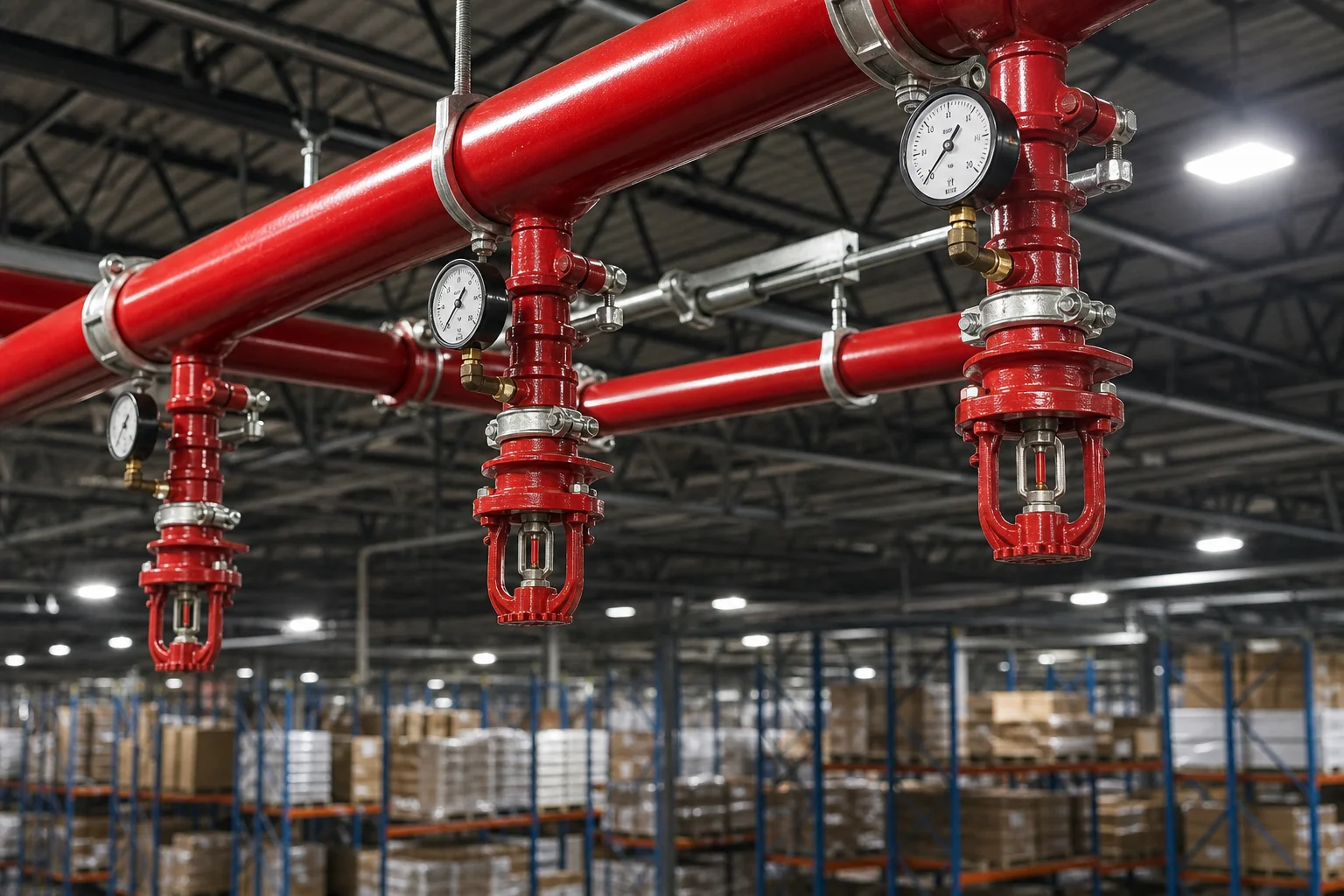
Early detection drives effective suppression. Industrial environments present conditions that standard smoke detectors cannot reliably handle, including welding fumes, combustible dust, steam from industrial processes, and exhaust from production equipment. False alarms in production environments disrupt operations and erode worker responsiveness to real alarm signals.
Detection technology suited to the industrial sector includes:
- Beam smoke detectors for high-bay warehouses and large open production floors
- Rate-of-rise and fixed-temperature heat detectors for dusty or fume-heavy areas where smoke detection triggers false alarms
- Flame detectors for chemical production lines, flammable liquid storage, and areas where rapid fire growth is expected before visible smoke appears
- Aspirating smoke detection for clean-room manufacturing environments and production areas with high-value equipment requiring the earliest possible warning
For Phoenix-area facilities, pairing detection with monitored alarm systems is standard practice. Our guide to fire alarm systems Phoenix covers detection, monitoring, and emergency response solutions in this region. A combined approach to building safety is detailed in our guide to fire and life safety protection, which addresses how suppression and detection systems work together for maximum building security.
Industrial Fire Protection Compliance and NFPA Code Requirements
Industrial fire protection in Arizona is a legal requirement, not an optional investment. NFPA codes adopted statewide set the minimum standards for fire safety systems in manufacturing and warehouse buildings. The key standards include:
- NFPA 13: Installation of sprinkler systems
- NFPA 72: National Fire Alarm and Signaling Code
- NFPA 25: Inspection, testing, and maintenance of water-based suppression systems
- NFPA 10: Portable fire extinguisher requirements
- NFPA 11 and NFPA 12: Foam and CO2 suppression systems for special hazard applications
OSHA requirements mandate that industrial facilities maintain written fire prevention plans and that all workers receive fire safety training. Non-compliance carries significant fines, and in the event of an incident, inadequate compliance creates major liability exposure.
Inspection frequency under NFPA 25 depends on system type. Wet pipe sprinkler systems require quarterly and annual inspections at minimum. Special hazard suppression systems such as foam or gaseous agents often require more frequent review. For industry benchmarks and professional standards in fire protection, see our guide to Grunau fire protection standards.
Frequently Asked Questions
What makes industrial fire protection different from standard commercial fire protection?
Industrial fire protection accounts for hazards not found in typical commercial buildings: flammable liquids, combustible dust, high-rack storage, and high-heat machinery. These require specialized suppression systems, higher sprinkler density, and detection suited to fume-heavy or dusty environments. Standard commercial systems are not rated for these conditions and will not provide adequate coverage in a manufacturing or warehousing setting.
How often do industrial fire suppression systems need to be inspected?
Under NFPA 25, wet pipe sprinkler systems require quarterly inspections of certain components and full annual inspections. Facilities with special hazard suppression systems such as foam or gaseous agents often have more frequent requirements. The exact schedule depends on system type, hazard classification, and the authority having jurisdiction for the facility's location.
Do warehouses with high-piled storage need specialized sprinkler systems?
Yes. NFPA 13 sets in-rack sprinkler requirements for storage above 12 feet in most commodity classifications. Standard ceiling-only sprinklers are not adequate for high-piled storage of Class III or IV commodities or Group A plastics. The engineering design must account for rack configuration, commodity class, and aisle spacing, with hydraulic calculations confirming system performance.
Can a manufacturing facility add fire suppression systems without halting production?
Phased installation can often be planned around production schedules to limit downtime. Feasibility depends on existing building infrastructure, available water supply, and the type of suppression system being added. A site assessment by a licensed fire protection engineer is necessary before any retrofit project begins, as constraints vary significantly from facility to facility.
What are the most common industrial fire hazards in Phoenix-area manufacturing facilities?
Flammable liquid storage, combustible dust from machining or finishing operations, high-heat industrial processes such as welding and heat treating, and high-piled storage of combustible goods are among the most frequent hazards. A formal hazard assessment is the required starting point for confirming which suppression systems and detection types are appropriate for each zone within the facility.
Get Reliable Industrial Fire Protection for Your Phoenix Facility
Manufacturing and warehousing operations cannot afford gaps in fire safety. The right fire suppression systems, detection technology, and code-compliant inspection program are what separate a contained incident from a total loss. Contact ArmorFirePro for a site assessment and Free Quote from licensed specialists in industrial fire protection.

