
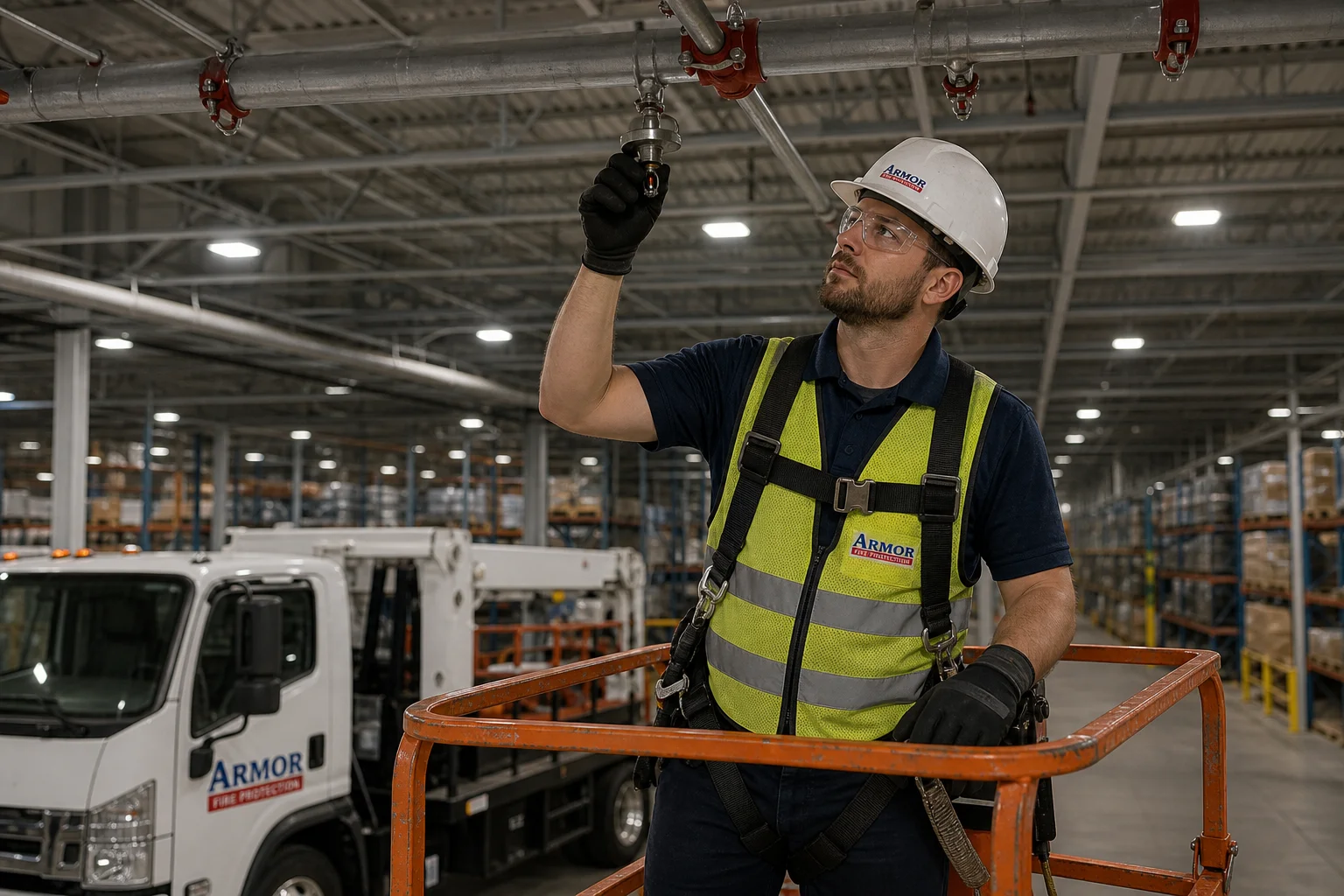
Grunau fire protection standards represent a quality benchmark that fire protection companies across the United States reference when designing, installing, and maintaining commercial life safety systems. Understanding these benchmarks helps building owners and facilities managers select a contractor who delivers reliable, code-compliant results on every project, from single-location restaurants to large commercial portfolios.
What Are Grunau Fire Protection Standards?
Grunau fire protection is a name tied to precise installation practices, rigorous hazard assessment, and detailed documentation across commercial fire protection projects. With extensive experience serving markets including Orlando, FL and across the country, the practices Grunau established reflect deep alignment with National Fire Protection Association requirements and a commitment to protecting lives, property, and business continuity.
For owners comparing contractors, understanding what separates minimum code compliance from industry-leading quality is the first step toward making the right choice for their facility.
Core Principles Behind the Standards
Three principles define quality at the Grunau fire protection level:
Design precision: Systems are engineered to match building occupancy type, hazard classification, and suppression demand. No two commercial buildings share identical risk profiles, so design must start with that specific building's layout, contents, and use.
Material quality: All components are listed and labeled, meeting NFPA requirements and local authority having jurisdiction approval before installation begins.
Documentation: Complete as-built drawings, inspection records, and signed corrective action reports are delivered after every service visit, giving customers a full compliance record.
NFPA Codes That Define Quality in the United States
In the United States, the NFPA publishes the model codes that govern fire protection system design and maintenance across commercial, industrial, and residential buildings. Top-tier contractors reference association NFPA standard requirements at every phase of a project, from initial design through ongoing inspection and maintenance.
Key standards include:
- NFPA 13: Covers sprinkler system layout, pipe sizing, and hydraulic calculations for commercial buildings
- NFPA 25: Defines inspection frequencies, test procedures, and documentation requirements for water-based systems
- NFPA 96: Applies to kitchen fire suppression systems in commercial cooking operations, requiring semi-annual service visits
Quality contractors treat these codes as a floor, cross-referencing local amendments and AHJ interpretations before finalizing any installation design.
Quality Benchmarks for Commercial Fire Suppression Systems

Comparing fire protection providers requires more than checking license numbers. True quality shows up in three operational benchmarks.
Hazard Assessment Before Design
A qualified contractor completes a thorough hazard assessment before specifying any equipment or laying out a system. This means physically walking the building, identifying high-risk areas such as commercial kitchen equipment zones, chemical storage spaces, and data server rooms, and selecting the suppression type best matched to each specific hazard.
Never skip main hazard assessment steps, even when a client faces a tight construction schedule. Contractors who rush past this phase produce systems with coverage gaps and undersized components that create liability for the building owner.
Inclusive Maintenance Service
Fire protection is not a one-time installation. An inclusive maintenance service agreement covers quarterly valve and gauge inspections, annual sprinkler head and pipe condition checks, five-year internal pipe assessments, and priority response to system impairments. Facilities operating under these schedules consistently pass third-party audits and satisfy insurance carrier requirements.
Documentation and Data Integrity
After every inspection visit, quality contractors provide signed reports, itemized deficiency lists, and corrective action timelines. Reputable companies never sell share or distribute a customer's personal information or facility data to third parties without explicit written authorization. Your inspection history belongs to your business and should stay protected.
Managing Fire Protection Across Multiple Locations
Multi-location businesses, whether a restaurant group based in Orlando, FL or a commercial property portfolio spanning several states, face specific compliance challenges. Tracking inspection schedules, open deficiencies, and service history across dozens of sites requires a systematic approach.
Some platforms use a group API to consolidate inspection scheduling, compliance dashboards, and deficiency tracking into a centralized system. This lets facilities teams identify which sites need back top compliance priority before a regulatory visit, reducing the risk of violations and emergency repair costs.
For companies evaluating enterprise fire protection partnerships, the ability to provide consistent, documented service across all locations is a key quality benchmark to assess. Visit a contractor's website to review their multi-site service capabilities and project portfolio before requesting a proposal.
Evaluating a Contractor's Terms and Service Documentation
Before signing any contract, review a company's terms service agreements thoroughly. Key items to examine:
- Scope of work: What inspections does the contract include? What triggers additional charges?
- Response commitments: What is the guaranteed callback window for impairment repairs?
- Technician credentials: Are field staff NICET-certified? Does the company hold current state contractor licenses?
- Data handling: How does the company store personal information gathered during facility assessments? Does the company sell share data with affiliates in other countries or third-party vendors without explicit consent?
Codes in the United States differ significantly from those in other countries, which is why hiring a domestically trained, NFPA-compliant contractor is essential for commercial facilities subject to local building and fire codes.
Frequently Asked Questions
What makes Grunau fire protection standards a benchmark for the industry?
Grunau fire protection earned its reputation through design precision, high-quality materials, and thorough documentation on every project. Contractors who match this level treat each facility as a unique project requiring a dedicated hazard assessment rather than a recycled design. The result is a system built to the specific occupancy needs of that building, not a generic installation that meets only minimum requirements.
How often should commercial fire sprinkler systems be inspected?
NFPA 25 requires quarterly inspections of control valves and gauges, annual inspections of sprinkler heads and pipe condition, and a five-year internal pipe assessment. High-hazard occupancies may face more frequent requirements based on AHJ rulings or insurance carrier stipulations. An inclusive maintenance service contract keeps all intervals on schedule without requiring the building owner to track deadlines manually.
What is a kitchen fire suppression system and when is it required?
A kitchen fire suppression system is a fixed automatic suppression system installed above commercial cooking equipment to control grease fires. NFPA 96 requires these systems in any commercial cooking operation producing grease-laden vapors, including full-service restaurants, cafeterias, and hospital kitchen areas. Systems require semi-annual inspection and recharge certification.
How do I verify that a fire protection contractor meets quality benchmarks?
Check for NICET certification, active state contractor licensing, and documented experience on commercial projects similar to your facility. Request sample inspection reports and ask for customer references. A qualified contractor will never skip main qualification documentation during the proposal process and will provide proof of insurance, licensing, and certification on request.
Does ArmorFirePro provide services comparable to Grunau fire protection standards?
ArmorFirePro delivers fire protection services designed to meet and exceed the quality benchmarks that define industry leaders. From initial design and installation through ongoing inspection and inclusive maintenance service, the team brings the technical experience and code compliance focus that Phoenix-area commercial facilities demand.
ArmorFirePro is the Phoenix-area fire protection company built to deliver the precision, documentation, and code compliance your facility needs. Contact today, locations served span the greater Phoenix metro, and request a free quote from our certified fire protection specialists.

