
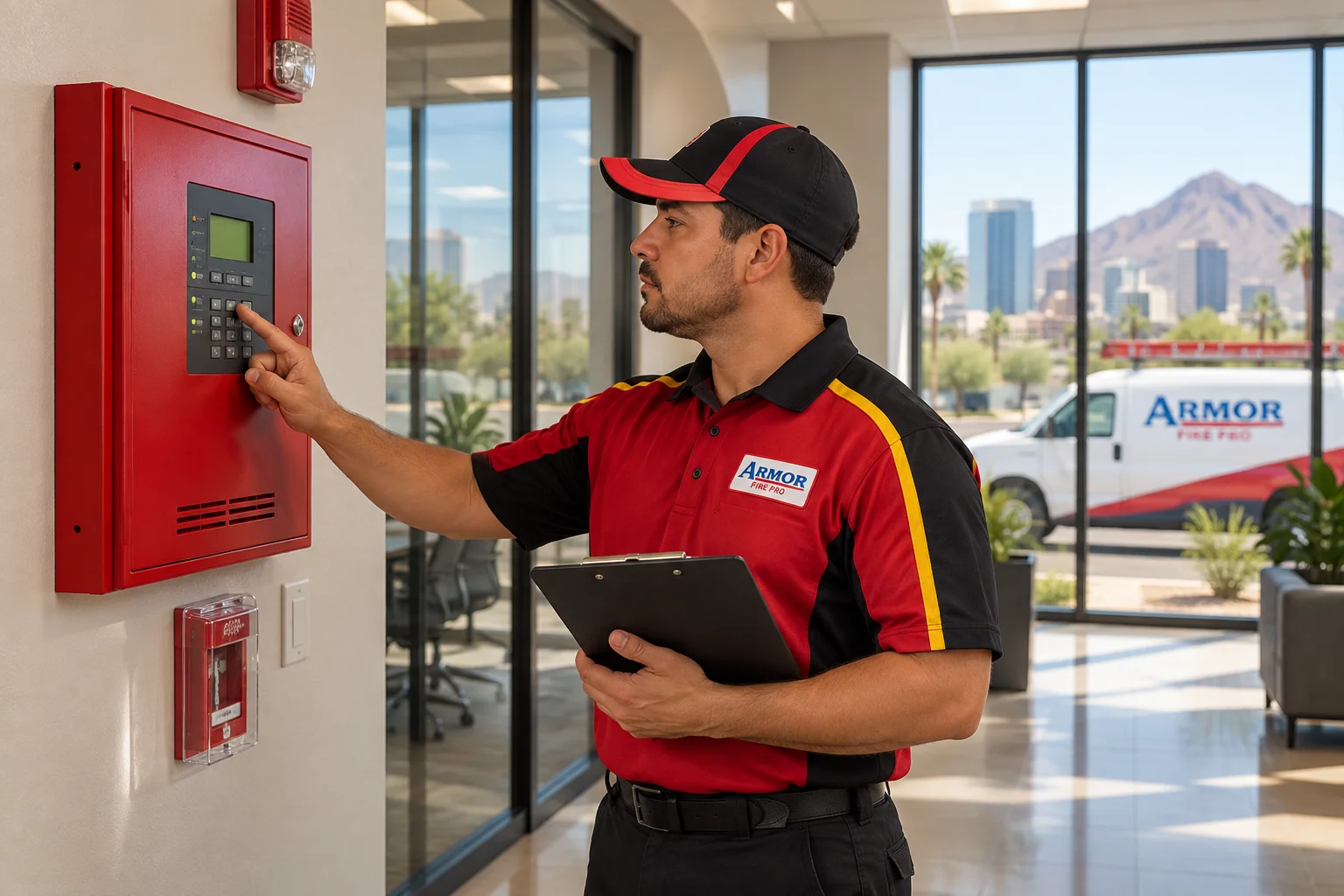
What fire protection inspections cost a Phoenix business, and what changes the price, comes down to the systems installed, the building's size, and how many trades are involved. Getting ahead of those variables before scheduling Fire Sprinklers testing or an alarm inspection keeps the invoice predictable and the building compliant.
By Armor Fire Pro Team, Fire Protection Specialists
There's no single number that applies to every building, because a fire protection inspection is really a bundle of separate line items: the labor hours to test each device, the paperwork required to file results with the local fire marshal, and any travel or scheduling fees tied to your facility's location. Once you know what fire protection inspections cost a Phoenix business, and what changes the price, the rest of this guide breaks each line item down individually so you can ask sharper questions before signing a service agreement.
The biggest swing factor is simply how many protection systems your building runs. A single-system facility with only fire extinguishers pays for far less labor than a commercial kitchen running suppression, alarms, and sprinklers together. Occupancy type matters too: a warehouse with open sprinkler heads inspects faster than a medical facility or an assembly space with life safety requirements layered on top by Arizona and Phoenix code officials.
Inspection Costs by System Type
Fire Alarm Systems
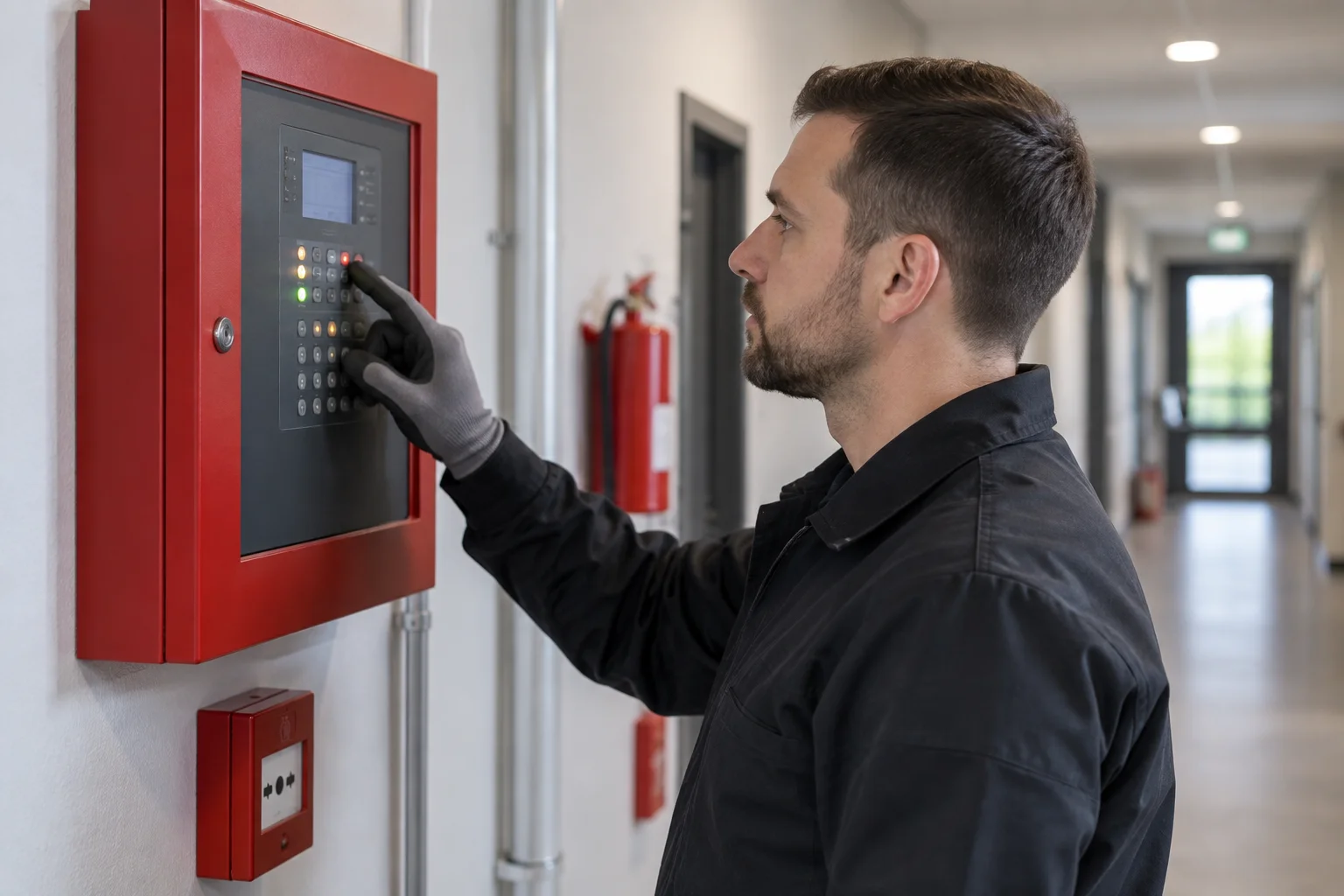
A fire alarm inspection covers pull stations, smoke and heat detectors, notification horns and strobes, and the control panel itself. The control panel is the brain of the fire alarm system, logging every device that trips during the test. Technicians inspect each device individually, tripping it and confirming the panel records the signal correctly. Buildings due for Fire Alarms & Lights service typically bundle the alarm test with a check of emergency and exit lighting, since both run on the same annual cycle under most Arizona fire codes.
Sprinkler Systems
A sprinkler system inspection focuses on flow testing, gauge checks, and control valves, plus confirming that fire department connections are unobstructed. A wet-pipe system in a small office inspects quickly; a dry-pipe or pre-action system in a warehouse or cold-storage facility takes longer because those sprinkler systems have more components that can fail testing.
Fire Extinguishers and Suppression Equipment
Portable fire extinguishers inspect and tag on a simple per-unit basis, so the extinguisher count on your floor plan drives that portion of the invoice directly. Commercial kitchens carry an additional layer: a kitchen fire suppression system over the hood needs its own semiannual service, and if the kitchen equipment layout has changed since the last inspection, the technician may need extra time to verify nozzle coverage still matches code.
Does Building Size or Occupancy Type Change the Price?
Square footage matters less than device count, but the two usually move together, a bigger building generally has more sprinkler heads, more detectors, and more extinguisher stations to check. Occupancy type changes the price more directly: industrial facilities often carry heavier-duty, harder-to-access equipment that takes longer to test than a straightforward retail space, and that holds true across commercial and industrial facilities alike, not just single-tenant offices. High-occupancy buildings like restaurants or assembly halls also face stricter inspection frequency because more people are at risk if a system fails.
How Often Phoenix Businesses Pay for Fire Protection Inspections
Most commercial fire protection systems in Phoenix require annual inspection and testing at minimum, though NFPA sets a different inspection testing schedule for each component type: some sprinkler and standpipe elements are checked quarterly or every five years, while fire alarm systems and extinguishers are typically tested every twelve months. Staying current with those annual certification requirements is what keeps your occupancy permit valid with the city.
What Does a Failed Inspection Cost to Fix?
A failed inspection doesn't reset the whole bill, it usually adds a smaller, separate re-inspection charge once the flagged item is repaired. If a single sprinkler head needs replacing or a detector needs recalibrating, many providers roll the re-check into the original service call rather than billing it as a second full inspection. Ask your provider directly whether a follow-up visit is included or billed separately before you approve the repair.
Who Pays for Fire Protection Inspections, and Does Insurance Help?
Landlord or Tenant: Who's Responsible?
Responsibility usually comes down to the lease. In many commercial leases, the landlord owns the base building systems, sprinklers and the fire alarm system tied to the shell, while the tenant covers anything added for their specific space, like kitchen suppression or extinguishers on their floor. Triple-net leases often shift more of that cost onto the tenant as a shared building expense. Reading the lease's maintenance clause, or asking your landlord directly, is the most reliable way to know who's billed for a given system.
Does Insurance Cover Inspection Costs?
General liability and commercial property insurance rarely pay for routine, scheduled inspections, those are treated as ordinary maintenance rather than a covered loss. Where insurance does help is on the back end: a documented inspection and testing history can support lower premiums or faster claims processing if a fire does occur, and some insurers require proof of current inspections as a condition of coverage. Ask your insurance agent whether your policy ties any discount to your inspection records.
Bundling Inspections and the Cost of Skipping One
Does Bundling Lower the Cost?
Scheduling your fire alarm, sprinkler, and extinguisher inspections with one company, on one visit, usually costs less than paying three separate vendors for three separate trip charges. Treating sprinklers, alarms, and suppression as integrated fire protection systems, rather than three unrelated service contracts, is what actually collapses redundant travel time and paperwork into a single invoice. It also means one point of contact when something fails testing, instead of three companies pointing at each other.
What Happens If a Phoenix Business Skips Its Required Inspection?
Skipping a required fire protection inspection doesn't just risk a fire, it risks the business's ability to operate at all. Phoenix fire code officials can issue violations or, in serious cases, red-tag a building until systems are brought back into compliance, and an expired inspection is one of the first things an inspector checks during a routine fire code visit or a permit renewal. Insurance carriers can also deny a claim outright if a required inspection was never performed, turning a routine annual expense into an uncovered total loss.
Frequently Asked Questions
What do fire protection inspections cost a Phoenix business, and what changes the price?
There's no flat number because pricing is built from labor hours, system count, and travel, not a single flat fee. A single-system office pays for far less than a multi-system commercial kitchen. The biggest changes come from occupancy type, building size, and whether last year's inspection flagged repairs that still need clearing before recertification.
How much does it cost when a Phoenix fire inspection fails and needs a re-inspection?
A failed item usually adds a smaller, separate re-inspection charge rather than resetting the entire bill. If a technician can fix the flagged item on the same visit, many providers roll that repair and a quick recheck into the original service call. Ask your provider directly whether a follow-up visit is billed separately before you approve repairs.
Does a landlord or tenant pay for fire protection inspections in a Phoenix commercial lease?
It depends on the lease. Landlords typically cover base building systems like the shell's fire alarm system and sprinklers, while tenants usually pay for anything added for their specific space, such as kitchen suppression or extinguishers. Triple-net leases often shift more of that cost to the tenant as a shared building expense, so read the maintenance clause closely.
Will insurance cover the cost of a fire protection inspection?
Usually not directly, general liability and property policies treat routine inspections as ordinary maintenance rather than a covered loss. Where insurance helps is indirectly: a documented inspection and testing history can support lower premiums or smoother claims if a fire happens, and some insurers require current inspection records as a condition of coverage.
Get a Clear Quote for Your Phoenix Fire Inspection
Every building's bill comes down to its own system count, occupancy type, and lease terms, and the fastest way to get an accurate number, matched to your building's actual fire protection needs, is to have someone look at the space itself. Request a Free Quote and get a straight answer on what your inspection will involve before you schedule it.

