
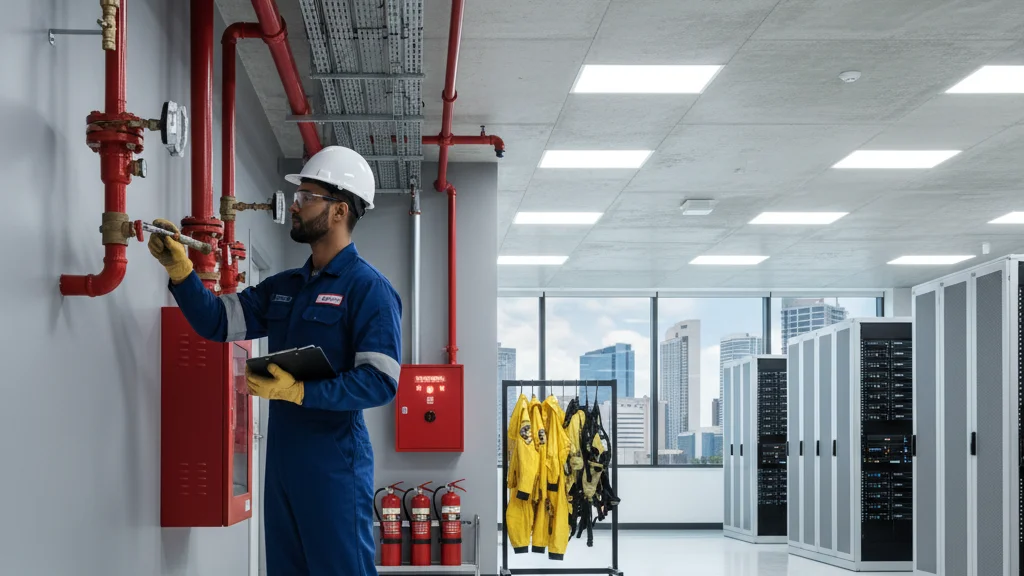
Phoenix fire prevention is not optional, it is a legal and operational necessity for every commercial property in Maricopa County. Whether you manage an office complex, a restaurant, a warehouse, or a medical facility, Arizona state law and local fire codes require that your fire protection systems be regularly inspected, tested, and maintained. Falling behind on compliance puts people at risk and exposes your business to fines, failed inspections, and potential liability. This guide covers what fire prevention services in Arizona actually include, what to expect during a fire inspection in Phoenix, and how to stay on the right side of compliance year-round.
What Do Fire Prevention Services in Arizona Actually Cover?
Fire prevention services in Arizona go well beyond installing a sprinkler system and calling it done. A complete fire protection program covers every layer of your building's safety infrastructure, from the moment a fire starts to the moment occupants evacuate safely.
Core services typically include:
- Fire sprinkler system inspections and testing covering heads, valves, gauges, and water flow
- Fire alarm system testing including pull stations, smoke detectors, heat detectors, and control panels
- Fire extinguisher inspections verifying charge levels, accessibility, and proper placement
- Emergency exit and egress lighting checks to confirm exits are marked and illuminated
- Kitchen hood suppression system inspections for any facility with commercial cooking equipment
- Backflow preventer testing for the water supply lines feeding sprinkler systems
- Fire pump testing for high-rise and large commercial properties
Every one of these systems has a specific inspection frequency mandated by code. Missing even one can result in a failed inspection or a notice of violation from the Phoenix Fire Department.
How Often Does Arizona Require Fire Inspections?
Inspection frequency in Arizona follows NFPA standards alongside local amendments adopted by the City of Phoenix and surrounding municipalities. Most commercial properties operate under a combination of annual, semi-annual, and quarterly requirements depending on the system type.
Annual inspections are required for most fire alarm systems, portable fire extinguishers, and standard sprinkler systems in low-hazard occupancies.
Semi-annual inspections are common for fire suppression systems in commercial kitchens and certain high-hazard environments.
Quarterly inspections are required for wet-pipe sprinkler systems with pressure gauges and certain water-based fire suppression components under NFPA 25.
Five-year testing is required for internal inspections of dry-pipe and pre-action sprinkler systems.
Phoenix businesses should note that the city's fire marshal office conducts its own periodic inspections, and those visits are not a substitute for the third-party testing and documentation your insurance carrier and local code require.
What Happens During a Fire Inspection in Phoenix?
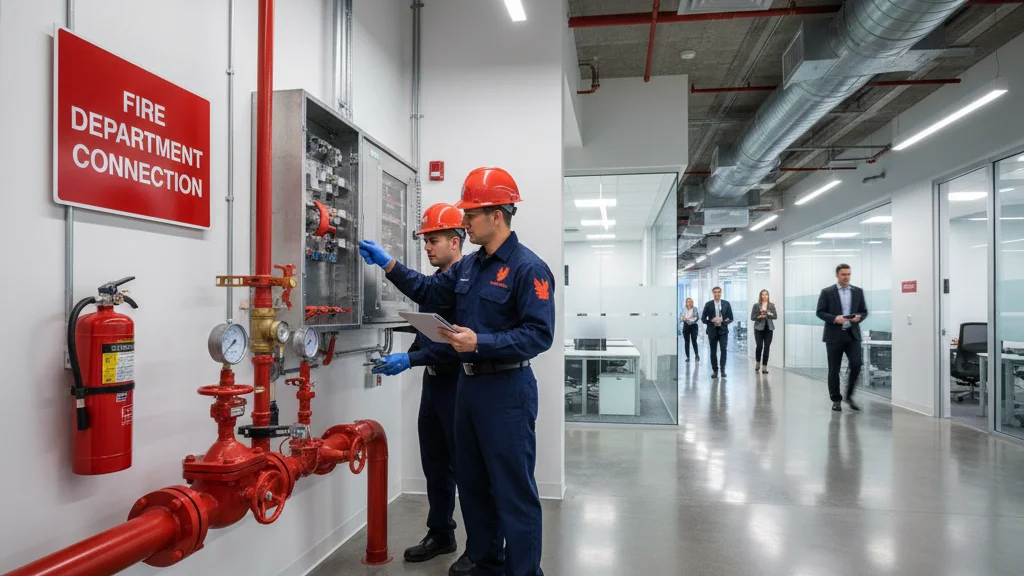
A professional fire inspection in Phoenix follows a structured process. Understanding what the technician is doing, and why, helps building managers prepare and respond to findings quickly.
The inspection typically begins with a review of your previous service records. The technician checks when systems were last tested, whether any deficiencies were noted, and whether corrective work was completed. If records are missing or incomplete, that itself becomes a deficiency.
Next comes a physical walkthrough of the property. The technician examines:
- Sprinkler head clearance (Phoenix code requires 18 inches of clearance below each head)
- Control valve positions and tamper switches
- Alarm panel status and any trouble signals
- Extinguisher tags, placement, and accessibility
- Exit sign function and backup power
- Any obstruction to fire department connections on the exterior
After the physical check, functional tests are run. This means water flow tests on sprinkler systems, audible and visual device tests on fire alarms, and operational tests on suppression systems. Findings are documented in an inspection report that you are required to keep on file and, in many cases, submit to the Phoenix Fire Department.
What Are the Most Common Compliance Failures in Arizona?
Certain deficiencies come up again and again in Phoenix commercial fire inspections. Knowing these in advance helps you address them before an inspector shows up.
Obstructed sprinkler heads are among the most frequent findings. Storage stacked too close to the ceiling, shelving units moved without accounting for head placement, and new partitions installed without adjusting coverage all create code violations.
Expired extinguisher tags are an easy failure that happens when maintenance gets deferred. Arizona code requires annual inspection tags on all portable extinguishers, with a six-year internal maintenance service and a 12-year hydrostatic test for most types.
Missing or outdated inspection records create immediate problems during both third-party inspections and fire department visits. Records must be retained on-site and available for review.
Unsupervised control valves occur when a water supply valve is found in the closed or partially closed position without a proper impairment procedure in place. This is a critical deficiency because a closed valve means the sprinkler system cannot function.
Corroded or damaged components show up frequently in older Phoenix properties, particularly those exposed to hard water or outdoor elements. Corroded sprinkler heads must be replaced, not cleaned.
Fire Prevention Services for Different Property Types
Not every Phoenix property has the same fire risk profile, and fire prevention services in Arizona are not one-size-fits-all.
Restaurants and commercial kitchens carry elevated risk from cooking oil, open flame, and high-temperature equipment. These properties require semi-annual hood suppression system inspections in addition to standard fire alarm and extinguisher services. Grease buildup is a leading cause of kitchen fires, making cleaning compliance as important as equipment testing.
Warehouses and industrial facilities deal with high fuel loads, forklifts, and changing storage configurations that can alter fire dynamics significantly. Sprinkler systems in these buildings often require rack storage calculations, and any change in storage height or commodity class should trigger a review.
Multi-tenant office buildings require coordination between building ownership and individual tenants. Each tenant space may have its own suppression zones, and alterations such as new walls, dropped ceilings, or relocated servers can require permit pulls and sprinkler modifications.
Healthcare and assisted living facilities operate under stricter life safety codes due to the presence of patients with limited mobility. These properties typically require more frequent testing cycles and detailed documentation for state licensing compliance.
How to Stay Ahead of Fire Code Compliance in Phoenix
Reactive fire compliance, only addressing problems when an inspector finds them, is the most expensive way to manage a fire protection program. Building owners and facility managers who stay ahead of compliance avoid emergency repair costs, last-minute service calls, and the risk of occupancy holds.
A proactive approach involves a few key practices:
Schedule inspections before they are due. Phoenix fire code compliance has no grace period once a system is overdue. Book your annual and semi-annual services in the calendar before the due date, not after.
Maintain a complete records file on-site. Every inspection report, test result, and deficiency correction notice should be filed and accessible. Digital records stored in a cloud folder accessible to your facility manager are an effective backup.
Address deficiencies within required timeframes. When a technician documents a deficiency, that creates a clock. Critical deficiencies, such as a non-functional suppression system, require immediate correction or a formal impairment process. Non-critical deficiencies typically must be corrected within 30 days.
Partner with a licensed Arizona fire protection contractor. Arizona requires fire protection contractors to hold a C-16 license issued by the Arizona Registrar of Contractors. Verifying your vendor's license before any work begins protects you from liability and ensures the work meets code.
Working with ArmorFirePro for Phoenix Fire Prevention
Staying compliant with fire prevention requirements in Phoenix takes more than good intentions. It takes a consistent inspection schedule, accurate documentation, and a contractor who understands both NFPA standards and the local amendments enforced by Phoenix, Scottsdale, Tempe, Chandler, and Glendale fire departments.
ArmorFirePro provides fire inspection, testing, and maintenance services for commercial properties across the Phoenix metro area. From sprinkler system inspections and alarm testing to hood suppression service and backflow testing, their team keeps your fire protection systems documented and compliant. If your property is due for inspection, overdue on a deficiency, or starting a new commercial build-out, reaching out to ArmorFirePro is the right first step toward keeping your property, your tenants, and your business protected.

